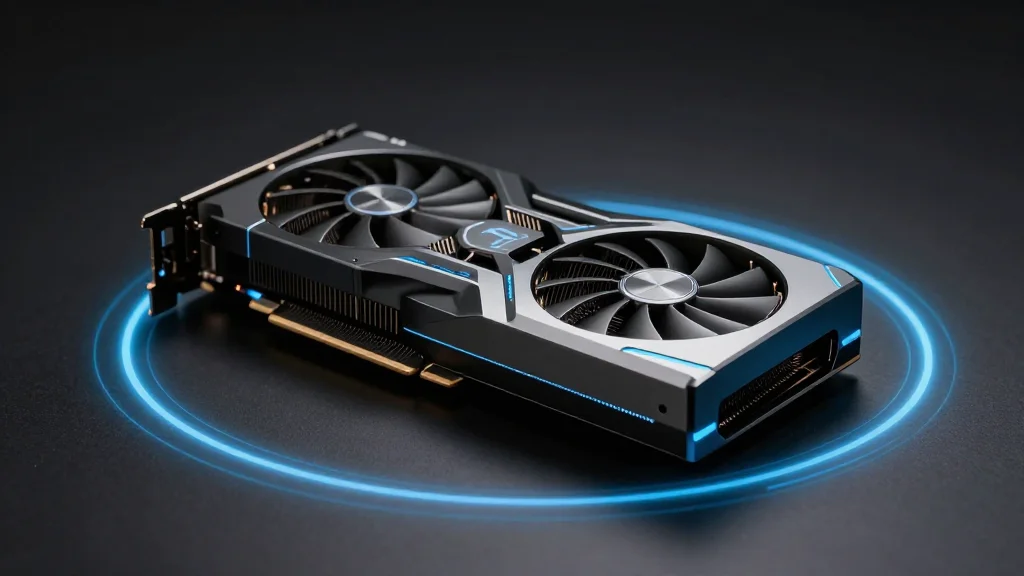
China Built a Gaming GPU: Lisuan's LX 7G100 Performs Like an RTX 3060 but Costs Almost $500
Companies Mentioned
Why It Matters
The launch signals China’s growing capability to produce competitive graphics hardware, challenging the Nvidia‑AMD‑Intel duopoly. However, the high price relative to its gaming performance limits immediate market impact, highlighting the gap still to bridge for domestic vendors.
Key Takeaways
- •Lisuan LX 7G100 priced ~ $480, near RTX 5060 Ti price.
- •12 GB GDDR6, four DP1.4a ports, 8K 60 HDR support.
- •3DMark matches RTX 3060, but game FPS far lower.
- •Lacks hardware ray tracing; driver UI basic, overclocking inconsistent.
- •Milestone for Chinese GPU industry despite poor price‑performance.
Pulse Analysis
China’s push to build a home‑grown graphics ecosystem has accelerated in recent years, moving from experimental silicon to a market‑ready product. Earlier attempts, such as Moore Threads’ MTT S80, struggled with driver stability and low performance. Lisuan’s LX 7G100, however, demonstrates that Chinese designers can integrate a full hardware stack—GPU core, memory, and software—capable of running modern titles without crashes. The card’s 12 GB of GDDR6, four DisplayPort 1.4a outputs, and support for DirectX 12, Vulkan 1.3, OpenGL 4.6 and OpenCL 3.0 place it squarely in the mainstream segment, a clear leap from the GTX 660 Ti‑class performance of its predecessor.
In benchmark labs, the LX 7G100 reaches 3DMark scores that sit alongside the five‑year‑old RTX 3060, suggesting respectable raw compute power. Real‑world gaming tells a different story: Cyberpunk 2077 at 1080p with FSR 3 Quality averages 88 fps, while the RTX 4060 tops 230 fps. Forza Horizon 5 and Black Myth: Wukong linger in the 40‑60 fps range on low settings. The absence of dedicated ray‑tracing hardware and a rudimentary driver interface further blunt its appeal to performance‑focused gamers, especially given its $480 price tag, which aligns more closely with higher‑end cards that deliver substantially better frame rates.
The broader market implication is twofold. First, the LX 7G100 proves Chinese firms can produce a functional, API‑compatible GPU, potentially reducing reliance on imported silicon and fostering a domestic supply chain. Second, the pricing‑performance mismatch underscores the challenge of displacing entrenched players like Nvidia, AMD and Intel. Lisuan has hinted at a second‑generation roadmap that will add ray tracing, suggesting a longer‑term strategy to close the gap. For investors and industry watchers, the card serves as a barometer of China’s evolving semiconductor ambitions, but immediate consumer adoption will hinge on delivering competitive performance at a more compelling price point.
China built a gaming GPU: Lisuan's LX 7G100 performs like an RTX 3060 but costs almost $500
Comments
Want to join the conversation?
Loading comments...