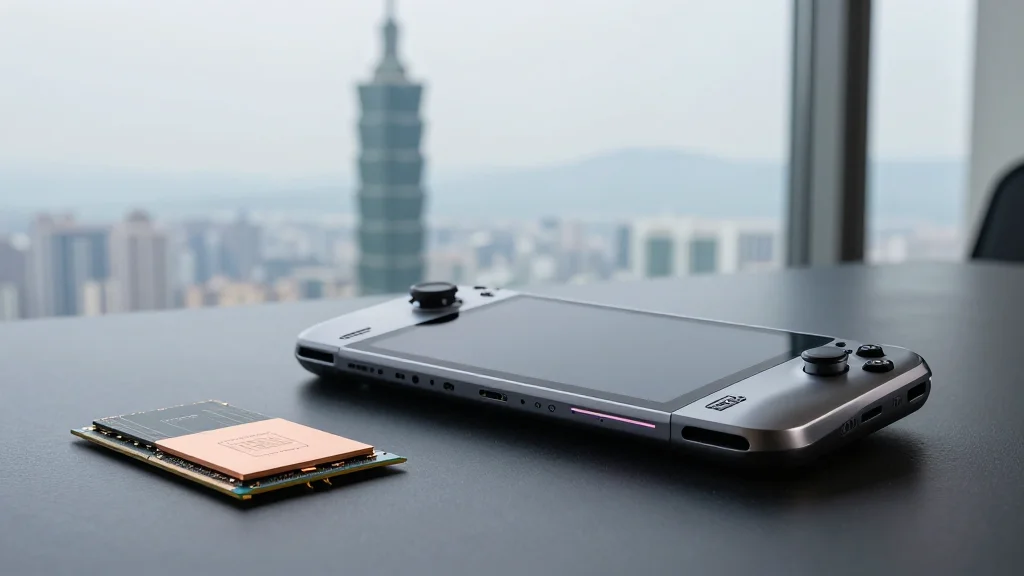
Computex 2026: Nvidia N1X AI Chip Preview, Intel Gaming Handhelds, and RAM Shortage Response

Companies Mentioned
Why It Matters
The convergence of AI‑centric silicon, next‑gen gaming handhelds and sustainable storage at Computex highlights a pivotal shift in consumer tech: performance is no longer measured solely by raw compute, but by how efficiently that compute can be delivered amid material constraints. Nvidia’s push into edge AI with Jetson Thor and the anticipated N1X chip signals that AI workloads will soon be embedded in everyday devices, raising the bar for memory bandwidth and power efficiency. Intel’s handheld effort reflects a broader industry move to capture mobile‑gaming revenue, a segment that has grown as traditional console sales plateau. Meanwhile, PROMISE’s GreenBoost 2.0 demonstrates that storage vendors are proactively addressing the power‑and‑cooling limits that RAM shortages impose, offering a more sustainable path for AI‑heavy workloads. If the RAM shortage deepens, manufacturers may be forced to adopt lower‑capacity configurations, potentially throttling AI performance on consumer devices and inflating prices. Conversely, breakthroughs in high‑density, low‑power memory or successful rollout of alternative architectures could restore balance, enabling the AI‑driven features promised at Computex to reach a broader market. The outcomes of these announcements will shape product pricing, design trade‑offs and the competitive dynamics among Nvidia, Intel, AMD and emerging Asian OEMs for the next 12‑month cycle.
Key Takeaways
- •Nvidia is expected to preview its N1X AI chip and unveil the Jetson Thor edge module at Computex 2026.
- •Intel plans to showcase next‑generation gaming handhelds built on Wildcat Lake silicon, targeting the mobile‑gaming market.
- •PROMISE Technology introduces GreenBoost 2.0 with Toshiba, promising up to 30 % lower power consumption for AI‑intensive storage.
- •Industry analysts warn of a 30 % price surge for DDR5 RAM, dubbing the crisis “RAMageddon.”
- •Jensen Huang reiterated Nvidia’s focus on the Chinese market, noting its importance for future AI chip sales.
Pulse Analysis
Computex 2026 serves as a litmus test for how consumer‑tech giants will reconcile the twin pressures of AI acceleration and material scarcity. Nvidia’s strategy of coupling high‑density silicon (Vera Rubin) with edge‑focused modules (Jetson Thor) reflects a recognition that AI workloads will soon be distributed across the device ecosystem, not confined to massive data centers. This distribution amplifies the RAM bottleneck: edge devices require fast, low‑latency memory that is currently in short supply. Intel’s handheld push, while aimed at capturing a lucrative gaming niche, also hinges on securing sufficient high‑speed DRAM to meet performance expectations. Failure to do so could erode the handheld’s value proposition and push consumers back toward cloud‑gaming alternatives.
PROMISE’s GreenBoost 2.0 initiative illustrates a complementary mitigation path—reducing overall system power draw to free up thermal and electrical headroom for higher‑density memory modules. By lowering the power envelope of storage subsystems, OEMs can allocate more of the limited power budget to memory, indirectly easing the RAM shortage’s impact on AI performance. However, the success of such an approach depends on broader ecosystem adoption, including motherboard designers and chipset vendors.
In the longer view, the RAM shortage could catalyze a shift toward alternative memory technologies, such as on‑package HBM or emerging MRAM solutions. Companies that invest early in integrating these alternatives may gain a competitive edge as traditional DDR5 supply tightens. Meanwhile, Nvidia’s emphasis on the Chinese market, despite export‑license hurdles, signals that the company is betting on a diversified revenue base to sustain its $200 billion CPU market forecast. If geopolitical constraints ease, Nvidia could unlock a massive new customer pool, further accelerating AI adoption across consumer devices. The next few months will reveal whether the hardware promises made at Computex translate into tangible product releases or remain speculative concepts constrained by supply‑chain realities.
Computex 2026: Nvidia N1X AI Chip Preview, Intel Gaming Handhelds, and RAM Shortage Response
Comments
Want to join the conversation?
Loading comments...