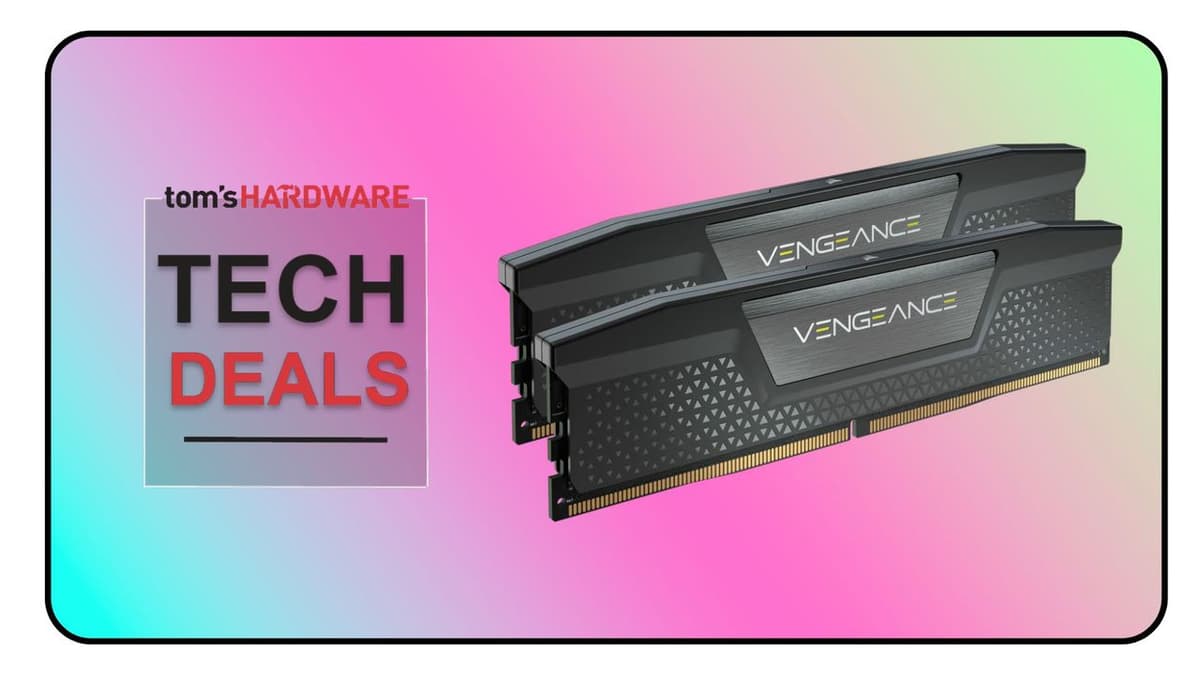
DDR5 RAM Gets Another Fleeting Discount, Lowest Price in Months — Corsair's 32GB Vengeance Kit Is $329 at Woot
•February 23, 2026
0
Companies Mentioned


Why It Matters
The price drop gives consumers a brief opportunity to acquire premium DDR5 memory amid a prolonged market squeeze, influencing upgrade cycles and budgeting for AI‑intensive workloads. It also signals that component pricing volatility may persist through 2026.
Key Takeaways
- •Corsair Vengeance 32GB DDR5 now $329.99 at Woot.
- •Price down from $344 in January, still above 2025 levels.
- •AI-driven demand pressures NAND, raising RAM and SSD costs.
- •Cheapest 32GB DDR5 kit now around $285, slower speeds.
- •Limited to two units per customer; deal expected short-lived.
Pulse Analysis
The memory market has entered an unprecedented price cycle as artificial‑intelligence workloads consume a growing share of NAND and DRAM capacity. Manufacturers that once could meet consumer demand at sub‑$100 price points now face strained inventories, pushing 32 GB DDR5 kits into the $300‑plus range. This shift is not isolated to RAM; SSDs and even traditional HDDs have felt the ripple effect, with price indices climbing steadily since late 2023. Analysts attribute the squeeze to data‑center expansion, generative‑AI training, and a lag in new fab capacity, creating a buyer’s market for early adopters willing to act quickly.
Corsair’s Vengeance DDR5‑6000 kit, now listed at $329.99 on Woot, offers a blend of high frequency and reliable timings that appeals to gamers and professional workstations alike. While the kit lacks the RGB lighting of its more expensive sibling, its C36 latency and 6000 MT/s speed place it ahead of budget 4800 MT/s models that start around $285. For users seeking a balance between performance and cost, the Corsair option provides a modest premium for a reputable brand, especially given the two‑unit purchase limit that curtails bulk discounting.
Looking ahead to 2026, the RAM price crunch is expected to deepen as AI model training scales and supply chain bottlenecks persist. Industry forecasts suggest that without a significant increase in DRAM fab output, premium DDR5 kits could breach the $350 threshold, making current deals appear comparatively attractive. Consumers planning major upgrades should therefore prioritize securing memory now, while monitoring promotional windows on trusted retailers like Woot and Amazon. In the longer term, the market may stabilize once next‑generation DDR6 silicon reaches volume production, but until then, strategic purchasing remains essential for cost‑conscious builders.
DDR5 RAM gets another fleeting discount, lowest price in months — Corsair's 32GB Vengeance kit is $329 at Woot
0
Comments
Want to join the conversation?
Loading comments...