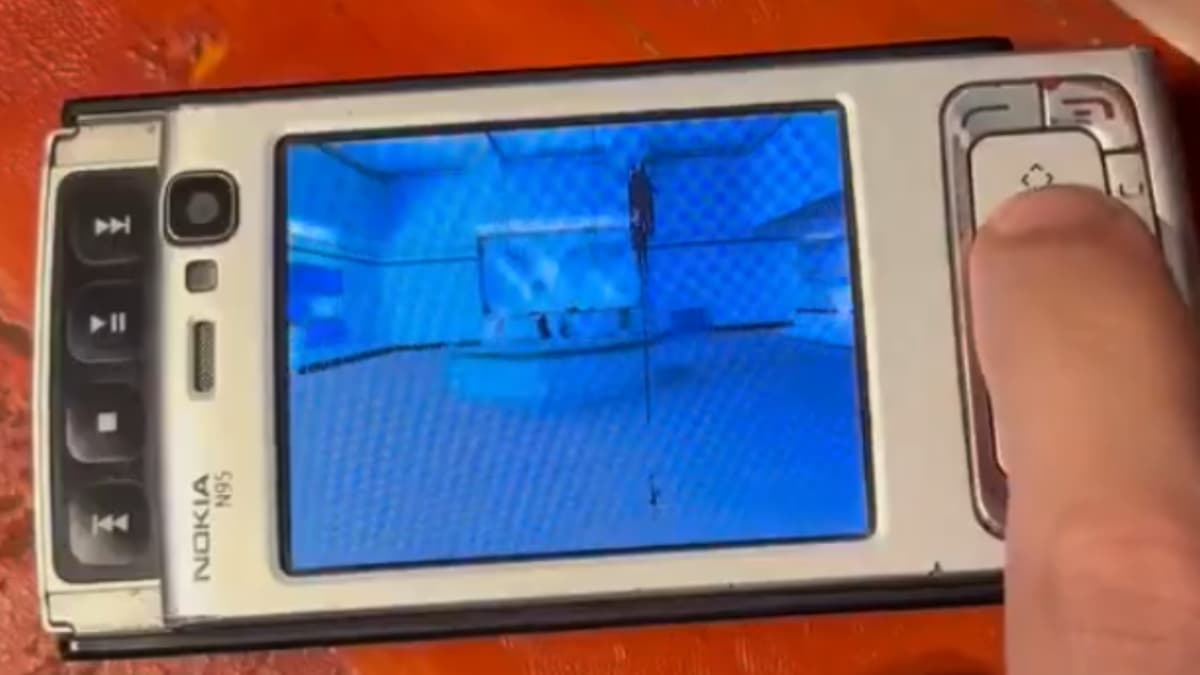
Developer Gets Half-Life Running at 30 FPS on a Nokia N95 — Proves 2007 Phones Can Just About Match 1998 PCs
Companies Mentioned


Why It Matters
The demo proves that even low‑end legacy smartphones can host classic PC games, highlighting the untapped potential for software preservation and hobbyist development on legacy hardware. It also underscores the flexibility of open‑source engines in bridging architecture gaps.
Key Takeaways
- •Half‑Life runs at 30 FPS on 2007 Nokia N95
- •Leoncini added mouse and keyboard support to the port
- •N95’s specs technically meet Half‑Life’s 1998 PC requirements
- •Previous ports include Quake 3, Crash Bandicoot, and NES emulators
- •Project relies on native Symbian build, not PC emulation
Pulse Analysis
The resurgence of retro game ports onto antiquated mobile devices reflects a growing niche where hobbyists test the limits of legacy hardware. The Nokia N95, released in 2007 with a 332 MHz dual‑core ARM11 processor, 64 MB of RAM and a PowerVR MBX 3D accelerator, was originally marketed as a high‑end smartphone. By achieving a consistent 30 FPS in Half‑Life—originally designed for a 133 MHz Pentium—Leoncini demonstrates that the device’s specifications, on paper, still align with the game’s modest 1998 requirements. This accomplishment builds on earlier successes such as Quake III on the same chipset, reinforcing the notion that early smartphones can serve as viable platforms for classic titles.
Technical hurdles dominate the porting process, primarily the architectural shift from x86 to ARM and the constraints of Symbian OS. Unlike typical emulation, Leoncini compiled a native Symbian version, likely leveraging the open‑source Xash3D engine, which has already been adapted for Android, Raspberry Pi, and Meta Quest. The primary bottleneck remains CPU throughput; even with the dual‑core OMAP 2420, frame‑time spikes occur during intensive scenes. Memory limits—64 MB versus the original 24 MB requirement—are less restrictive, but the 240 × 320 display and limited storage demand careful asset scaling. Ongoing work focuses on optimizing rendering pipelines and fixing residual slowdowns, illustrating the meticulous engineering required to bridge decades of hardware evolution.
Beyond the novelty factor, such ports have broader implications for software preservation and the indie development ecosystem. By demonstrating that classic PC games can run on devices predating modern smartphones, developers gain a low‑cost testbed for engine portability and performance tuning. Enthusiasts can experience legacy titles without resorting to full PC emulators, preserving original gameplay feel while sidestepping legal gray areas. Moreover, the community’s success may inspire manufacturers to consider retro‑compatibility features in future devices, fostering a market for nostalgia‑driven gaming experiences. As open‑source engines continue to evolve, the line between vintage and contemporary hardware grows increasingly blurred.
Developer gets Half-Life running at 30 FPS on a Nokia N95 — proves 2007 phones can just about match 1998 PCs
Comments
Want to join the conversation?
Loading comments...