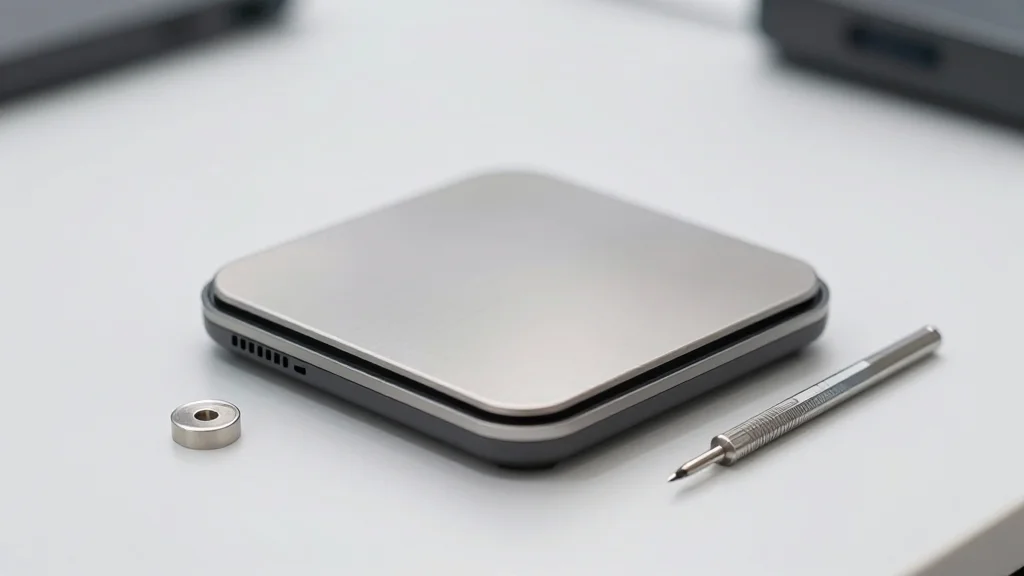
Digital Mini Scale ON BALANCE MTT-200 Reading 50g Weight Wrongly
Why It Matters
Accurate measurement tools are essential for culinary, laboratory, and hobbyist applications; a malfunctioning scale can lead to costly errors and erode consumer confidence in the brand.
Key Takeaways
- •Calibration requires a known 200 g weight for accurate reset
- •Low battery voltage often causes drift in digital scale readings
- •Clean load cell and ensure no debris interferes with sensor
- •Follow the manual’s zeroing procedure before any calibration
- •If issues persist, pursue warranty service or replacement
Pulse Analysis
Digital pocket scales like the ON BALANCE MTT-200 are popular for their portability and precision, but they rely on a delicate load‑cell sensor that can be affected by power, environment, and user handling. When a scale consistently reports an incorrect weight, the first suspect is often insufficient battery power; even a slight voltage drop can skew the analog‑to‑digital conversion, producing readings that are uniformly offset. Replacing alkaline cells with fresh, high‑capacity batteries is a quick, low‑cost fix that resolves many drift issues.
The next step involves proper calibration, which typically requires a certified reference weight matching the scale’s calibration setting—in this case, 200 g. Without that exact mass, the device cannot establish an accurate baseline, leading to persistent errors like the 50 g misreading reported. Users can purchase calibrated stainless‑steel or ceramic weights from scientific supply stores; these are inexpensive and ensure compliance with the scale’s specifications. Additionally, cleaning the load‑cell platform and confirming that the scale sits on a stable, vibration‑free surface eliminates mechanical interference that can further degrade accuracy.
If battery replacement and correct calibration do not restore proper function, the fault may lie within the load‑cell circuitry or internal firmware. At this stage, consulting the manufacturer’s troubleshooting guide or contacting customer support is advisable, especially if the unit is still under warranty. Many brands offer replacement parts or a full device swap for defective units, protecting consumers from the hidden costs of inaccurate measurements in cooking, jewelry appraisal, or laboratory work. Understanding these steps helps users maintain measurement integrity and reinforces confidence in digital weighing technology.
Digital mini scale ON BALANCE MTT-200 reading 50g weight wrongly
Comments
Want to join the conversation?
Loading comments...