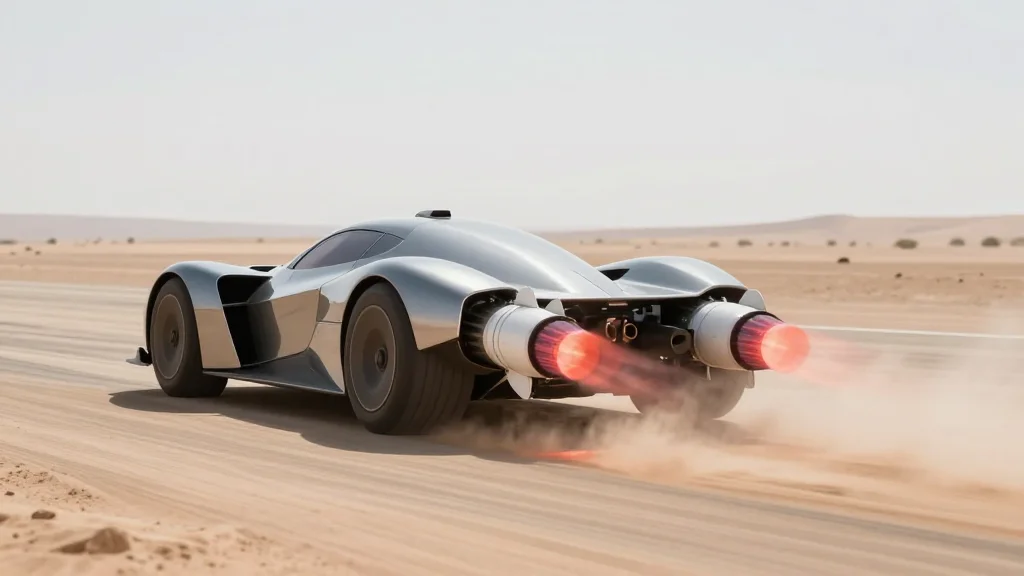
Dreame Unveils Rocket‑Powered Nebula NEXT 01, Claims 0‑60 Mph in 0.9 Seconds

Companies Mentioned
Why It Matters
The Nebula NEXT 01 illustrates how consumer‑tech companies are using extreme performance prototypes to break out of crowded markets and attract investor interest. If Dreame can demonstrate a functional rocket‑boosted EV, it could reshape expectations for acceleration benchmarks and spark a wave of experimentation with non‑traditional propulsion methods in the passenger‑car segment. Even if the claim proves unrealistic, the episode highlights the tension between marketing hype and engineering feasibility that increasingly defines the consumer‑tech landscape. Companies that can balance spectacle with credible technology may gain a competitive edge, while those that overpromise risk reputational damage and regulatory scrutiny.
Key Takeaways
- •Dreame unveiled the Nebula NEXT 01 Jet Edition in San Francisco on April 29, 2026.
- •The vehicle claims 0‑60 mph in 0.9 seconds using dual solid‑rocket boosters delivering 100 kN of thrust.
- •Previous Dreame concept at CES produced 1,399 kW (1,876 hp) and 0‑100 km/h in 1.8 seconds.
- •Traction limits make sub‑1‑second 0‑60 times on normal roads physically doubtful.
- •Live testing and certification plans are pending; no pricing or production timeline disclosed.
Pulse Analysis
Dreame’s foray into rocket‑propelled EVs is less about immediate market entry and more about brand repositioning. By delivering a headline‑grabbing performance claim, the company forces the conversation away from its modest vacuum‑cleaner origins toward a future where it could be seen as a challenger in high‑tech mobility. Historically, firms like Dyson have attempted similar pivots—Dyson’s electric‑car project collapsed after years of R&D, but the effort kept the brand in the public eye as an innovator. Dreame appears to be learning from that playbook, opting for a demonstrator rather than a fully engineered product.
From a market perspective, the claim could pressure established EV manufacturers to explore hybrid propulsion concepts that blend electric torque with auxiliary thrust. While solid‑rocket boosters are unlikely to become mainstream due to safety and cost concerns, the underlying idea—using short‑burst high‑thrust systems for performance gains—might inspire niche solutions for drag racing or track‑only vehicles. Moreover, the episode underscores the growing importance of credibility in tech marketing; investors and consumers are increasingly skeptical of out‑of‑scale claims, especially when they clash with basic physics. Dreame’s next step—delivering verifiable test data—will determine whether this stunt translates into lasting strategic advantage or fades as another over‑hyped prototype.
In the short term, the Nebula NEXT 01 will serve as a litmus test for how much hype the consumer‑tech audience can tolerate before demanding substance. If Dreame can back its numbers with transparent testing, it may open doors to partnerships with aerospace firms or niche automotive startups seeking to integrate rocket‑based acceleration. If not, the company risks being relegated to the growing list of tech firms whose grand visions never materialize, potentially slowing its ambitions to become a global consumer‑electronics powerhouse.
Dreame Unveils Rocket‑Powered Nebula NEXT 01, Claims 0‑60 mph in 0.9 Seconds
Comments
Want to join the conversation?
Loading comments...