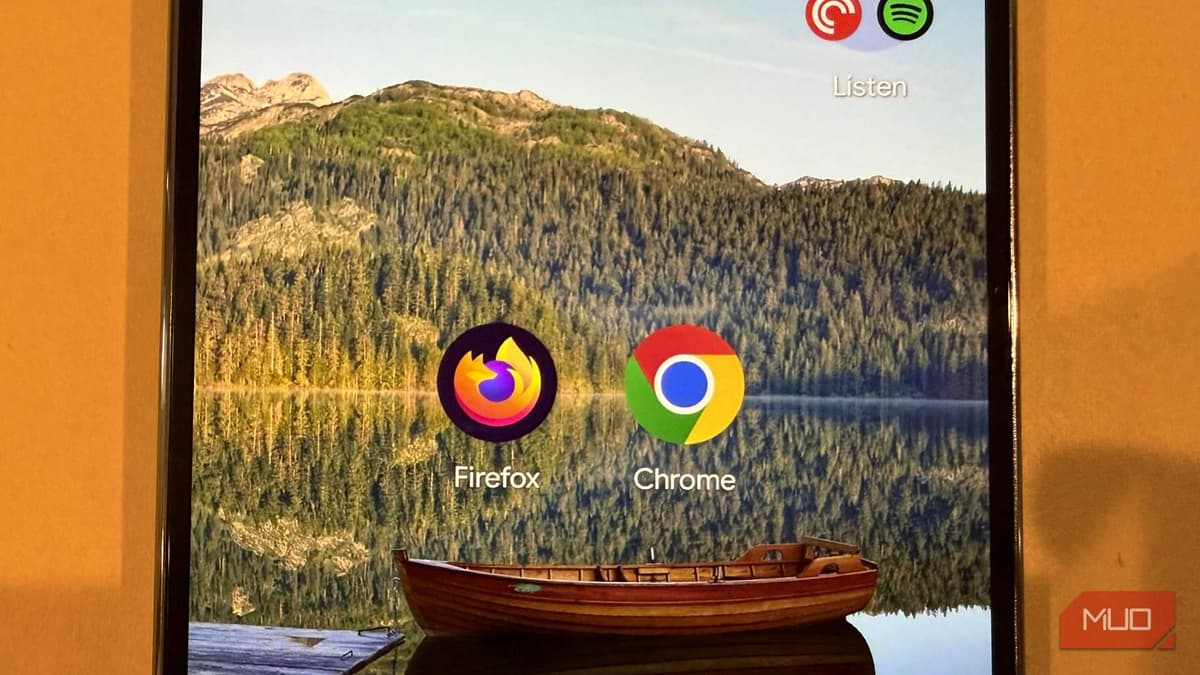
Firefox Does One Thing Chrome Simply Won't on Android
Companies Mentioned
Why It Matters
Firefox’s extension capability gives Android power users privacy, accessibility, and productivity tools unavailable in Chrome, potentially reshaping mobile browsing preferences. Enterprises can leverage these features to enforce security policies without abandoning Google’s ecosystem.
Key Takeaways
- •Firefox Android supports over 6,500 free extensions.
- •Chrome Android still lacks any extension support.
- •Extensions like AdGuard, Dark Reader, and Read Aloud enhance privacy and accessibility.
- •Firefox’s extension ecosystem offers ad blocking, dark mode, and audio tools.
- •Users keep Chrome for Google sync, use Firefox for specialized features.
Pulse Analysis
The Android browser market has long been dominated by Google Chrome, which ships pre‑installed on virtually every device and syncs seamlessly with Gmail, Drive, and other services. However, Chrome’s mobile version deliberately omits extension support, citing concerns over security vulnerabilities, memory consumption, and the difficulty of adapting desktop‑centric add‑ons to touch‑first interfaces. This limitation leaves power users without the ability to customize their browsing environment, a gap that Firefox has chosen to fill.
Firefox for Android leverages Mozilla’s long‑standing add‑on infrastructure, offering a catalog of more than 6,500 free extensions ranging from ad blockers like AdGuard to accessibility tools such as Read Aloud. These extensions not only enhance privacy by stripping trackers but also improve usability with dark‑mode enforcement and volume boosting. For professionals who rely on password managers, reverse‑image search, or site archiving, Firefox provides a one‑stop solution that can coexist with Chrome’s Google‑centric workflow, delivering a hybrid browsing strategy that maximizes both convenience and control.
From a business perspective, the ability to deploy extensions on mobile browsers opens new avenues for corporate IT policies and security compliance. Companies can mandate ad‑blocking or tracking‑removal extensions to reduce exposure to malicious content, while still allowing employees to use Chrome for its native Google Workspace integration. As user demand for customizable mobile experiences grows, Firefox’s extension model may pressure Google to reconsider its stance, potentially reshaping the competitive dynamics of Android browsing in the coming years.
Firefox does one thing Chrome simply won't on Android
Comments
Want to join the conversation?
Loading comments...