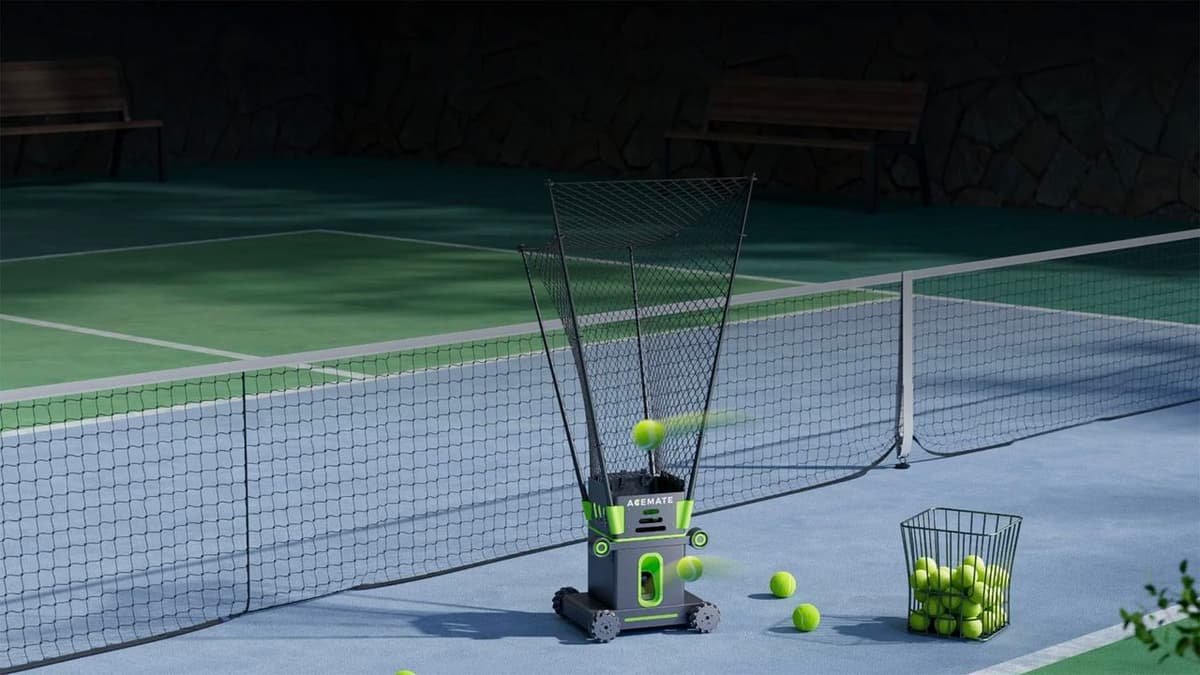
Forget Wimbledon, This Acemate Robot Is the Tech that Could Get Me Back Into Tennis
Companies Mentioned
Why It Matters
The robot brings AI‑driven, solo tennis training to consumers at a price point that challenges traditional ball machines, potentially reshaping the sports‑tech landscape and lowering barriers to high‑level practice.
Key Takeaways
- •Acemate robot launches balls up to 60 mph with spin and height variation
- •Built‑in 4K AI camera tracks player and provides coaching analytics
- •Robot can catch and reload up to 80 balls, extending practice sessions
- •Battery lasts roughly two hours, limiting continuous playtime
- •Price starts around $2,815, positioning it above traditional ball machines
Pulse Analysis
The tennis training market has long relied on static ball machines that simply feed balls at preset intervals, leaving players without realistic rally dynamics or feedback. As solo practice becomes increasingly important for busy athletes, manufacturers are turning to robotics and artificial intelligence to simulate a human opponent. This shift mirrors broader trends in sports technology, where data‑rich devices aim to deliver personalized coaching without the cost of a private instructor.
Acemate’s robot distinguishes itself by combining mobility, ball‑catching capability, and a 4K binocular camera that feeds AI algorithms for real‑time performance analysis. Users can adjust serve speed, spin, and interval through a Bluetooth‑linked app that also logs shot distribution and provides coach‑like insights. With a two‑hour battery and a capacity for 80 balls, the system offers extended sessions, though occasional refills are still required. Priced at roughly $2,815, it sits above conventional ball launchers but undercuts high‑end robotic coaches, positioning it as a premium yet accessible option for serious amateurs.
The introduction of such advanced robots signals a potential disruption in the tennis coaching ecosystem. As AI‑driven devices become more affordable, clubs and private players may opt for on‑demand, data‑centric training tools, reducing reliance on human coaches for basic skill development. Acemate’s upcoming padel variant suggests a broader strategy to capture emerging racket‑sport markets. Industry observers will watch how quickly consumers adopt these systems and whether manufacturers can refine ball‑catching reliability to deliver truly uninterrupted practice experiences.
Forget Wimbledon, this Acemate robot is the tech that could get me back into tennis
Comments
Want to join the conversation?
Loading comments...