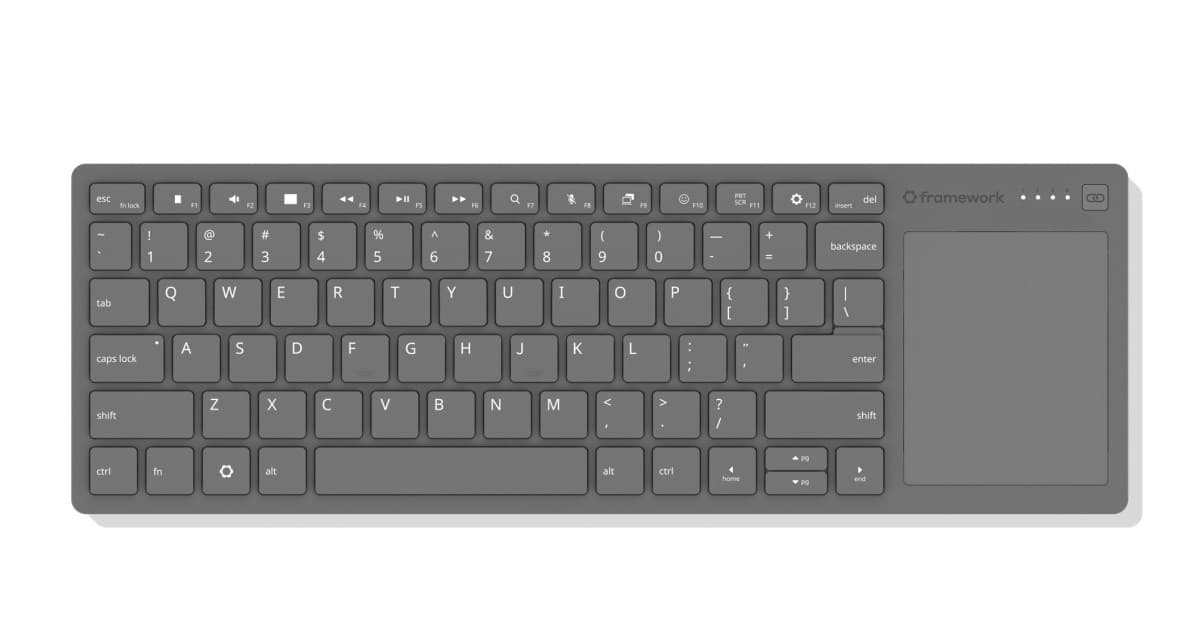
Framework Is Building a Better Couch Keyboard because Everyone Hates the Logitech One
Companies Mentioned
Why It Matters
By offering a modular, open‑source alternative to the entrenched K400, Framework could reshape the peripheral market for living‑room computing and empower DIY customization. This move reinforces the broader trend toward repairable, upgradable tech ecosystems.
Key Takeaways
- •Framework's couch keyboard uses Laptop 12 mechanical switches.
- •Nordic nRF54 radio enables low‑power Bluetooth to four hosts.
- •Open‑source ZMK firmware allows custom wireless keyboard designs.
- •USB‑A dongle and USB‑C cable offer flexible connectivity.
- •Launch slated for later 2026 alongside Framework Desktop.
Pulse Analysis
The couch‑keyboard niche has been dominated for nearly two decades by Logitech’s K400 series, a device that combines a full‑size keyboard with an integrated touchpad. While its convenience is undeniable, users frequently criticize its shallow key travel, bulky plastic chassis, and lack of upgrade paths. As streaming media and cloud‑based gaming become household staples, the demand for a more ergonomic, adaptable input solution has grown, creating an opening for challengers willing to rethink the form factor.
Framework’s entry leverages the proven mechanical switches from its Laptop 12, delivering a tactile experience that rivals traditional desktop keyboards. Powered by a Nordic nRF54 radio, the keyboard promises low‑energy Bluetooth connectivity to up to four hosts, a notable improvement over the single‑host limitation of many competitors. The inclusion of open‑source ZMK firmware and a publicly released control board invites hobbyists and OEMs to modify firmware, swap modules, or even create entirely new peripheral designs, aligning with the company’s modular philosophy.
If the product meets its performance promises, it could catalyze a shift toward open, customizable peripherals in the living‑room market. Enthusiasts may gravitate to a device that not only feels better but also integrates seamlessly with multiple devices—TVs, consoles, laptops—without sacrificing repairability. Competitors will likely feel pressure to add modular features or improve ergonomics, accelerating innovation across the broader keyboard ecosystem. Framework’s strategy underscores a growing consumer appetite for hardware that can evolve rather than become obsolete.
Framework is building a better couch keyboard because everyone hates the Logitech one
Comments
Want to join the conversation?
Loading comments...