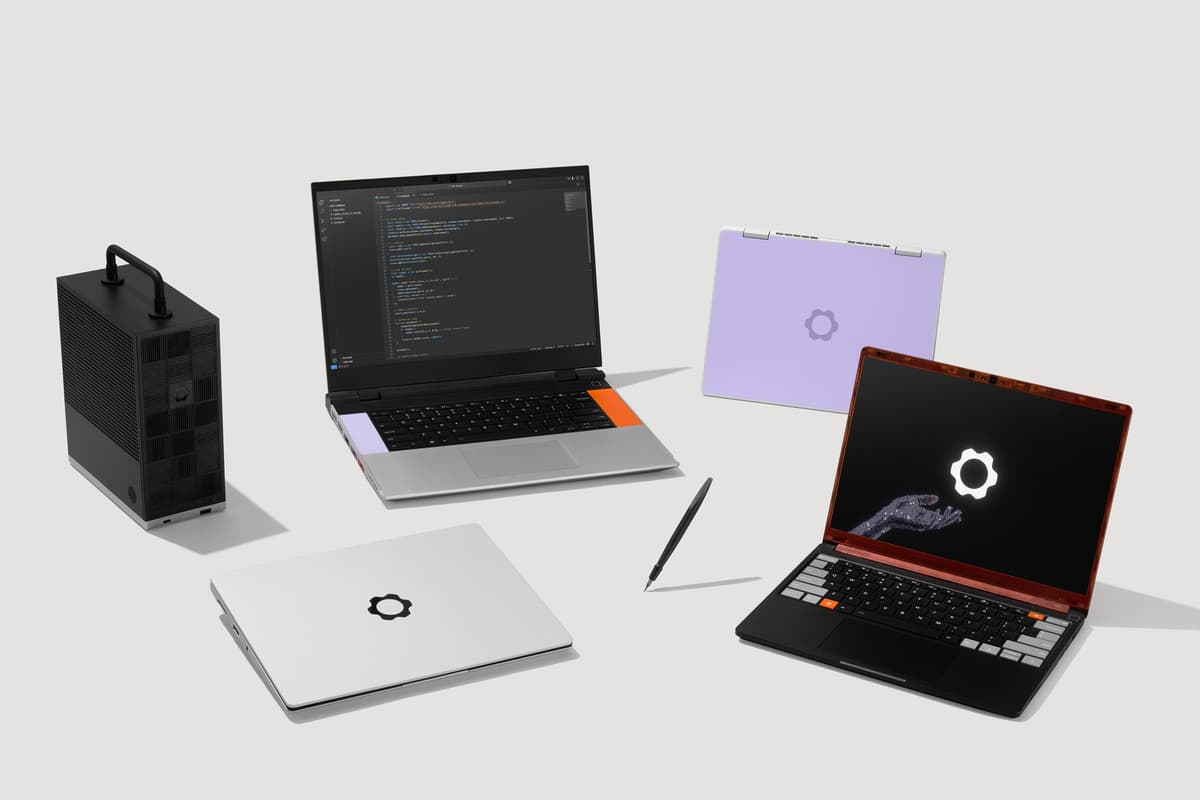
Framework Has a Better, More Take-Apartable Laptop
Why It Matters
The launch reinforces Framework’s push for high‑performance, repairable laptops, challenging the disposable‑by‑design model and giving professionals a sustainable alternative with Intel’s latest efficiency gains.
Key Takeaways
- •Framework 13 Pro starts at $1,199 DIY, $1,499 pre‑built
- •Intel Core Ultra 3 replaces AMD, boosting efficiency
- •Battery now exceeds 20 hours of 4K streaming
- •Modular design lets owners reuse mainboard, display, battery
- •New haptic touchpad and Dolby Atmos speakers added
Pulse Analysis
The Framework Laptop 13 Pro arrives as a clear evolution of the company’s repair‑first philosophy, pairing a 13.5‑inch 3K matte display with Intel’s third‑generation Core Ultra processor. The switch from AMD to Intel is framed as a leap in power efficiency, enabling a battery that delivers over 20 hours of 4K Netflix playback—roughly 12 hours more than its predecessor. At a starting price of $1,199 for a do‑it‑yourself kit and $1,499 for a fully assembled unit, the Pro also adds a haptic touchpad, Dolby Atmos speakers and Ubuntu certification, positioning it as a premium yet upgradable alternative to mainstream ultrabooks.
Framework’s emphasis on modularity directly addresses growing consumer fatigue with planned obsolescence. By allowing users to replace ports, upgrade memory, swap the mainboard, or even keep the same battery and display across generations, the laptop extends its usable lifespan and reduces electronic waste. This approach resonates with enterprises seeking lower total‑ownership costs and environmentally conscious buyers, while also putting pressure on incumbents such as Apple and Dell to offer more serviceable designs. The 20‑hour battery life further differentiates the Pro in a market where endurance often dictates productivity.
The San Francisco event also hinted at a broader ecosystem strategy. An OCuLink developer kit will let enthusiasts attach external graphics solutions, expanding the 16‑inch model’s performance ceiling, while a wireless mechanical keyboard prototype—built on the open‑source ZMK firmware—invites community contributions. By opening hardware interfaces and software tooling, Framework cultivates a developer‑friendly environment that could accelerate third‑party accessories and custom configurations. If the company can sustain this open‑hardware momentum, it may set a new standard for collaborative laptop innovation.
Framework Has a Better, More Take-Apartable Laptop
Comments
Want to join the conversation?
Loading comments...