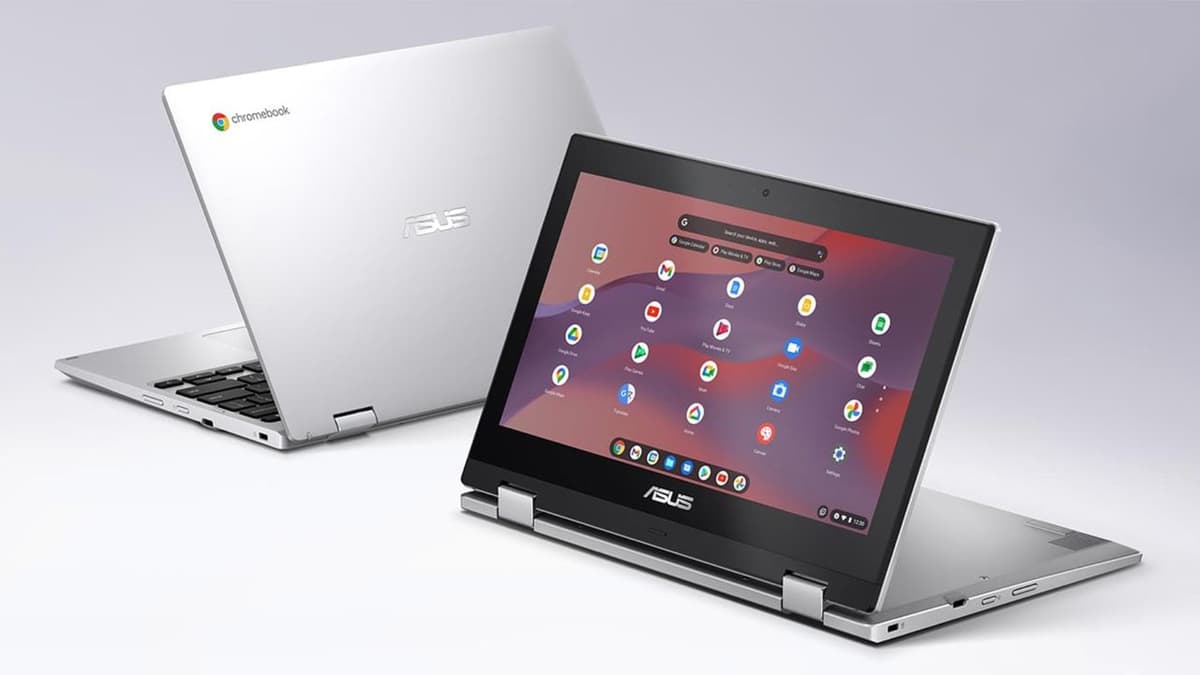
Google Chromebook Marks Its 15th Anniversary — Slow Feature Rollouts and a Canceled Steam Beta Leave It Largely Stuck in Classrooms
Companies Mentioned
Why It Matters
Chromebooks power a multi‑billion‑dollar education hardware market, yet their limited consumer reach underscores Google’s difficulty expanding ChromeOS beyond the classroom.
Key Takeaways
- •Chromebooks hold ~70% share of US K‑12 device market
- •Google Play Store arrived on Chromebooks in 2016, later than rivals
- •Linux app support added in 2018, expanding developer ecosystem
- •Steam gaming beta launched 2019, discontinued in 2024
- •2023 introduced 10‑year OS update guarantee for new models
Pulse Analysis
When Google and hardware partners Acer and Samsung launched the first Chromebooks in 2011, they entered a market still haunted by slow, low‑cost Windows netbooks. By emphasizing cloud‑first design, fast boot times and minimal local storage, Chromebooks quickly proved a perfect fit for school districts seeking affordable, easy‑to‑manage devices. Over the past decade the platform has captured roughly 70% of the U.S. K‑12 market, driven by low acquisition costs, centralized admin tools, and rugged form factors that survive classroom mishaps. This entrenched position has turned Chromebooks into a reliable revenue stream for Google and its OEM partners.
Despite that success, ChromeOS has lagged in the consumer arena. Core features that could have broadened appeal arrived years after competitors: the Google Play Store in 2016, Linux app support in 2018, and a Steam gaming beta in 2019, which was shuttered in 2024 after limited uptake. High‑end experiments like the 2017 Pixelbook failed to change perception that Chromebooks are “budget‑only” devices. The delayed feature set, combined with a historically short software‑support window, left mainstream users gravitating toward Windows laptops and macOS devices that offered richer ecosystems and longer update cycles.
The 2023 commitment to a ten‑year OS‑update guarantee marks a strategic pivot, aiming to cement ChromeOS’s reliability narrative and reassure IT administrators of long‑term viability. For education buyers, this translates into lower total‑cost‑of‑ownership and fewer device replacements. However, expanding beyond schools will likely require a more aggressive hardware push—such as premium designs with higher‑resolution displays and stronger performance—and tighter integration with Android and Linux ecosystems. If Google can accelerate those initiatives, Chromebooks could evolve from a classroom workhorse into a credible alternative for cost‑conscious consumers and small businesses alike.
Google Chromebook marks its 15th anniversary — slow feature rollouts and a canceled Steam beta leave it largely stuck in classrooms
Comments
Want to join the conversation?
Loading comments...