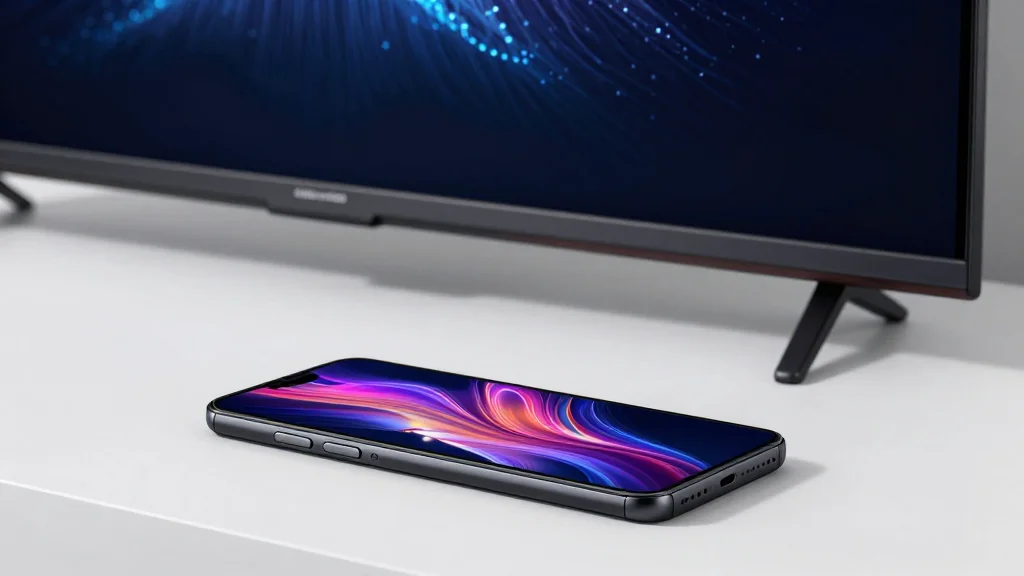
Google Expands Gemini AI to Android and Google TV with Notebooks, Image and Video Generators

Companies Mentioned
Why It Matters
By bringing Gemini’s notebook organization and file‑export functions to Android, Google is turning smartphones into full‑featured AI research assistants, potentially reshaping how users gather, synthesize and share information on the go. The TV rollout introduces generative AI directly into the living‑room, giving consumers creative tools that previously required a computer or specialized software. Together, these moves deepen Google’s foothold in the consumer AI market, challenging rivals like Apple’s Siri and Amazon’s Alexa, and set a new baseline for AI integration in everyday devices. The expansion also highlights Google’s strategy of leveraging its existing hardware partners—such as TCL for Google TV—to pilot advanced features before a wider launch. This approach reduces risk while gathering real‑world usage data that can inform future iterations of Gemini across the Android ecosystem and beyond.
Key Takeaways
- •Gemini notebooks are now available to all Android users, free and paid, after rollout from early 2026.
- •Free Android users can add up to 50 sources per notebook; paid subscribers can add 100‑600 sources.
- •Gemini now supports exporting responses as PDF, Word, PowerPoint, Markdown, RTF and more.
- •Google TV update adds Nano Banana image generation and Veo video generation, first on TCL devices in the US.
- •YouTube Shorts row and enhanced Google Photos voice search debut on Google TV, with global rollout planned.
Pulse Analysis
Google’s staggered deployment of Gemini across Android and Google TV reflects a calculated push to embed AI deeper into consumer workflows. On mobile, the notebook feature transforms the phone from a passive query tool into a structured research hub, aligning with the growing demand for AI‑assisted knowledge management. By offering a free tier with limited source capacity, Google lowers the barrier to entry while incentivizing upgrades to its paid AI subscription—a classic freemium model that could drive recurring revenue as users outgrow the basic limits.
On the television front, the introduction of Nano Banana and Veo marks a bold experiment: turning the living‑room into a creative studio. This differentiates Google TV from competitors that focus primarily on content recommendation. If users adopt these generative tools for casual content creation—such as customizing holiday slideshows or generating quick visual memes—Google could capture a new segment of entertainment consumption that blurs the line between viewing and producing. The partnership with TCL, a major TV OEM, provides a controlled launch environment, allowing Google to refine the UI and performance before scaling to other manufacturers.
Strategically, the dual‑device rollout reinforces Google’s ecosystem narrative, where data and AI capabilities flow seamlessly from phone to TV. This could increase user lock‑in, as the convenience of a unified Gemini experience may deter migration to rival platforms. However, the rollout also raises privacy and moderation questions, especially with on‑device generation of images and videos. Google will need robust safeguards to prevent misuse, a challenge that will shape regulatory scrutiny and public perception. Overall, the Gemini expansion positions Google as a front‑runner in consumer AI, setting a higher bar for integrated, cross‑device intelligence.
Google expands Gemini AI to Android and Google TV with notebooks, image and video generators
Comments
Want to join the conversation?
Loading comments...