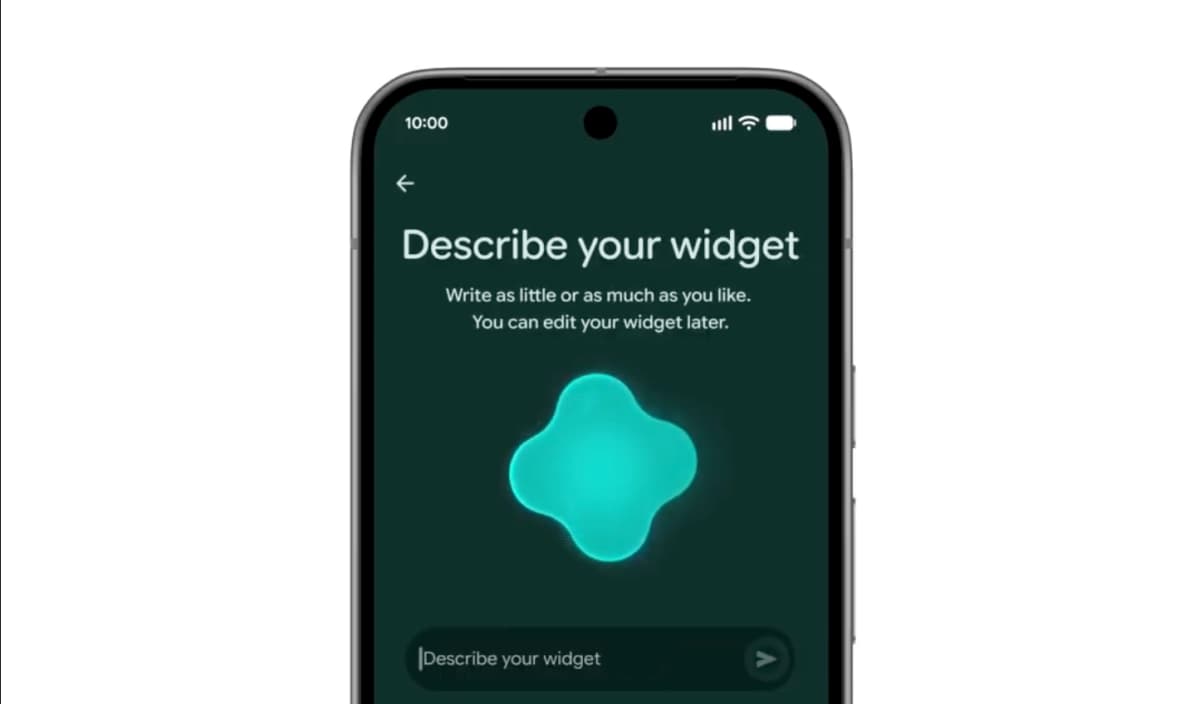
Google’s ‘Create My Widget’ Feature Will Let You Vibe-Code Your Own Widgets

Companies Mentioned
Why It Matters
By lowering the technical barrier to widget creation, Google aims to boost Android engagement and differentiate its AI‑first roadmap from rivals, while expanding Gemini’s foothold across everyday user interactions.
Key Takeaways
- •Create My Widget lets users design widgets via natural language
- •Feature launches on Samsung Galaxy and Pixel devices this summer
- •Gemini integrates Gmail, Calendar, and web data for personalized dashboards
- •AI-generated widgets simplify daily planning and niche info needs
- •Part of Google’s broader Gemini Intelligence rollout for Android
Pulse Analysis
Google’s "Create My Widget" feature marks a significant shift in how Android users personalize their devices. Leveraging Gemini’s large‑language‑model capabilities, the system translates a simple text prompt—such as a request for high‑protein meal ideas or a cyclist‑focused weather readout—into a fully functional home‑screen widget. The AI not only formats the visual layout but also aggregates real‑time data from Google services, web sources, and third‑party APIs, delivering a single, dynamic dashboard. Launching first on Samsung Galaxy and Pixel phones this summer, the rollout aligns with Google’s strategy to embed generative AI deeper into the mobile OS.
From a business perspective, the feature could reshape Android’s value proposition. Apple’s iOS currently offers limited widget customization, relying on developers to supply pre‑built options. By democratizing widget creation, Google empowers non‑technical users to tailor their experience, potentially increasing daily engagement metrics and ad‑supported services tied to personalized content. The ease of use also opens a new channel for Google’s ecosystem partners, who can expose data feeds that Gemini can surface on demand, blurring the line between native functionality and third‑party extensions.
"Create My Widget" is part of a broader Gemini Intelligence push that includes AI‑driven autofill, voice dictation for Gboard, and deeper integration across Google Workspace. While the convenience is clear, the rollout raises privacy considerations, as the model accesses personal emails, calendar events, and location data to build dashboards. Google’s emphasis on on‑device processing and transparent consent will be crucial to maintaining user trust. Looking ahead, the same underlying technology could evolve into more complex AI assistants, automated workflow generators, or even bespoke app prototypes, cementing Gemini as a cornerstone of Google’s next‑generation Android experience.
Google’s ‘Create My Widget’ feature will let you vibe-code your own widgets
Comments
Want to join the conversation?
Loading comments...