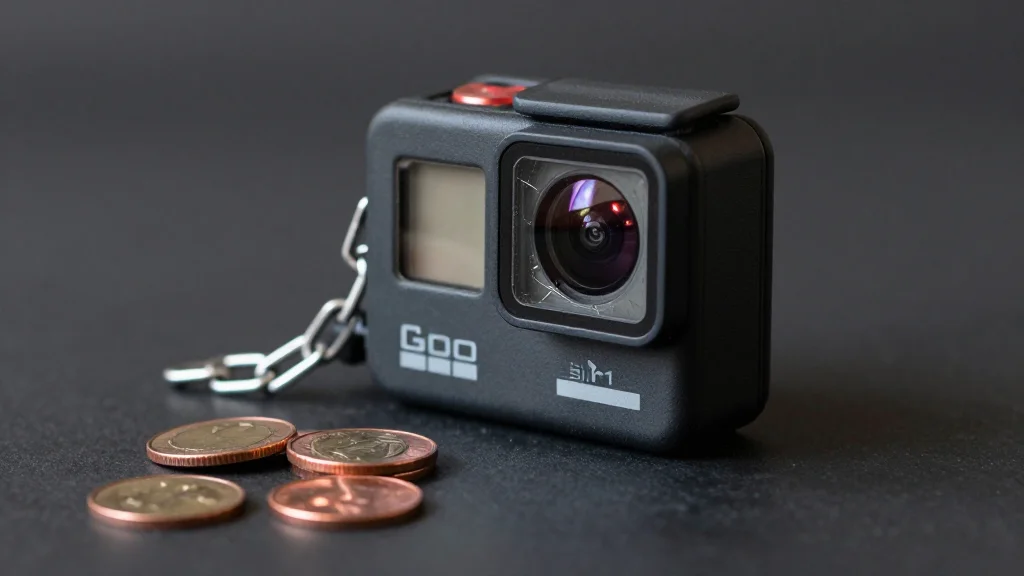
GoPro Faces Bankruptcy as Sales Plunge and Memory Costs Surge

Companies Mentioned

Why It Matters
GoPro’s crisis underscores how supply‑chain shocks, especially in memory chips, can destabilize even iconic consumer‑tech brands. The surge in flash‑memory prices, driven by AI workloads, has exposed the vulnerability of hardware companies that rely on thin margins and limited bargaining power. A potential bankruptcy would also remove a key differentiator in the action‑camera space, potentially consolidating market share among larger players and reducing consumer choice. The situation serves as a cautionary tale for other niche hardware firms that have bet on subscription revenue and direct‑to‑consumer models without diversifying supply sources. Investors and executives will likely reassess risk management strategies around component sourcing, debt covenants, and the need for flexible financing in an environment where macro‑level technology trends can rapidly alter cost structures.
Key Takeaways
- •GoPro filed a June 1 8‑K warning of "substantial doubt" about its ability to continue operating.
- •Revenue fell 19% YoY to $651.5 million; first‑quarter gross margin dropped to 4.5% from 32.3% a year earlier.
- •Flash‑memory prices spiked 80%‑115% in March 2026, leading to a $24.5 million purchase‑commitment penalty.
- •Cash balance at end‑2025 was $49.7 million; the firm faces covenant breaches with Wells Fargo and Farallon Capital.
- •Board approved a restructuring plan cutting ~23% of staff and is exploring a sale amid possible bankruptcy.
Pulse Analysis
GoPro’s predicament illustrates the convergence of three disruptive forces: commoditization of camera technology, aggressive competition from drone and 360‑camera makers, and an external memory‑chip shortage fueled by AI. The company’s historic advantage—high‑quality, rugged hardware—has been eroded by smartphones that now deliver comparable image quality for casual users, while DJI’s dominance in the drone market has siphoned off premium action‑camera customers. GoPro’s pivot to a subscription model provided a modest revenue cushion, but flat subscription numbers ($106.3 million) were insufficient to offset the steep decline in hardware sales.
The memory‑chip surge is a wild‑card that few consumer‑electronics firms anticipated. AI training workloads have driven data‑center demand for high‑bandwidth flash, pushing prices up by as much as 115% and forcing suppliers to prioritize enterprise contracts over smaller OEMs. GoPro’s $24.5 million penalty reflects a contractual rigidity that left it exposed when the market turned. Companies with larger scale, such as Apple or Samsung, can absorb such shocks, but GoPro’s thin cash runway ($49.7 million) leaves little room for maneuver.
Looking ahead, GoPro’s most viable path may be a strategic sale to a larger consumer‑electronics conglomerate that can integrate its brand and technology into a broader ecosystem, thereby achieving economies of scale in component sourcing. Absent that, a Chapter 11 filing could see its patents and the Mission 1 line sold off to the highest bidder, potentially revitalizing the brand under new ownership. Either outcome will reshape the action‑camera niche, prompting remaining players to either double down on differentiation or exit the segment altogether.
GoPro Faces Bankruptcy as Sales Plunge and Memory Costs Surge
Comments
Want to join the conversation?
Loading comments...