
Why It Matters
By leveraging built‑in accelerometers, the app offers a hardware‑free, potentially more accurate tuning solution, expanding the utility of smartphones for musicians and lowering entry barriers for casual players.
Key Takeaways
- •Uses phone accelerometer instead of microphone for tuning
- •Detects pitch from strongest vibration axis, reducing ambient noise
- •Requires motion permission; optimal on Android high‑rate IMU
- •Eliminates need for external hardware, uses existing sensors
- •Scalable to other stringed instruments with minor software tweaks
Pulse Analysis
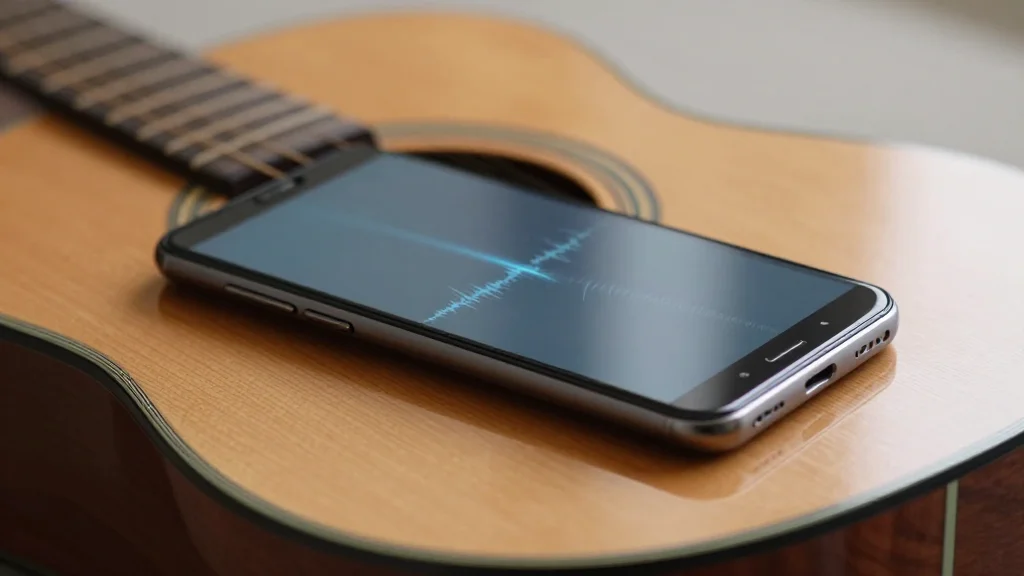
The rise of sensor‑rich smartphones has opened doors for novel audio‑processing tools, and this guitar tuner exemplifies that trend. Rather than relying on a microphone to capture sound waves, the app measures the physical vibration of the instrument’s body through the phone’s inertial measurement unit (IMU). This method captures the raw mechanical energy of each string, providing a direct link to pitch that is less susceptible to room acoustics, background chatter, or microphone placement errors. For musicians, especially those practicing in noisy environments, the accelerometer‑based approach can deliver faster, more reliable tuning feedback.
From a technical standpoint, the app records three‑axis acceleration data as the phone contacts the guitar. It computes the vector magnitude |a| and identifies the axis with the highest amplitude, which typically corresponds to the vibrating string. An alias‑correction algorithm then maps the sampled frequency to the actual musical note, compensating for the limited sampling rates of consumer IMUs. Android devices with high‑rate IMU capabilities (often 200 Hz or higher) provide the most accurate results, while iOS users may experience reduced precision due to lower sensor refresh rates. The requirement for motion permission is a minor hurdle, but it ensures the app can access the necessary sensor streams.
Market implications are significant. By turning any compatible smartphone into a professional‑grade tuner, the app reduces the need for dedicated hardware, appealing to budget‑conscious hobbyists and educators. Its sensor‑first design could be extended to violins, ukuleles, or even percussive instruments, creating a unified tuning platform across the music ecosystem. However, adoption will depend on user awareness of the permission model and the consistency of IMU performance across device generations. As developers refine sensor‑fusion techniques, we can expect a broader class of music‑tech applications that harness existing hardware for specialized audio tasks, reshaping how musicians interact with their tools.
Guitar tuner that uses phone accelerometer
Comments
Want to join the conversation?
Loading comments...