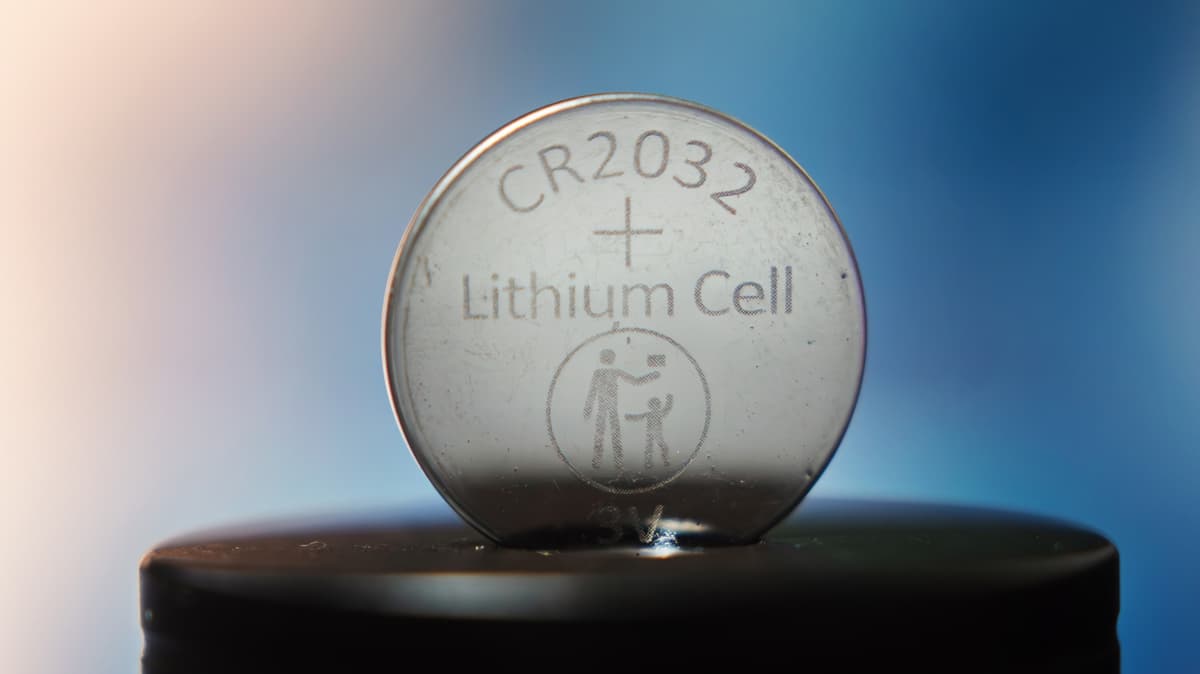
Here's How To Tell If A CR2032 Battery Is Bad
•March 1, 2026
0


Why It Matters
Accurate CR2032 testing prevents unexpected device failures and saves consumers time and money, especially for security‑critical items like key fobs and tracking tags.
Key Takeaways
- •CR2032 nominal voltage 3 V, drops below 2.7 V when dead.
- •Dedicated testers cost $15‑$19, show status instantly.
- •Multimeter measurement requires 20 V DC setting.
- •New cells read 3.0‑3.3 V; 2.7‑2.9 V still usable.
- •Battery failure can affect AirTag, key fob performance.
Pulse Analysis
CR2032 button cells power a surprisingly wide range of everyday gadgets, from Bluetooth trackers to automotive key fobs. Their chemistry delivers a stable 3‑volt output for most of their lifespan, then drops sharply, often catching users off guard. Understanding this voltage curve is essential for anyone who relies on these tiny power sources, because a sudden loss of signal can compromise security, convenience, or even safety in critical applications.
For quick, reliable diagnostics, dedicated CR2032 testers have become popular. Priced between $15 and $19, devices like the LaCrosse 911‑65557‑INT or the Dlyfull universal checker display a clear pass/fail indicator and support multiple battery formats. Their plug‑and‑play design eliminates guesswork, making them ideal for non‑technical users who need an instant readout without calibrating a meter. The low cost and ease of use also encourage regular maintenance, extending the functional life of devices that depend on consistent voltage.
When a dedicated tester isn’t on hand, a standard digital multimeter offers a versatile alternative. By selecting the 20 V DC range and placing the red lead on the positive side and the black lead on the negative, users can read the exact voltage. Readings above 3.0 V confirm a fresh cell, while values between 2.7 V and 2.9 V indicate remaining capacity. Below 2.7 V, the battery should be replaced. This method not only verifies CR2032 health but also familiarizes users with broader electrical troubleshooting, adding value beyond a single battery check.
Here's How To Tell If A CR2032 Battery Is Bad
0
Comments
Want to join the conversation?
Loading comments...