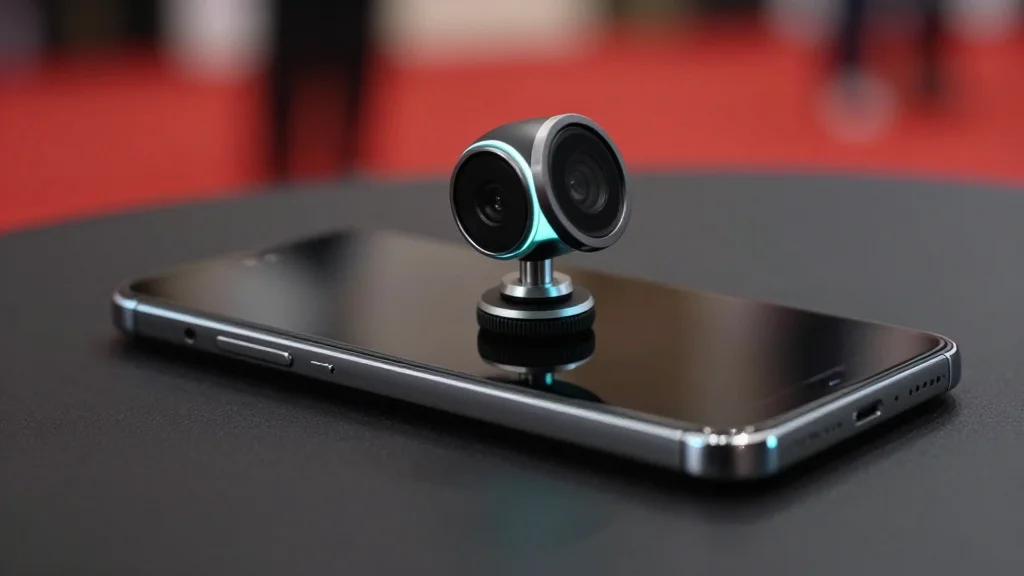
Honor Unveils Robot Phone with 200MP Gimbal Camera, Targets Q3 2026 Launch

Companies Mentioned
Why It Matters
The Robot Phone could reshape consumer expectations for mobile imaging by making hardware‑level stabilization a standard feature rather than an aftermarket accessory. Content creators would gain a single device capable of producing gimbal‑smooth footage without the bulk of separate rigs, potentially accelerating the shift toward mobile‑first video production. If successful, Honor’s approach may force other OEMs to explore mechanical camera solutions, sparking a new wave of innovation in a segment that has been dominated by sensor‑size and software improvements. The move also underscores China’s growing ambition to compete not just on price but on high‑end, differentiated technology in the global smartphone arena.
Key Takeaways
- •Honor’s Robot Phone integrates a 3‑axis motorized gimbal and a 200 MP primary sensor
- •Launch window confirmed for Q3 2026 (July‑September) at Cannes Film Festival
- •Device incorporates ARRI Image Science and a proprietary 4DoF robotic gimbal system
- •Targets both flagship smartphone market and dedicated handheld camera segment (e.g., DJI Osmo Pocket 4)
- •CEO Li Jian positioned the phone as the world’s first "robot smartphone," aiming to empower Chinese cinema
Pulse Analysis
Honor’s Robot Phone arrives at a moment when the premium smartphone market is saturated with incremental camera upgrades. By introducing a mechanical gimbal, Honor is attempting a categorical leap rather than a marginal improvement. Historically, hardware innovations that add moving parts—such as rotating cameras on early flip phones—have struggled with durability and cost. However, the partnership with ARRI gives the device credibility among professional creators, and the integration of AI‑driven tracking could mitigate the typical learning curve associated with gimbals.
From a competitive standpoint, the Robot Phone forces rivals to confront a new benchmark. Apple and Google have doubled down on computational photography, but they lack a physical stabilization system. If Honor can deliver a reliable, mass‑produced gimbal at a price point comparable to flagship phones, it could erode the niche market held by dedicated handheld stabilizers, compelling companies like DJI to rethink product positioning or to integrate deeper software ties with smartphone ecosystems.
Looking ahead, the success of the Robot Phone will hinge on three factors: manufacturing yield of the gimbal mechanism, software integration that makes the hardware intuitive, and consumer willingness to pay a premium for a feature that traditionally required separate gear. Should Honor meet these challenges, it may trigger a broader industry trend where smartphones become the default tool for on‑the‑go cinematography, blurring the line between mobile devices and professional camera rigs.
Honor Unveils Robot Phone with 200MP Gimbal Camera, Targets Q3 2026 Launch
Comments
Want to join the conversation?
Loading comments...