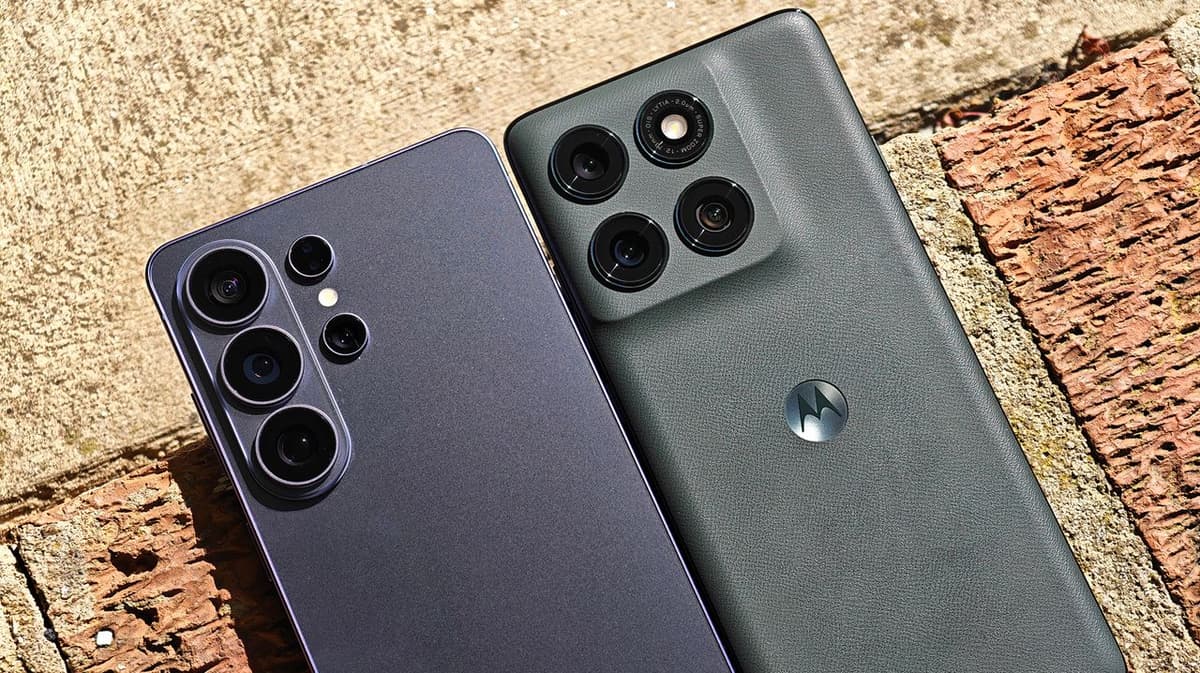
Horizon Lock on the Galaxy S26 Ultra Is Amazing, but Motorola Did It First. Here's How They Compare
Companies Mentioned
Why It Matters
The feature lets users capture steady, horizon‑aligned video without expensive rigs, influencing consumer preference for phones that combine AI stabilization with affordable pricing. As video content dominates social media, manufacturers that democratize high‑quality stabilization gain a competitive edge.
Key Takeaways
- •Motorola introduced Horizon Lock on budget Edge 2025 at $549
- •Samsung's Horizontal Lock maintains QHD video at 30 FPS
- •Galaxy S26 Ultra gives clearer footage than Edge in low light
- •Feature relies on fused main and ultrawide sensors plus gyroscope data
- •Higher‑end Motorola Razr Ultra matches Samsung's quality with Horizon Lock
Pulse Analysis
The ability to keep video oriented while the camera moves—often marketed as Horizon Lock or Horizontal Lock—has moved from a niche gimmick to a mainstream expectation for premium smartphones. Motorola pioneered the feature on its Edge 2025, a mid‑range device priced around $549, demonstrating that sophisticated AI‑driven stabilization can be delivered without a flagship price tag. Samsung, meanwhile, reserved a comparable implementation for the Galaxy S26 Ultra, a high‑end model costing between $1,099 and $1,300, positioning the technology as a differentiator in its premium lineup.
Both implementations fuse data from the main and ultrawide lenses with gyroscope and accelerometer inputs, allowing the software to infer the horizon line and lock the frame. Samsung pushes the output to QHD (2560 × 1440) at 30 fps, while Motorola caps its Edge model at 1080p, resulting in a noticeable quality gap, especially under low‑light or rapid motion. However, the Razr Ultra 2025, priced similarly to the S26 Ultra, narrows that gap, offering Horizon Lock performance that rivals Samsung’s, highlighting the importance of sensor hardware in delivering premium video quality.
The democratization of horizon‑locking video is likely to accelerate as manufacturers recognize its appeal to content creators and casual users alike. As AI‑based scene understanding becomes more efficient, we can expect future phones to deliver higher resolutions, smoother frame rates, and reduced artifacting even on mid‑tier devices. This trend pressures competitors to bundle advanced stabilization across broader product ranges, potentially reshaping the smartphone video market and influencing buying decisions where video quality and price‑performance are key factors.
Horizon Lock on the Galaxy S26 Ultra is amazing, but Motorola did it first. Here's how they compare
Comments
Want to join the conversation?
Loading comments...