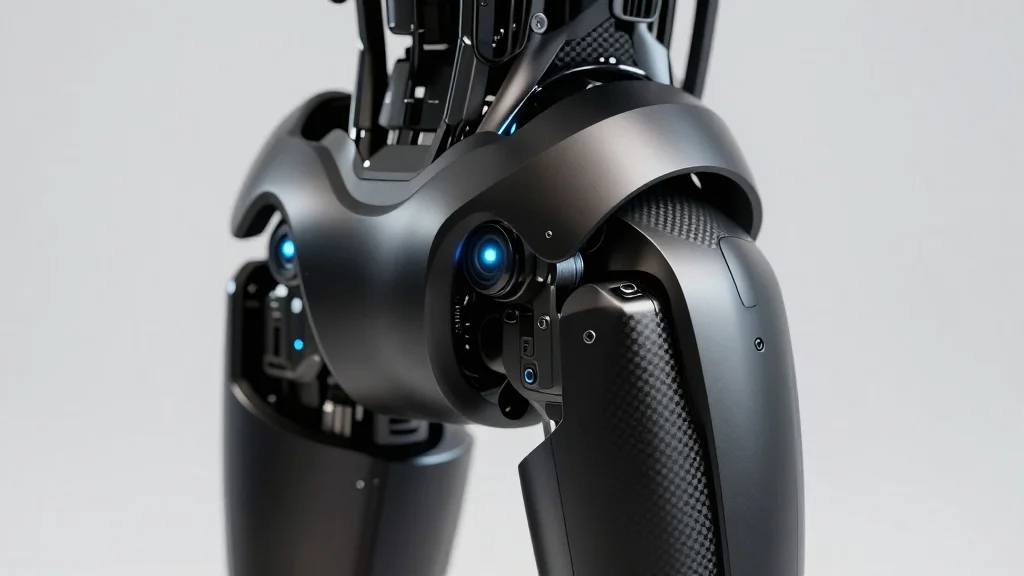
Hypershell X Series Exoskeleton Debuts AI‑Driven Motion Control for Consumers

Companies Mentioned
Why It Matters
The X Series marks a turning point for consumer wearables by introducing AI‑driven motion assistance that rivals industrial robotics in responsiveness and efficiency. By lowering the physiological cost of prolonged activity, the technology could expand the market for active‑lifestyle gear and create new demand among users who previously avoided powered assistance due to bulk or complexity. Certification by TÜV Rheinland and SGS also sets a benchmark for safety standards in a category that has struggled with regulatory uncertainty. As more consumers encounter AI‑enhanced exoskeletons, expectations for performance, comfort and reliability will rise, pressuring rivals to adopt similar AI architectures or risk obsolescence.
Key Takeaways
- •Three‑model X Series exoskeletons launch with HyperIntuition AI across all tiers
- •0.31‑second response time, 64 % faster than previous generation
- •Up to 39.2 % lower oxygen consumption and 42.7 % lower heart rate during varied terrain
- •M‑One Ultra motor delivers 1,000 W peak power, 22 N·m torque, 90 % energy conversion efficiency
- •First consumer exoskeleton range certified by TÜV Rheinland and SGS
Pulse Analysis
Hypershell’s decision to democratize AI motion control reflects a broader shift in consumer tech toward embedded intelligence that was once confined to niche industrial applications. The company’s modular hardware platform, combined with a unified software stack, reduces development costs and accelerates iteration cycles, giving it a competitive edge over rivals that rely on fragmented sensor‑fusion pipelines.
Historically, exoskeletons have been hampered by weight, limited battery life and clunky control algorithms. HyperIntuition’s end‑to‑end approach, inspired by autonomous vehicle perception systems, directly addresses these pain points by eliminating intermediate processing steps. The resulting latency reduction not only feels more natural to users but also translates into measurable physiological benefits, a claim supported by third‑party testing. If these performance gains hold up in real‑world deployments, we could see a rapid expansion of use cases beyond recreation, including warehouse logistics and assisted rehabilitation.
Looking ahead, the market will likely see a cascade of AI‑centric exoskeleton offerings as manufacturers scramble to match Hypershell’s benchmark. Pricing will be a decisive factor; without transparent cost data, the X Series could remain a premium niche. However, the dual‑battery architecture and scalable control system suggest that economies of scale are on the horizon. Investors and analysts should monitor early adoption rates and the outcomes of Hypershell’s field trials, as they will indicate whether AI‑enabled wearables can achieve mainstream penetration.
Hypershell X Series Exoskeleton Debuts AI‑Driven Motion Control for Consumers
Comments
Want to join the conversation?
Loading comments...