I Finally Used a High-End Portable Hotspot on Holiday – and I Get the Hype, but Still Not the Price
Companies Mentioned
Why It Matters
The review underscores the trade‑off between reliable multi‑device connectivity and the high total cost of ownership, a key consideration for businesses equipping mobile workforces. It also signals market pressure for more affordable unlimited eSIM plans in the portable hotspot segment.
Key Takeaways
- •Nighthawk M7 5G retails around $614, targeting high‑budget travelers
- •20 GB 30‑day eSIM plan costs about $45, higher than phone‑only options
- •Device delivers stable Wi‑Fi whenever any 5G signal is available
- •No connectivity in zero‑signal zones; cannot generate network from nothing
- •Useful for teams sharing bandwidth for image or video work while traveling
Pulse Analysis
The portable hotspot market has accelerated as 5G coverage expands, yet most consumer‑grade devices remain inexpensive and single‑device focused. Enterprise‑grade solutions like Netgear’s Nighthawk M7 5G fill a niche for professionals who require a constant Wi‑Fi environment across laptops, tablets, and IoT gear. By bundling a 5G modem with a Wi‑Fi 7 router and a unified management app, Netgear positions the M7 as a premium alternative to ad‑hoc phone tethering, justifying its $614 price tag for users who value network stability over cost.
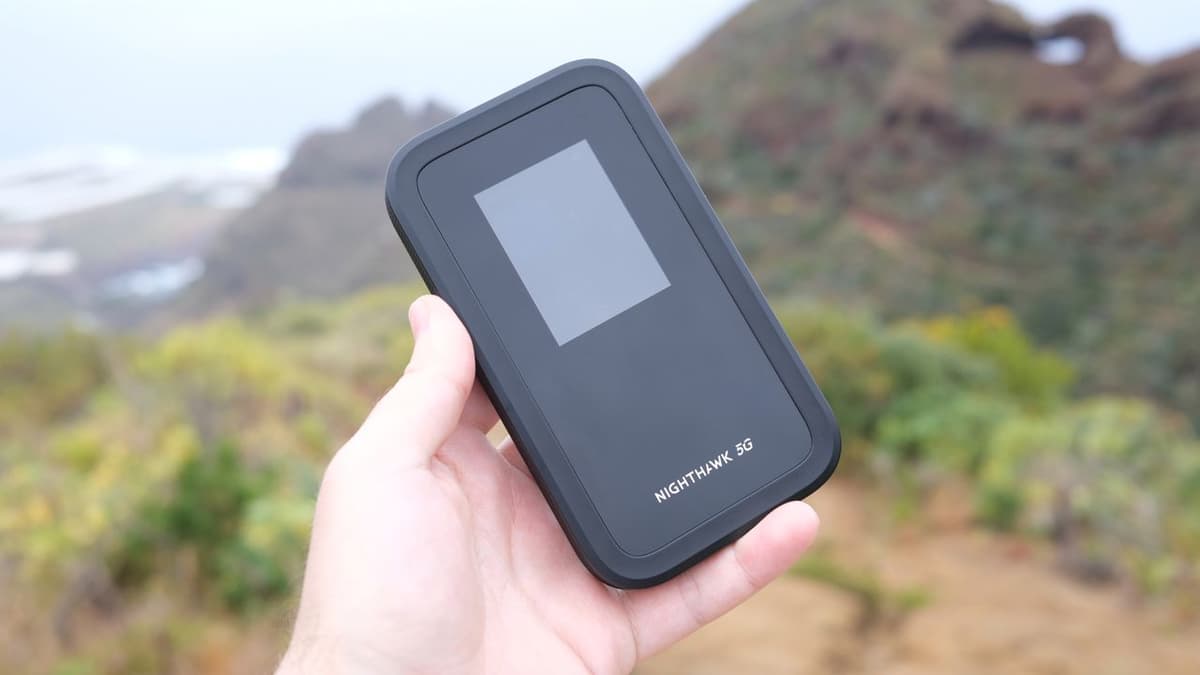
In real‑world testing on the remote outskirts of Tenerife, the M7 proved its core promise: it creates a reliable local network whenever any 5G signal is detectable. The device’s ability to support multiple simultaneous streams makes it attractive for creatives handling large image or video files on the road. However, the $45 eSIM for 20 GB of data adds a significant recurring expense, especially when compared with cheaper phone‑only eSIMs that can deliver comparable speeds for a single device. For businesses budgeting travel expenses, the total cost of ownership—hardware plus data—must be weighed against the productivity gains of shared bandwidth.
Looking ahead, the hotspot’s limitations in zero‑signal environments highlight a broader industry challenge: delivering truly ubiquitous connectivity without relying on existing cellular towers. As carriers roll out broader 5G footprints and negotiate unlimited data packages for eSIMs, devices like the Nighthawk M7 could become more cost‑effective for remote teams. Until then, firms with high‑budget mobile workforces may adopt the M7 for its reliability, while others will likely stick to cheaper phone tethering solutions or wait for more affordable unlimited plans.
I finally used a high-end portable hotspot on holiday – and I get the hype, but still not the price
Comments
Want to join the conversation?
Loading comments...