I Gave Edge on Android a Real Chance and It Solved My Biggest Problem with Chrome
Companies Mentioned
Why It Matters
Extension support closes Chrome’s biggest mobile weakness, giving Android users a richer, more secure browsing environment. Microsoft’s move pressures Google to accelerate feature parity and reshapes competition in the mobile browser market.
Key Takeaways
- •Edge Android now supports extensions, filling Chrome's biggest mobile gap.
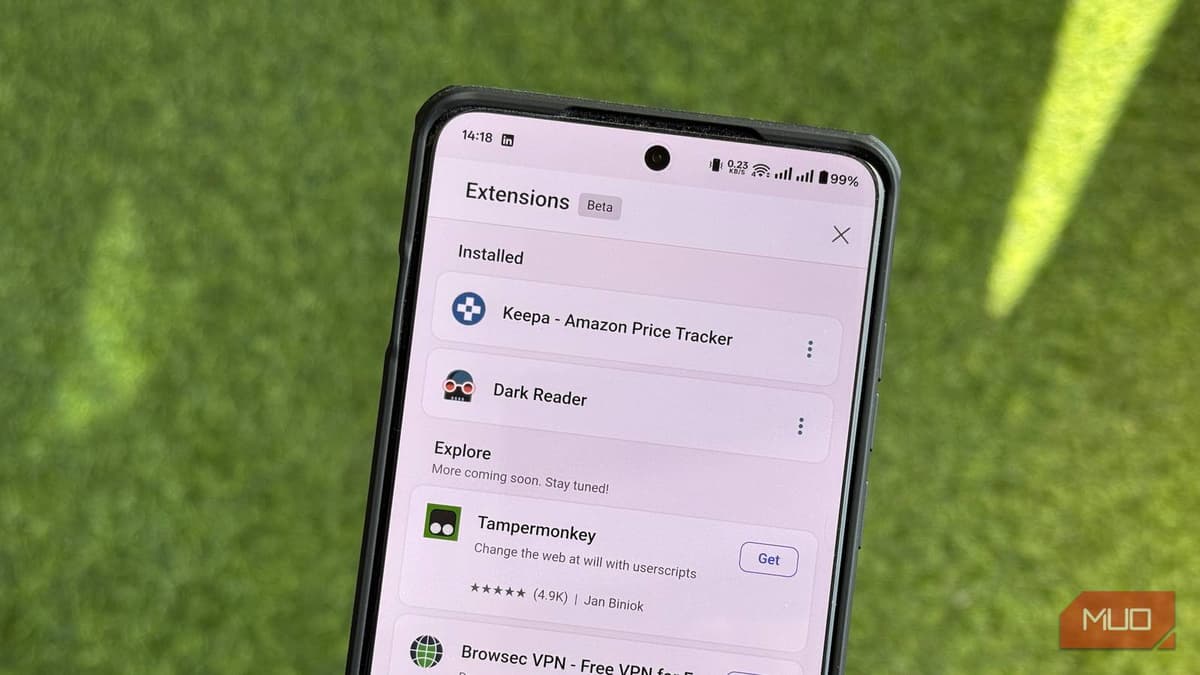
- •Users add Dark Reader, Bitwarden, Keepa for dark mode, passwords, price alerts.
- •Built‑in ad blocker and AI Copilot enhance browsing without extra add‑ons.
- •Edge syncs collections, Drop, and passwords across devices, boosting productivity.
Pulse Analysis
The mobile browser arena has been dominated by Chrome for years, but its Android version has lagged behind on feature depth, notably lacking an extension ecosystem. Without add‑ons, power users cannot replicate desktop workflows on their phones, leading to fragmented experiences across devices. Microsoft’s decision to roll out beta extensions in Edge directly addresses this gap, positioning the browser as a viable alternative for users who demand customization, privacy tools, and productivity enhancements on the go.
Edge’s extension rollout, though still in beta, includes the most widely used add‑ons: Dark Reader for consistent night‑mode browsing, Bitwarden for cross‑platform password management, and Keepa for real‑time price‑tracking. Installation is streamlined through the browser’s menu, and Microsoft prompts users to review permissions, mitigating security concerns that often accompany third‑party extensions. By bundling these tools with native features like built‑in ad blocking and the AI‑powered Copilot, Edge delivers a unified experience that reduces reliance on multiple apps, thereby conserving device resources and simplifying user workflows.
Strategically, Microsoft’s expansion of Edge on Android signals a broader push to capture mobile market share and challenge Google’s monopoly. The integration of AI capabilities aligns with industry trends toward conversational assistants, offering contextual summaries and content generation directly within the browser. As developers observe growing user adoption, the extension library is likely to expand, further narrowing the functional divide between desktop and mobile browsers. For enterprises, the move promises enhanced security controls and consistent policy enforcement across employee devices, making Edge an increasingly attractive choice for corporate mobility strategies.
I gave Edge on Android a real chance and it solved my biggest problem with Chrome
Comments
Want to join the conversation?
Loading comments...