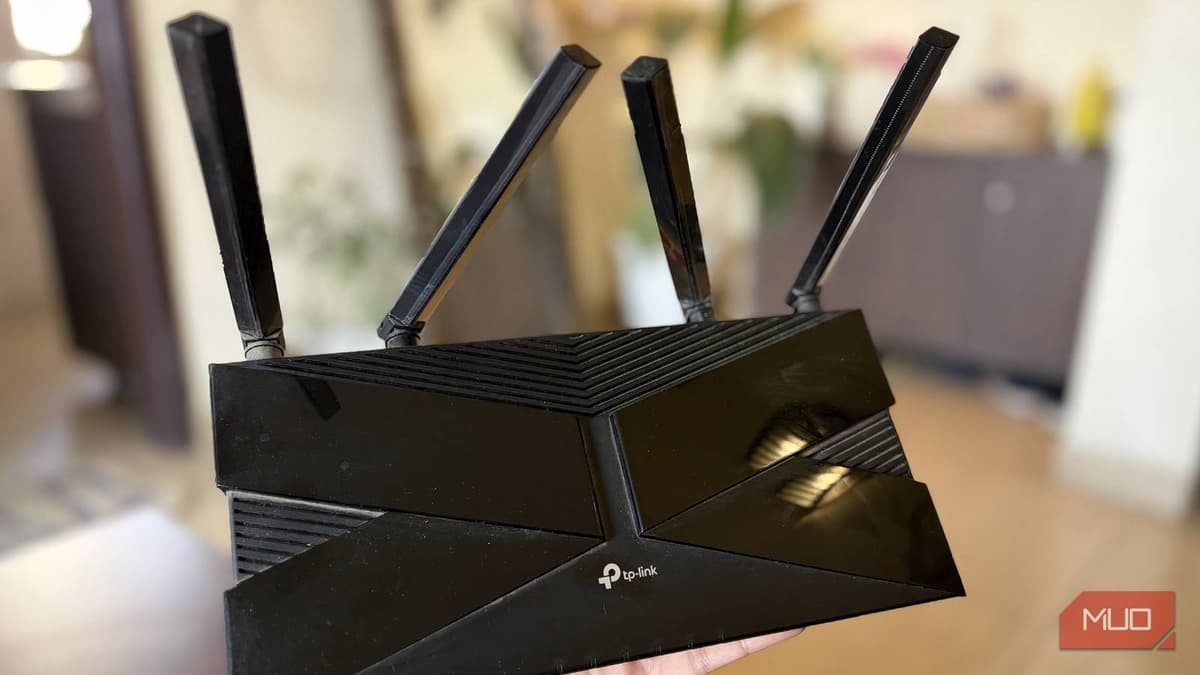
I Repositioned My Router Antennas Based on How They Actually Work and My Wi-Fi Improved Immediately
Why It Matters
Optimizing antenna orientation extracts maximum value from existing broadband plans, lowering frustration and potential upgrade costs for consumers and enterprises alike.
Key Takeaways
- •Angle router antennas vertically and outward to broaden coverage.
- •Separate antenna orientations reduce dead zones across multiple floors.
- •Tri‑band routers like TP‑Link AX6600 deliver up to 4.8 Gbps on 5 GHz.
- •Simple antenna tweaks improve reliability without extra hardware costs.
Pulse Analysis
Modern homes rely on Wi‑Fi for everything from remote work to streaming, yet many users still experience patchy coverage despite paying for high‑speed broadband. The physics of router antennas explains this gap: most consumer devices emit signals in a doughnut‑shaped pattern, concentrating energy horizontally rather than uniformly in all directions. When antennas stand upright, the strongest signal spreads across the same floor, leaving upper or lower levels underserved. Adjusting the antennas to a mix of vertical and outward angles aligns the radiated pattern with the layout of devices, effectively extending the sweet spot of the network without altering the router’s firmware or adding extenders.
For multi‑story residences or offices, the benefit is especially pronounced. A single router equipped with three or more antennas can cover multiple floors if one antenna remains vertical while the others tilt outward, creating overlapping zones that mitigate dead spots. This low‑cost tweak also complements newer tri‑band models like the TP‑Link AX6600, which combines a 4.8 Gbps 5 GHz channel with eight high‑gain antennas, delivering robust throughput when properly oriented. Users who experiment with antenna angles often report fewer connection drops and steadier speeds, translating into higher productivity and smoother media consumption.
Beyond the immediate performance gains, understanding antenna orientation empowers consumers to make data‑driven decisions about network upgrades. Rather than defaulting to expensive mesh systems, many can achieve comparable coverage by simply re‑configuring existing hardware. This approach aligns with cost‑efficiency trends in both residential and small‑business environments, where maximizing ROI on IT assets is paramount. As Wi‑Fi standards evolve, the fundamental principle of matching antenna patterns to device placement will remain a cornerstone of effective network design.
I repositioned my router antennas based on how they actually work and my Wi-Fi improved immediately
Comments
Want to join the conversation?
Loading comments...