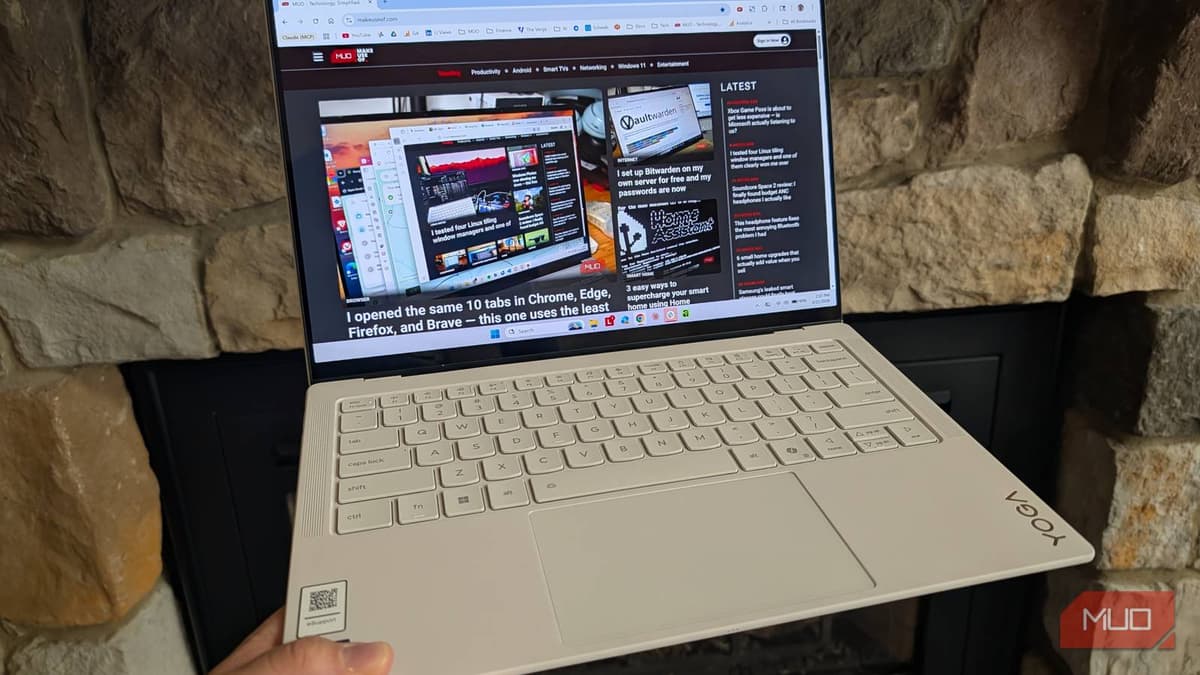
I Reviewed the Lenovo Yoga 7 Slim Ultra and It Almost Made Me Enjoy Windows Again
Why It Matters
The Yoga 7 Slim Ultra illustrates the trade‑off between extreme portability and sustained performance, shaping buyer expectations in the premium ultrabook market. It also underscores Intel’s struggle to match ARM‑based efficiency in thin‑and‑light Windows laptops.
Key Takeaways
- •Weighs 2.15 lb, lighter than any comparable Windows notebook
- •14‑inch 2.8K OLED bright but highly reflective outdoors
- •Intel Core Ultra 7 throttles under load, limiting performance
- •Battery delivers ~5 hours, despite 75 Wh capacity
- •Competitors offer better performance and battery at similar price
Pulse Analysis
The ultra‑light laptop segment has become a battleground for manufacturers seeking to combine portability with premium features. Lenovo’s approach with the Yoga 7 Slim Ultra relies on a magnesium‑alloy‑plastic hybrid chassis and a thin OLED display to achieve a record‑low 2.15 lb weight. While the material choices keep the notebook feather‑light, they also introduce a plasticky feel and limited structural rigidity, a compromise that many power users notice when typing or moving the device.
Performance is the Achilles’ heel of the Yoga 7 Slim Ultra. Powered by Intel’s Core Ultra 7 355 Panther Lake SOC, the laptop suffers from thermal throttling in sustained workloads, a direct result of the slim envelope that restricts cooling airflow. Compared with ARM‑based alternatives such as ASUS’s Snapdragon X2‑powered ZenBook, the Intel chip falls short on both efficiency and multi‑core performance, making the Yoga less suitable for heavy multitasking or creative applications that demand consistent CPU power.
For professionals weighing a purchase, the Yoga’s strengths lie in its weight, fast 65 W charging, and Dolby Atmos speakers, but the trade‑offs in battery endurance and display reflectivity limit its appeal in bright environments. At a price point that rivals the Acer Swift Edge and the newer ZenBook models, buyers can secure better sustained performance, longer battery life, and less glare. As the market pushes toward even thinner designs, Lenovo will need to address thermal constraints and display brightness if it hopes to compete with the increasingly efficient ARM‑based ultrabooks and Apple’s M‑series laptops.
I reviewed the Lenovo Yoga 7 Slim Ultra and it almost made me enjoy Windows again
Comments
Want to join the conversation?
Loading comments...