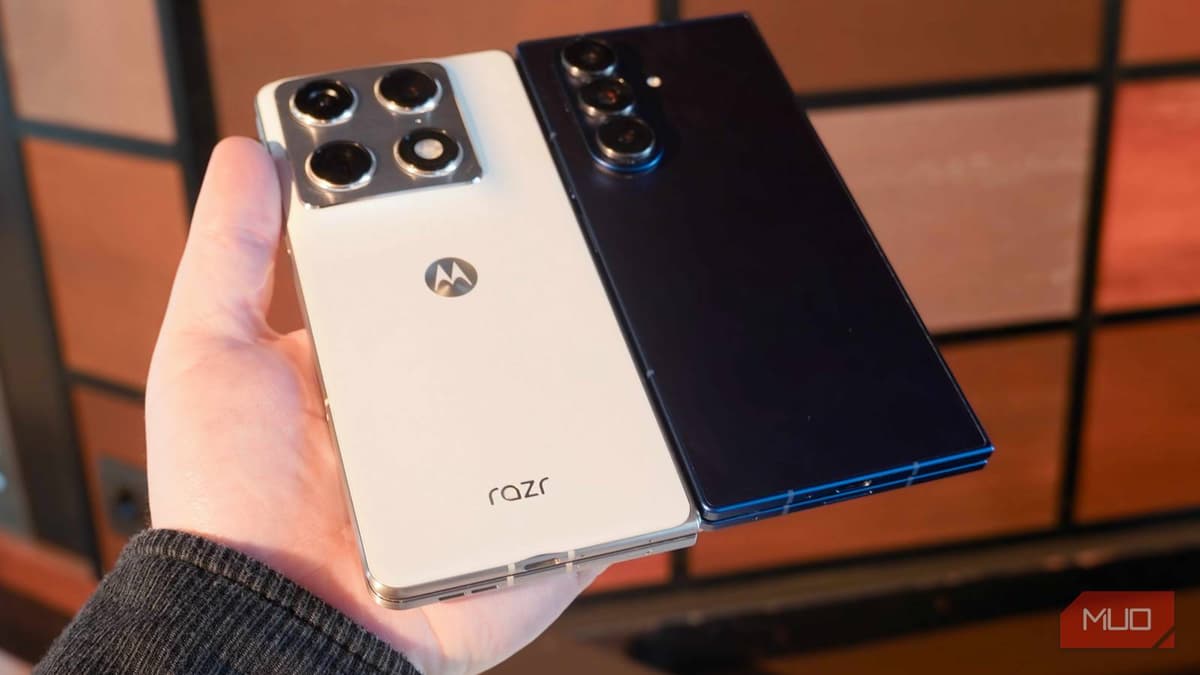
I Took 100 Photos with the Galaxy Z Fold 7 and Razr Fold — the Camera Fight Was Closer than I Expected
Companies Mentioned
Why It Matters
Camera performance is a key differentiator in the fast‑growing foldable market, influencing purchase decisions and shaping each brand’s competitive positioning. The trade‑off between vivid HDR and consistent color accuracy highlights divergent product strategies that could steer future hardware roadmaps.
Key Takeaways
- •Motorola Razr Fold sports 50 MP ultrawide and telephoto lenses.
- •Samsung Galaxy Z Fold 7 offers consistent color accuracy across shots.
- •Razr Fold’s HDR can produce over‑exposed images in bright light.
- •Samsung’s 12 MP main sensor delivers steadier overall performance.
Pulse Analysis
The foldable segment remains a battleground for premium Android makers, with Samsung still commanding the largest share but rivals like Motorola seeking to carve out niches through hardware quirks. By equipping the Razr Fold with 50‑megapixel secondary sensors and a 20‑megapixel cover selfie camera, Motorola aims to attract power users who value high‑resolution zoom and Instagram‑style HDR punch. Samsung, in contrast, leans on a more modest 12‑megapixel primary array and refined image‑processing pipelines that prioritize color accuracy and exposure consistency across varied lighting conditions. This strategic split reflects broader brand philosophies: Samsung bets on reliability and ecosystem integration, while Motorola pushes bold sensor specifications to differentiate its foldable offering.
Technical nuances become decisive when the phones are put through real‑world shooting scenarios. The Razr Fold’s 3× optical telephoto lens, bolstered by a 50‑MP sensor, captures fine details such as printed numbers on distant signage—an advantage for sports fans and concert‑goers who demand crisp zoom. However, its aggressive HDR engine can oversaturate skies and wash out textures, especially in high‑contrast daylight. Samsung’s Z Fold 7, despite a lower‑resolution 10‑MP telephoto module, delivers more natural tones and balanced exposure, thanks to refined tone‑mapping algorithms. The consistency of its 12‑MP main camera translates into reliable results for everyday photography, a factor that matters to the broader consumer base.
For prospective buyers, the choice hinges on priorities. Users who crave eye‑catching, high‑dynamic‑range images and are willing to tolerate occasional over‑processing may find the Razr Fold’s sensor suite compelling. Those who prefer dependable color reproduction and smoother performance across lighting conditions will likely gravitate toward the Galaxy Z Fold 7. As foldable designs mature, we can expect both manufacturers to iterate—Samsung may tighten its sensor resolution while preserving processing stability, and Motorola could temper its HDR aggressiveness to improve overall usability. The ongoing camera duel underscores how imaging capabilities will continue to shape the competitive landscape of premium foldables.
I took 100 photos with the Galaxy Z Fold 7 and Razr Fold — the camera fight was closer than I expected
Comments
Want to join the conversation?
Loading comments...