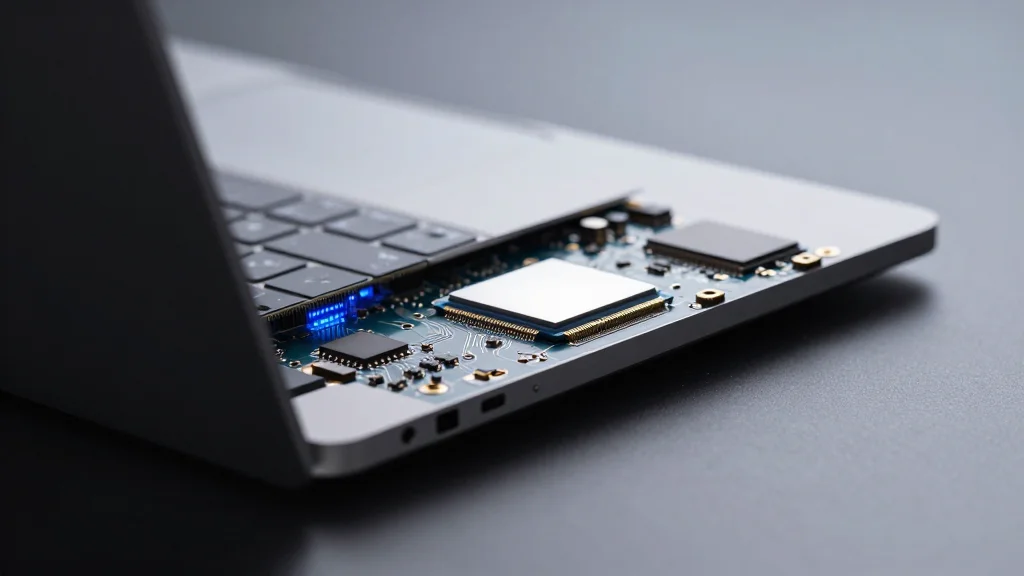
Intel Showcases Wildcat Lake Reference Laptop with Aluminum Chassis and Fanless Design
Companies Mentioned

Why It Matters
The launch marks Intel’s aggressive push into the low‑cost, AI‑ready ultrabook segment, challenging Apple’s Neo and forcing Windows OEMs to accelerate value‑oriented designs.
Key Takeaways
- •Wildcat Lake reference laptop uses 6‑core 2P+4LPE CPU with 17 TOPS NPU
- •Fanless model runs at 11 W TDP, promising no thermal throttling
- •16 GB soldered RAM targets high‑speed AI workloads amid DRAM price spikes
- •Intel claims 47% boost, 2.8× GPU AI gains vs older chips
Pulse Analysis
Intel’s latest Core Series 3 "Wildcat Lake" chips bring the company’s 18‑angstrom process to the budget‑friendly notebook market. By combining two high‑performance P‑cores with four low‑power efficiency cores, an integrated Xe graphics block and a dedicated 17 TOPS neural‑processing unit, the silicon is engineered for AI‑centric workloads while keeping power draw modest. The reference laptop’s aluminum chassis and MacBook‑style keyboard signal a design shift toward premium aesthetics even at the $599 price point, while the fanless 11 W configuration showcases Intel’s confidence in thermal efficiency.
The hardware stack is notable for its 16 GB of soldered memory, a rarity in a market strained by record‑high DRAM prices. NotebookCheck estimates the RAM could operate near 7,467 MT/s, offering bandwidth that aligns with the NPU’s AI acceleration capabilities. Intel’s performance claims—up to 47% better single‑thread and 41% better multi‑thread performance, plus a 2.8× uplift in GPU AI tasks—are benchmarked against five‑year‑old low‑power CPUs, suggesting a substantial generational leap for entry‑level laptops. The fanless variant’s promise of no throttling under an 11 W TDP further differentiates it from traditional cooling‑reliant designs.
Strategically, the Wildcat Lake reference laptop is Intel’s answer to Apple’s MacBook Neo, which has disrupted the Windows ecosystem with its low price and strong AI credentials. Early OEM reactions, such as MSI’s rollout of Panther Lake and Wildcat Lake‑powered budget models, indicate rapid adoption. If manufacturers can deliver comparable build quality and battery life, Intel’s platform could reshape the value‑segment narrative, pressuring competitors to accelerate AI‑ready silicon and potentially expanding the market for affordable, high‑performance ultrabooks.
Intel showcases Wildcat Lake reference laptop with aluminum chassis and fanless design
Comments
Want to join the conversation?
Loading comments...