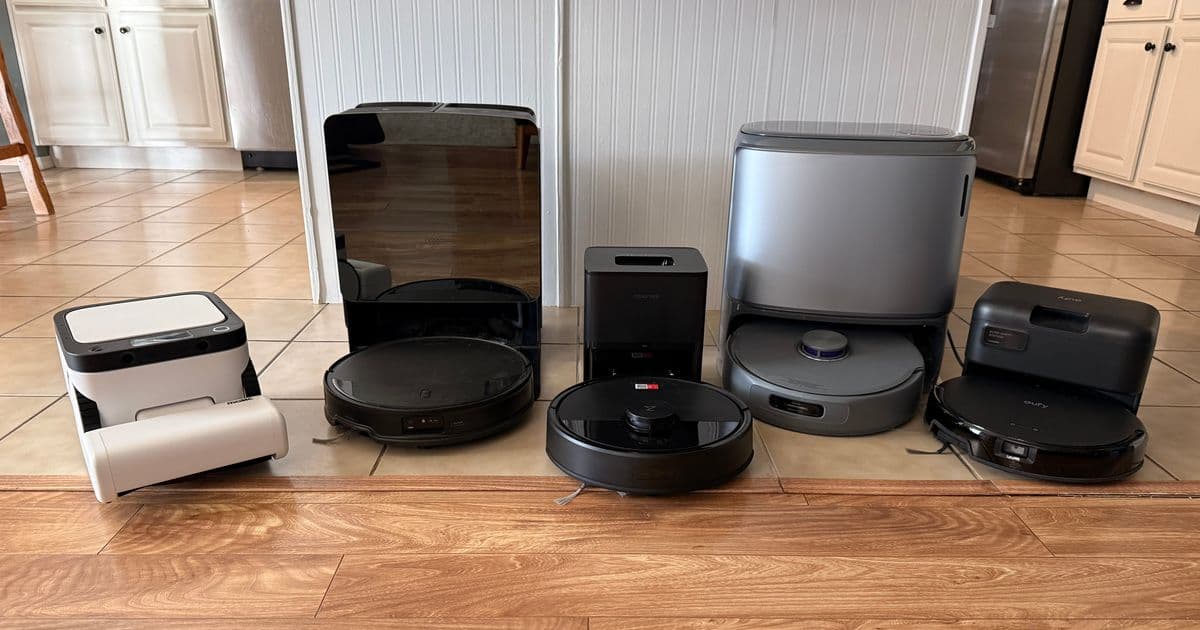
I’ve Tested More Than 20 Robot Vacuums. These Are the Best.
Companies Mentioned
Why It Matters
Robot vacuums are becoming essential for busy households and pet owners, and choosing the right model can cut cleaning time, lower maintenance costs and improve indoor air quality. Understanding performance trade‑offs ensures consumers invest in devices that deliver real value across diverse floor types.
Key Takeaways
- •Roborock Q7 M5+ offers 10,000 Pa suction, 150‑min runtime
- •Eufy C10 provides affordable self‑emptying dock in tight spaces
- •Narwal Freo Z10 Ultra delivers 240‑min battery and hot‑water mopping
- •High suction models improve pet‑hair pickup but increase noise
- •Choose based on brush quality, navigation, and battery life
Pulse Analysis
The robot‑vacuum market has accelerated in the past two years, driven by advances in lidar mapping, AI‑based obstacle avoidance and tighter integration with smart‑home ecosystems. Consumers now expect devices that can navigate multi‑level homes, handle pet hair and operate quietly enough for daytime use. Brands such as Roborock and Narwal have leveraged high‑precision sensors and powerful suction—measured in Pascals—to differentiate premium models, while budget‑friendly options like Eufy focus on compact self‑emptying docks that fit smaller apartments.
Performance hinges on three technical pillars: suction, brush architecture and battery endurance. Suction levels above 10,000 Pa can lift embedded debris from carpet and pull stubborn pet hair, but they also generate more noise and drain the battery faster. Innovative brush designs—rubber, split or dual‑direction—reduce tangling and improve edge cleaning, extending the motor’s life. Battery runtime ranging from 120 to 240 minutes determines whether a unit can complete a full‑home pass without returning to its base, a critical factor for larger floor plans. Additional features like hot‑water mopping, HEPA filtration and self‑emptying stations add convenience but increase price and sometimes acoustic output.
For buyers, the decision matrix should start with home size, floor type and pet presence, then narrow to navigation method (infrared versus camera‑assisted lidar) and maintenance preferences. High‑end models with AI‑driven stain detection and dual‑tank docks are ideal for spacious homes with mixed flooring, while mid‑range units offer solid cleaning at a lower cost for apartments. As firmware updates improve mapping accuracy and voice‑assistant compatibility expands, future robot vacuums will become even more autonomous, making them a worthwhile investment for anyone seeking a hands‑free clean.
I’ve Tested More Than 20 Robot Vacuums. These Are the Best.
Comments
Want to join the conversation?
Loading comments...