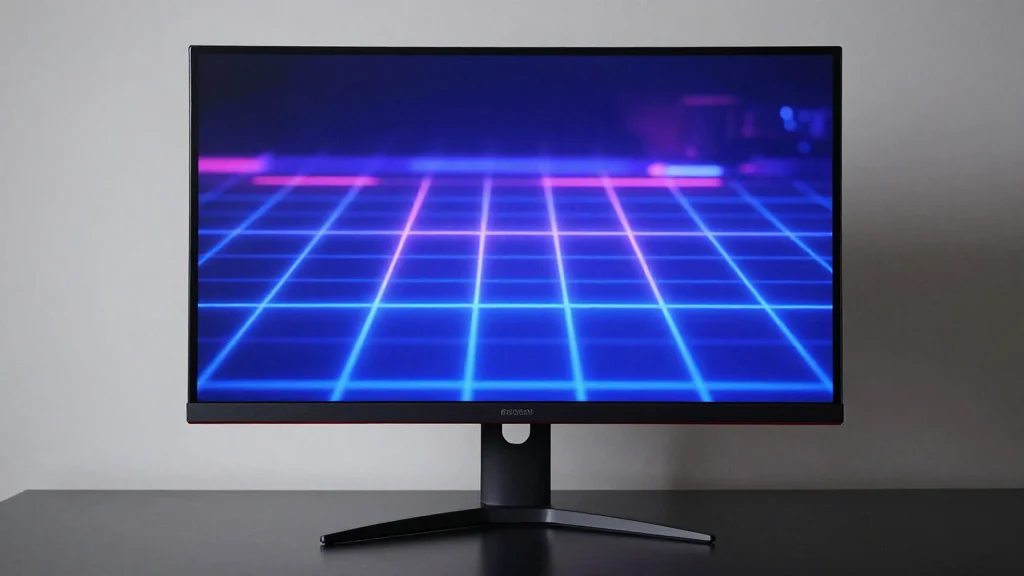
LG UltraGear 25G590B Sets New Standard with World's First Native 1000 Hz Full‑HD Gaming Monitor

Companies Mentioned

Why It Matters
The UltraGear 25G590B pushes display technology into a realm previously limited to prototypes, signaling that ultra‑high refresh rates are moving from niche experiments to mainstream consumer products. For the broader consumer tech market, this could accelerate the adoption of DisplayPort 2.1 and drive GPU makers to prioritize raw frame‑rate performance over visual fidelity in certain segments. In the eSports ecosystem, a monitor that can truly deliver 1,000 Hz without interpolation may become a new standard for professional training and competition, reshaping how players practice and how tournaments set hardware requirements. Beyond gaming, the underlying panel and bandwidth innovations could trickle down to other latency‑sensitive applications such as virtual reality, high‑speed video editing, and real‑time data visualization, expanding the impact of LG’s breakthrough beyond the gaming chair.
Key Takeaways
- •LG UltraGear 25G590B offers a native 1000 Hz refresh rate at 1080p resolution
- •24.5‑inch IPS panel includes Motion Blur Reduction Pro and low‑reflection film
- •Equipped with DisplayPort 2.1 to handle the bandwidth of 1,000 fps
- •Targeted at competitive FPS titles where millisecond advantages matter
- •First commercial monitor to claim true native 1000 Hz performance
Pulse Analysis
The refresh‑rate arms race has been a defining narrative in gaming hardware for the past decade. Starting from 144 Hz as the premium benchmark, manufacturers incrementally pushed to 240 Hz, then 360 Hz, and most recently 500 Hz, each jump justified by diminishing but still measurable latency gains for elite players. LG’s 1,000 Hz claim is not just a numeric leap; it represents a paradigm shift that forces the entire ecosystem—monitors, GPUs, and game engines—to reconsider performance ceilings.
Historically, ultra‑high refresh rates have been hampered by bandwidth constraints and the inability of most PCs to sustain matching frame rates. LG’s integration of DisplayPort 2.1 addresses the former, while the latter may catalyze a new wave of GPU development focused on raw FPS output rather than ray‑tracing or high‑resolution textures. Early adopters will likely be professional teams and tournament organizers who can justify the cost of high‑end rigs capable of exploiting the monitor’s potential. If the market validates the performance edge, we could see a trickle‑down effect where mid‑range gamers demand higher refresh rates, prompting manufacturers to produce more affordable 500‑Hz and eventually 1,000‑Hz panels.
From a strategic standpoint, LG’s move also repositions the brand from a traditional consumer electronics player to a serious contender in the high‑performance gaming arena. By securing the “first‑to‑market” label, LG gains valuable brand equity among the most vocal segment of gamers, a demographic that often influences broader consumer trends. Competitors will need to respond quickly, either by accelerating their own native‑1000 Hz projects or by differentiating through alternative features such as HDR, higher resolutions, or adaptive sync technologies. The next few quarters will reveal whether LG’s gamble reshapes the premium monitor market or remains a niche marvel for the elite.
LG UltraGear 25G590B Sets New Standard with World's First Native 1000 Hz Full‑HD Gaming Monitor
Comments
Want to join the conversation?
Loading comments...