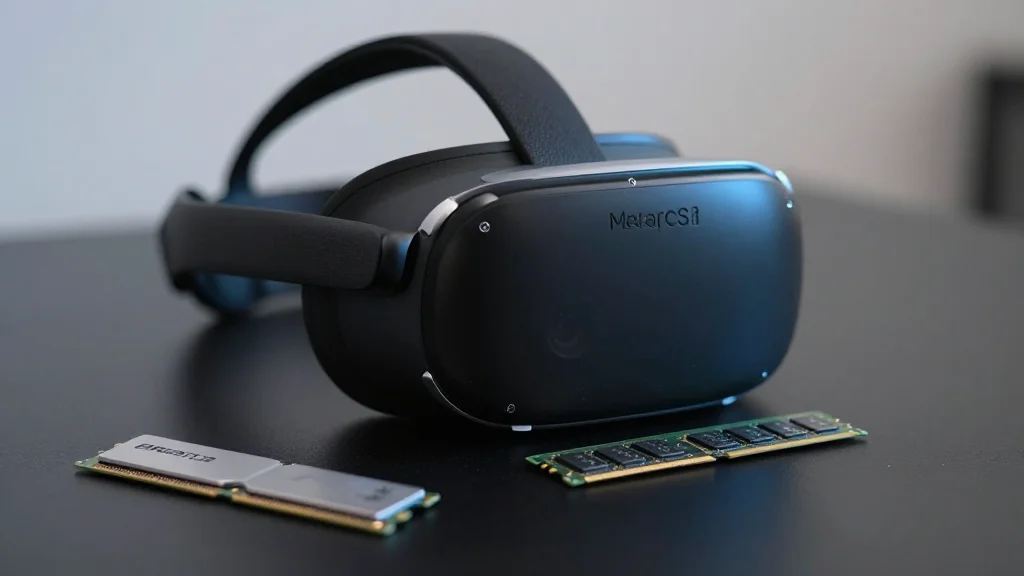
Meta Hikes Quest 3 and Quest 3S Prices as RAM Shortage Squeezes VR Costs


Why It Matters
The Quest price hike signals that even market‑dominant firms like Meta are not immune to supply‑chain volatility. A sustained DRAM shortage could raise the cost of a wide array of consumer electronics, forcing manufacturers to either absorb margins or pass costs onto consumers. For VR, higher entry prices may dampen adoption at a time when the technology is still seeking mainstream acceptance, potentially ceding ground to rivals with deeper pockets or more diversified supply chains. Beyond VR, the episode highlights how component scarcity can reshape competitive dynamics in the broader consumer‑tech arena. Companies that have secured long‑term memory contracts or that can redesign products to use less RAM may gain a pricing advantage, while those that cannot may see profit pressures and slower growth. Investors and analysts will therefore watch component‑price trends as a leading indicator of future pricing strategies across smartphones, laptops, and emerging AI‑enabled devices.
Key Takeaways
- •Meta raised Quest 3 and Quest 3S headset prices effective April 19 to offset rising DRAM costs.
- •Global DRAM shortage has driven memory prices up by double‑digit percentages in recent quarters.
- •Meta did not disclose the exact amount of the price increase, stating details were not disclosed.
- •VR market valued at roughly $300 billion in 2025, with Quest devices a key growth driver for Meta.
- •Analysts view the hike as a margin‑preserving move amid Meta’s $115‑$135 billion capex plan for 2026.
Pulse Analysis
Meta’s decision to raise Quest prices is less about profit maximization than about protecting a fragile margin in a hardware line that has long been a loss center. Reality Labs has consistently posted operating deficits, and the company’s broader strategy hinges on turning VR into a platform for future revenue streams—advertising, commerce, and AI‑driven experiences. By shifting some of the memory‑price shock to consumers now, Meta buys time to iterate on software and AI features that could justify a higher price point and improve stickiness.
Historically, hardware price hikes in emerging categories tend to slow adoption unless paired with compelling new capabilities. Meta’s upcoming AI‑enhanced features, such as on‑device vision models and generative‑AI assistants for creators, could provide the necessary value proposition. However, the company must also manage the risk of alienating price‑sensitive gamers and developers who have gravitated to the Quest ecosystem because of its relative affordability.
In the longer term, the DRAM shortage may accelerate a strategic shift toward alternative memory technologies or more efficient chip designs. Companies that can redesign their products to use less RAM—or that secure long‑term supply contracts—will gain a competitive edge. For Meta, the price increase is a stop‑gap measure, but it also serves as a warning bell: without supply‑chain resilience, the race to dominate the next wave of immersive computing could be derailed by the very components that power it.
Meta hikes Quest 3 and Quest 3S prices as RAM shortage squeezes VR costs
Comments
Want to join the conversation?
Loading comments...