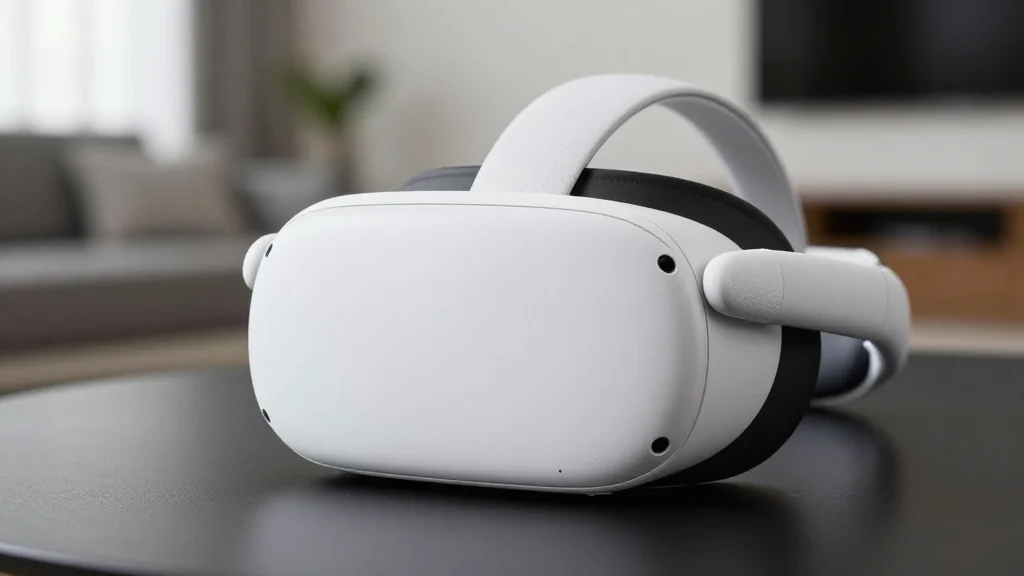
Meta Launches Quest 3S, a Lower‑cost VR Headset Built on Quest 2 Parts


Why It Matters
The Quest 3S could reshape the consumer VR landscape by offering a high‑performance, lower‑priced alternative to premium headsets. By reusing proven components, Meta reduces manufacturing complexity and passes savings to consumers, potentially accelerating mainstream acceptance of VR for gaming, fitness, and social experiences. The removal of the proximity sensor also demonstrates Meta’s willingness to address hardware reliability concerns that have plagued earlier models, improving consumer confidence. If the Quest 3S gains traction, it may force competitors to reconsider pricing strategies for entry‑level devices, intensifying competition in a market that has struggled to achieve scale. A broader user base would also expand the ecosystem of VR content, benefiting developers and advertisers seeking new engagement channels.
Key Takeaways
- •Quest 3S reuses Quest 2 Fresnel lenses and RGB‑stripe LCD panel
- •Upgraded to Snapdragon XR2 Gen2 4 nm SoC with 8 GB RAM
- •Wi‑Fi 6E and Bluetooth 5.2 added for faster wireless performance
- •Proximity sensor removed, replaced by timed auto‑shutoff to improve reliability
- •Speaker arms redesigned from Quest 3, but headphone jack omitted
Pulse Analysis
Meta’s decision to launch the Quest 3S reflects a strategic pivot toward volume sales rather than pure technological leadership. The company has already saturated the high‑end segment with the Quest 3, which commands a premium price and targets early adopters. By stripping back the optical stack to the cheaper Fresnel lenses, Meta can dramatically cut component costs while still delivering a respectable visual experience. The trade‑off is a slightly bulkier form factor and potentially lower visual fidelity compared to the pancake lenses, but for most consumers the difference will be marginal, especially when paired with the newer XR2 Gen2 processor that ensures smooth performance.
The removal of the proximity sensor is a pragmatic response to a documented failure mode that generated warranty headaches. By simplifying the hardware architecture, Meta not only reduces the risk of future defects but also shortens assembly time, which can improve supply chain resilience—a crucial advantage as the industry grapples with component shortages. This move may also signal a broader shift toward modular, repair‑friendly designs, a trend that could appease the growing community of DIY repair advocates.
From a competitive standpoint, the Quest 3S puts pressure on rivals that have focused on premium pricing. Sony’s PlayStation VR2, priced near $550, and Apple’s Vision Pro, slated at $3,500, occupy opposite ends of the price spectrum, leaving a gap for a mid‑range offering. If Meta can price the Quest 3S aggressively—potentially under $400—it could capture price‑sensitive gamers and educators who have been waiting for a more affordable standalone headset. The success of this strategy will hinge on how quickly Meta can deliver the device to market and whether the software ecosystem can keep pace with consumer expectations for mixed‑reality experiences.
Overall, the Quest 3S is less about breaking new technical ground and more about scaling adoption through cost optimization. If Meta’s gamble pays off, it could set a new benchmark for budget VR, prompting a wave of similar offerings from other manufacturers and accelerating the mainstream acceptance of immersive technology.
Meta launches Quest 3S, a lower‑cost VR headset built on Quest 2 parts
Comments
Want to join the conversation?
Loading comments...