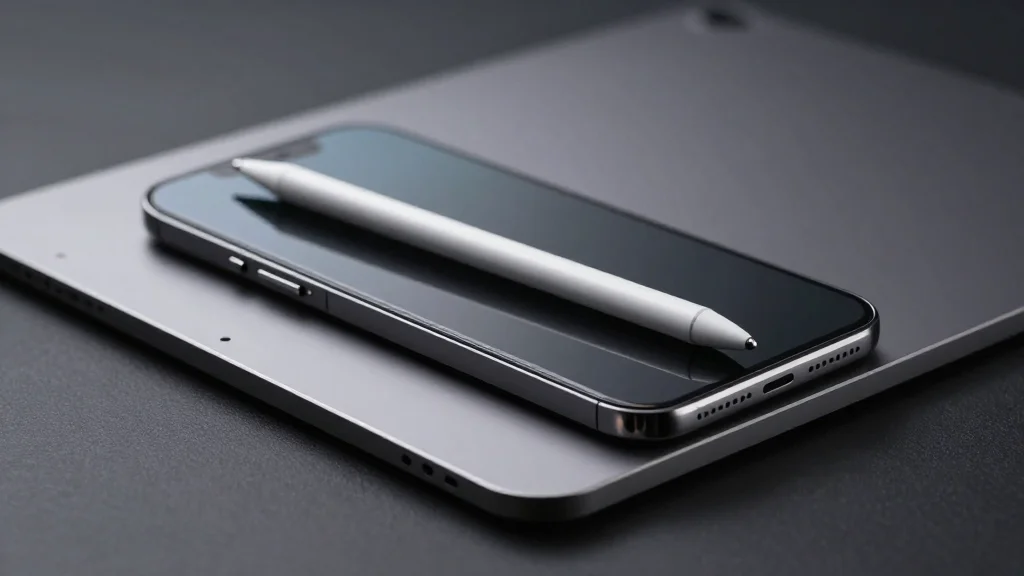
Motorola Launches Budget Moto G Stylus 2026 and Moto Pad 2026 with Active Pen Support

Companies Mentioned
Why It Matters
Motorola’s introduction of an active stylus to a budget smartphone challenges the long‑standing association between pen input and premium price tags. By offering pressure sensitivity, tilt detection, and AI‑enhanced note‑taking at a lower cost, the Moto G Stylus 2026 could broaden the user base for digital drawing and productivity tools, especially among students and remote workers who are price‑sensitive. The accompanying Moto Pad 2026 reinforces a unified ecosystem, potentially increasing cross‑device engagement and setting a new benchmark for affordable 5G tablets with stylus support. If the devices gain traction, competitors may be compelled to lower the entry price for stylus functionality, accelerating the diffusion of creative‑focused hardware across the consumer tech market. This could also spur further integration of AI features in everyday productivity apps, as manufacturers seek to differentiate low‑cost hardware with software value‑adds.
Key Takeaways
- •Motorola launches Moto G Stylus 2026 with an active pen featuring pressure sensitivity and tilt detection
- •Active stylus recharges in 15 minutes for up to 100 hours of continuous use
- •Phone specs include Snapdragon 6 Gen 3, 8 GB RAM, 6.7‑inch 120 Hz OLED, 5,000‑nit peak brightness, 50 MP Sony LYTIA 700C camera, IP68/69 rating, and 5,200 mAh battery
- •Moto Pad 2026 tablet offers an 11‑inch 2.5K 90 Hz display, MediaTek Dimensity 6300 processor, native 5G, and Smart Connect software
- •Launch targets productivity‑focused consumers seeking affordable stylus-enabled devices
Pulse Analysis
Motorola’s move reflects a broader industry shift toward democratizing premium features. Historically, active stylus technology has been confined to high‑end flagships—Samsung’s Note line and Apple’s iPad Pro with Apple Pencil—creating a price barrier that limited mass adoption. By embedding a fully functional active pen in a device positioned below flagship pricing, Motorola is testing whether the market will respond to a value‑driven proposition that pairs hardware capability with AI‑enhanced software.
The timing aligns with a surge in remote work and digital learning, where note‑taking and sketching on the go have become essential. Motorola’s AI‑powered Notes app, which can clean up sketches or generate images from rough inputs, adds a software moat that could offset the lower hardware margins typical of budget devices. If users find the AI features compelling, it may set a precedent for other OEMs to bundle similar capabilities, turning software differentiation into a competitive lever in the low‑cost segment.
From a competitive standpoint, the Moto G Stylus 2026 could pressure Samsung and Apple to reconsider pricing strategies for their stylus ecosystems. Samsung’s recent focus on foldable devices has left a gap in the mid‑range stylus market, while Apple’s iPad lineup remains premium‑priced. Motorola’s entry may force these players to introduce more affordable stylus‑compatible models or enhance the value proposition of existing ones. The success of the Moto Pad 2026 will also be a litmus test for how well consumers embrace a cohesive, low‑cost ecosystem that spans phone and tablet, potentially reshaping the dynamics of the budget tablet market.
Overall, Motorola’s launch is a calculated bet that the convergence of active‑pen hardware, AI software, and 5G connectivity can create a compelling, affordable productivity platform. Market reception over the next few months will reveal whether this formula can disrupt entrenched premium models and expand the consumer base for stylus‑centric devices.
Motorola launches budget Moto G Stylus 2026 and Moto Pad 2026 with active pen support
Comments
Want to join the conversation?
Loading comments...