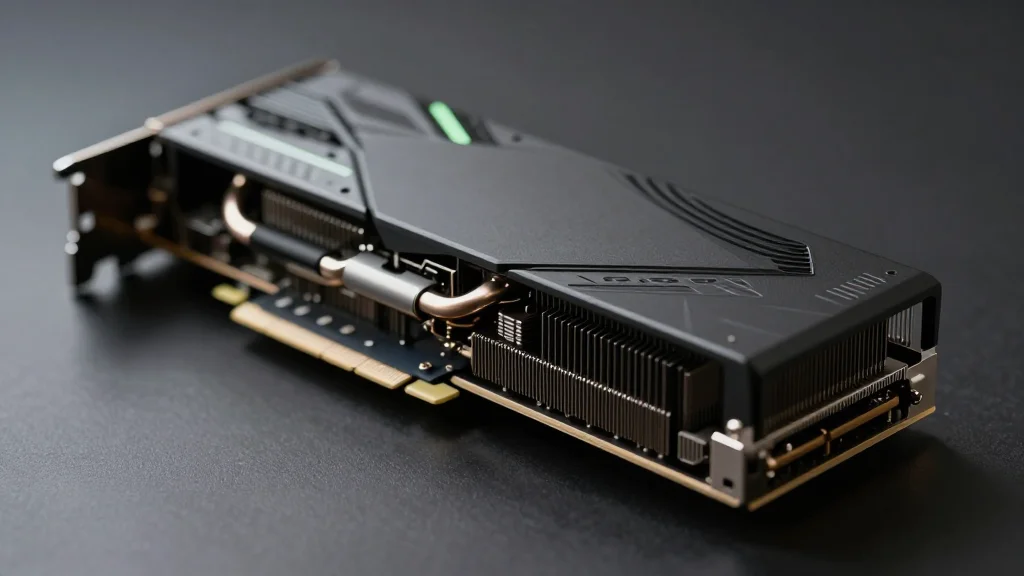
NVIDIA Revives RTX 3060 as Budget GPU Strategy Shifts in 2026
Companies Mentioned
Why It Matters
Re‑launching the RTX 3060 lets NVIDIA sustain a competitive low‑cost GPU offering while preserving advanced‑node capacity for higher‑margin products, reinforcing its market dominance across segments.
Key Takeaways
- •RTX 3060 reintroduced to fill entry‑level gap amid RTX 5050 delays
- •Uses Samsung 8 nm DUV process, freeing TSMC capacity for high‑end GPUs
- •GDDR6 memory remains cheap and abundant compared with scaling GDDR7 supply
- •Older node production cuts costs, preserving margins on budget graphics cards
- •Continued RTX 3060 availability signals NVIDIA’s strategic shift toward supply‑chain efficiency
Pulse Analysis
NVIDIA’s decision to resurrect the RTX 3060 reflects a pragmatic response to the current semiconductor landscape. The 2022 Ampere‑based card, originally retired after one year, offers a proven silicon design that can be manufactured on Samsung’s legacy 8 nm DUV process. This older node is no longer needed for NVIDIA’s flagship GPUs, which now rely on TSMC’s 5 nm and 4 nm platforms. By shifting the budget segment to a mature process, NVIDIA frees valuable wafer capacity for high‑end gaming and data‑center chips where profit margins are substantially higher.
Memory economics also play a pivotal role. The RTX 3060’s 12 GB of GDDR6 is sourced from a well‑established supply chain, keeping component costs low and ensuring steady availability. In contrast, the upcoming RTX 5050 would require GDDR7, a newer memory technology still scaling production and commanding premium prices. Maintaining a GDDR6‑based product allows NVIDIA to price the RTX 3060 competitively, appealing to cost‑sensitive gamers and PC builders while avoiding the risk of supply bottlenecks that could delay market entry.
For the broader GPU market, the revival signals that manufacturers may increasingly lean on legacy architectures to bridge gaps caused by component shortages or production hiccups. Competitors such as AMD will need to evaluate whether similar cost‑effective strategies can sustain their entry‑level lineups. Meanwhile, consumers can expect a reliable, affordable graphics solution that delivers respectable performance for 1080p and entry‑level 1440p gaming, even as the industry pushes toward more advanced, higher‑cost technologies. This approach underscores NVIDIA’s focus on balancing performance, pricing, and supply‑chain resilience as it navigates a volatile semiconductor environment.
NVIDIA Revives RTX 3060 as Budget GPU Strategy Shifts in 2026
Comments
Want to join the conversation?
Loading comments...