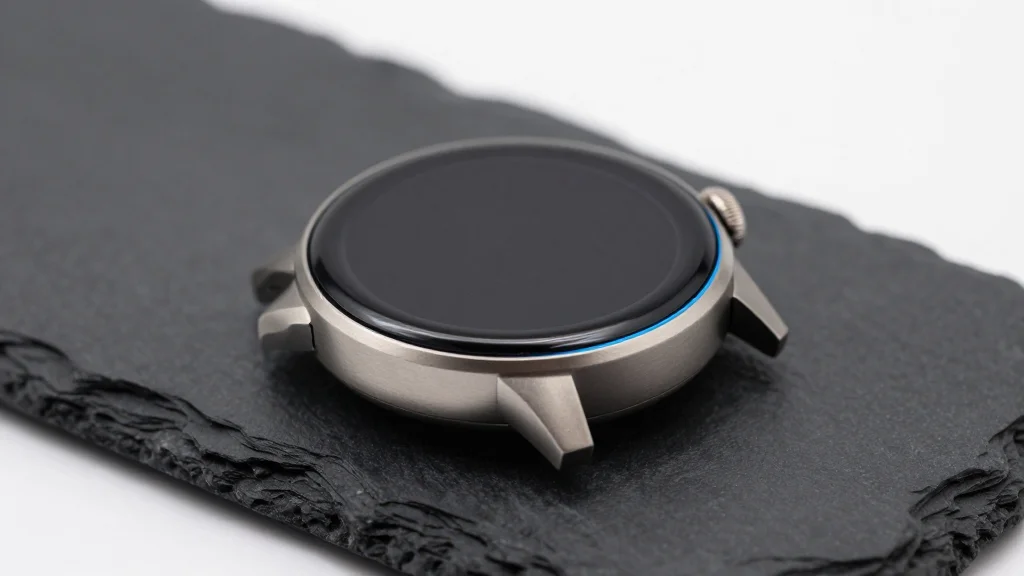
OnePlus Unveils Watch 4 with up to Five Days of Battery Life

Companies Mentioned
Why It Matters
The Watch 4’s five‑day battery life directly addresses a long‑standing pain point for smartwatch users: frequent charging. If the claim proves accurate, it could force rivals to prioritize power efficiency in future hardware revisions, potentially accelerating the adoption of larger batteries or more aggressive low‑power chipsets. Moreover, OnePlus’s move into premium materials signals its intent to compete beyond the mid‑range segment, expanding its ecosystem and brand perception. Longer battery life also expands the functional envelope of wearables, enabling more continuous health monitoring, longer GPS sessions for outdoor activities, and reduced reliance on charging accessories. This could drive higher engagement metrics for app developers and service providers that rely on persistent data collection, reshaping the economics of the wearable app market.
Key Takeaways
- •OnePlus Watch 4 announced with a titanium case and sapphire‑glass display
- •Dual‑engine architecture combines Snapdragon W5 and BES2800 chips
- •646 mAh battery promises up to five days of smart‑mode usage
- •Peak brightness of 3,000 nits and 466×466 pixel LTPO OLED screen
- •Pricing and launch date not disclosed; pre‑orders expected later this quarter
Pulse Analysis
OnePlus’s strategy with the Watch 4 reflects a broader industry trend of differentiating wearables through endurance and premium design rather than sheer feature parity. Historically, the smartwatch market has been dominated by Apple and Samsung, whose devices excel in ecosystem integration but lag in battery longevity. By delivering a five‑day claim, OnePlus forces a recalibration of consumer expectations, potentially nudging competitors toward larger batteries or more aggressive power‑saving silicon.
The dual‑engine approach mirrors a pattern seen in smartphones, where high‑performance cores are paired with efficiency cores to balance speed and stamina. Translating this to a smartwatch is novel and could set a new architectural baseline for the segment. If the BES2800 chip delivers the promised low‑power performance, it may become a reference design for future wearables, encouraging chipset vendors to develop dedicated ultra‑low‑power cores.
From a market perspective, OnePlus is betting on a premium niche that values durability (titanium, MIL‑STD‑810H) and long battery life over the lowest price point. This could attract a demographic that currently opts for dedicated fitness trackers or rugged watches, expanding OnePlus’s addressable market. However, success hinges on price positioning and the ability to deliver the advertised endurance in real‑world conditions. Independent testing will be the ultimate arbiter, and early adopters will likely shape the narrative that determines whether the Watch 4 becomes a catalyst for change or a niche curiosity.
OnePlus unveils Watch 4 with up to five days of battery life
Comments
Want to join the conversation?
Loading comments...