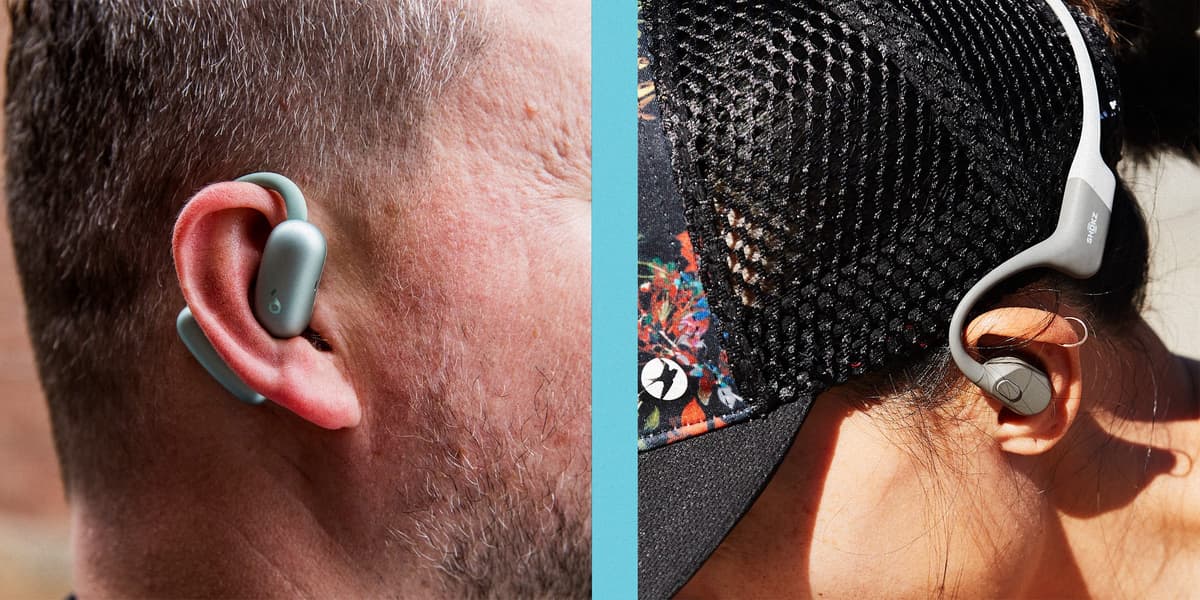
Open-Ear Vs. Bone Conduction Headphones: Which Delivers Better Sound?
•March 10, 2026
0
Why It Matters
Understanding the trade‑offs helps consumers choose headphones that balance safety with audio performance, influencing purchasing decisions in the growing wearable audio market.
Key Takeaways
- •Bone conduction sends vibrations through skull, not ear canal.
- •Open‑ear speakers emit sound waves through air near ear.
- •Both designs keep ears open for situational awareness.
- •Bone conduction favored by runners for secure fit.
- •Open‑ear offers richer audio than bone conduction.
Pulse Analysis
The wearable audio segment is expanding as runners, cyclists, and urban commuters prioritize safety without sacrificing music. Traditional in‑ear or over‑ear solutions often block ambient sounds, prompting a surge in open‑ear technologies that sit outside the canal. Brands like Shokz have leveraged this niche, positioning bone‑conduction headphones as a premium safety accessory, while newcomers such as Soundcore target budget‑conscious users with open‑air designs. This shift reflects broader consumer demand for devices that integrate seamlessly into active lifestyles while preserving environmental awareness.
Technically, bone‑conduction headphones convert electrical signals into mechanical vibrations that travel through the cheekbones to the cochlea, bypassing the eardrum entirely. This method excels in noisy environments because it leaves the ear canal free for external sounds, but it can compromise bass response and overall fidelity. Open‑ear models, by contrast, place miniature drivers just outside the ear, allowing air‑borne sound waves to enter the canal naturally. The result is a fuller frequency range and clearer mids, though users must still manage ambient noise. Fit and stability also differ: bone‑conduction frames wrap securely around the head, ideal for high‑impact activities, whereas open‑ear clips may shift during intense motion.
Market analysts predict that as health‑focused wearables proliferate, hybrid solutions that blend safety, sound quality, and comfort will dominate. Manufacturers are experimenting with adaptive audio processing, bone‑vibration enhancements, and modular designs that let users switch between conduction modes. For retailers, highlighting the distinct use‑case scenarios—such as trail running versus casual commuting—can drive informed purchases. Ultimately, the choice hinges on the user’s priority: maximum situational awareness with a secure fit, or richer audio fidelity with a lighter, more affordable package.
Open-Ear vs. Bone Conduction Headphones: Which Delivers Better Sound?
0
Comments
Want to join the conversation?
Loading comments...