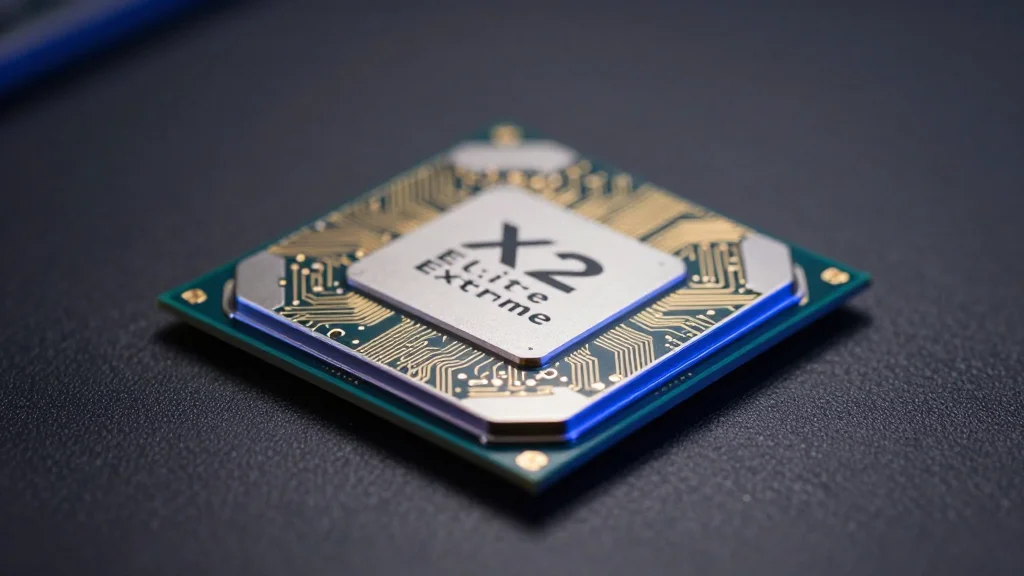
Qualcomm Unveils Snapdragon X2 Elite Extreme 18‑core Chip in Asus Zenbook A16

Why It Matters
The Snapdragon X2 Elite Extreme represents a watershed moment for ARM‑based processors in the high‑end laptop market. By delivering performance that rivals the best x86 chips while offering superior power efficiency and built‑in AI acceleration, Qualcomm challenges the long‑standing dominance of Intel and AMD in premium consumer devices. This could accelerate the shift toward heterogeneous computing architectures, where manufacturers blend ARM and x86 solutions based on workload needs. For consumers, the chip promises thinner, lighter laptops that stay unplugged longer without compromising on tasks like video editing, gaming and AI‑driven applications. For the industry, Qualcomm’s move forces competitors to innovate on efficiency and integrated AI capabilities, potentially reshaping product roadmaps across the PC ecosystem.
Key Takeaways
- •Qualcomm’s Snapdragon X2 Elite Extreme features an 18‑core layout (6P+8E+4E) optimized for performance and efficiency.
- •The chip powers the $1,699 Asus Zenbook A16, the first laptop to ship with the processor.
- •Benchmark tests show single‑thread performance on par with Intel 13th‑gen i7 and AMD Ryzen 7 7840HS.
- •Power draw under sustained load is up to 30% lower than comparable x86 laptops, extending battery life by roughly three hours.
- •Integrated AI tensor cores enable on‑device inference, targeting enterprise and creative workloads.
Pulse Analysis
Qualcomm’s aggressive entry into the premium laptop segment underscores a broader industry trend: the convergence of mobile and desktop silicon. Historically, ARM architectures excelled in power‑constrained environments, but the performance gap with x86 has narrowed dramatically thanks to advances in process technology and architectural design. The X2 Elite Extreme’s 18‑core configuration mirrors the heterogeneous core strategies seen in Apple’s M‑series, suggesting Qualcomm is borrowing proven concepts while leveraging its deep expertise in connectivity and AI.
From a competitive standpoint, Intel and AMD now face a dual challenge. First, they must defend performance leadership while improving efficiency—a balance they have historically struggled with in thin‑and‑light laptops. Second, they must address the growing demand for on‑device AI, an area where Qualcomm’s integrated tensor cores have a clear advantage. If Qualcomm can scale production and secure additional OEM partners, the pressure on x86 vendors could translate into faster iteration cycles and more aggressive pricing.
Looking forward, the real test will be market adoption beyond early‑adopter enthusiasts. Enterprise buyers, who value security, manageability and long‑term support, may be cautious about moving away from the entrenched x86 ecosystem. However, the promise of built‑in 5G, Wi‑Fi 7 and AI acceleration could tip the scales for mobile workforces that need constant connectivity and low‑latency processing. Qualcomm’s roadmap, which hints at broader X2 family variants, suggests the company is betting on a diversified portfolio to win over both consumer and enterprise segments. The next six months will reveal whether the Snapdragon X2 Elite Extreme can sustain its early performance hype and translate it into measurable market share.
Qualcomm unveils Snapdragon X2 Elite Extreme 18‑core chip in Asus Zenbook A16
Comments
Want to join the conversation?
Loading comments...