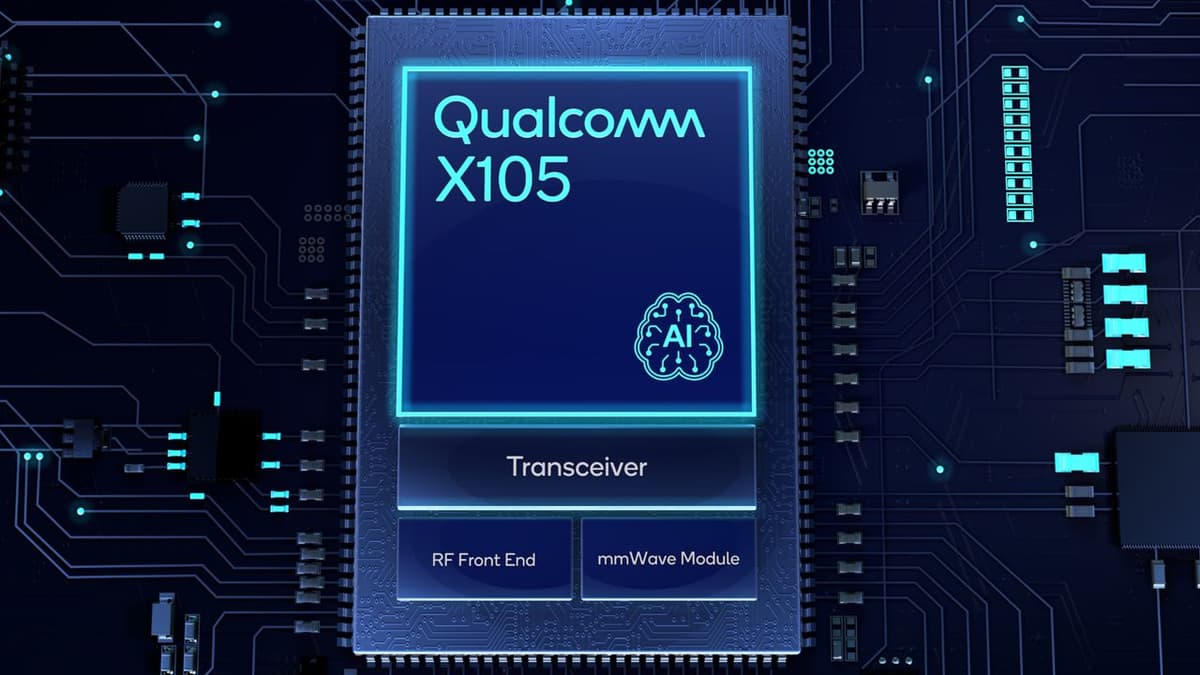
Qualcomm's X105 Modem Will Keep You Connected in Elevators and Parking Garages
•March 2, 2026
0
Companies Mentioned


Why It Matters
The X105 bridges coverage gaps in dense urban and off‑grid environments, accelerating the shift toward AI‑optimized, satellite‑augmented 5G and laying groundwork for 6G ecosystems.
Key Takeaways
- •X105 supports 5G satellite (NR‑NTN) connectivity.
- •NB‑IoT fallback improves signal in elevators, garages.
- •Agentic AI boosts performance via predictive intelligence APIs.
- •Downlink up to 14.8 Gbps, uplink 4.2 Gbps.
- •Expected in Snapdragon 8 Elite Gen 6 flagship devices.
Pulse Analysis
The launch of Qualcomm's X105 modem marks a pivotal step in the evolution of mobile connectivity, as manufacturers race to meet the demands of the AI‑driven era. By integrating NR‑NTN capabilities, the chip extends true 5G coverage beyond terrestrial towers, tapping satellite constellations to maintain high‑speed links where traditional networks falter. This satellite integration aligns with the broader 5G‑Advanced roadmap, which emphasizes resilience, low latency, and seamless handoffs across heterogeneous networks, setting a foundation for future 6G ambitions.
Beyond satellite reach, the X105 introduces a dual‑mode fallback using Narrowband IoT, a low‑power LTE‑based protocol designed for reliable messaging in signal‑challenged locations. Coupled with agentic AI, the modem can anticipate congestion and dynamically adjust parameters, delivering smoother video calls and faster downloads even in elevators or underground garages. Qualcomm’s open APIs invite third‑party developers to embed predictive intelligence directly into apps, potentially reshaping how services manage bandwidth and user experience on the fly.
For device makers, the X105 offers a compelling value proposition: a single silicon solution that consolidates high‑throughput 5G, satellite access, and IoT fallback while delivering industry‑leading speeds of 14.8 Gbps downlink and 4.2 Gbps uplink. Flagship smartphones such as the upcoming OnePlus 16 or Samsung Galaxy S27 Ultra could leverage these capabilities to differentiate on reliability and performance, appealing to power users and enterprise customers alike. As competitors scramble to match Qualcomm's AI‑enhanced modem suite, the X105 is set to become a benchmark for next‑generation mobile hardware.
Qualcomm's X105 modem will keep you connected in elevators and parking garages
0
Comments
Want to join the conversation?
Loading comments...