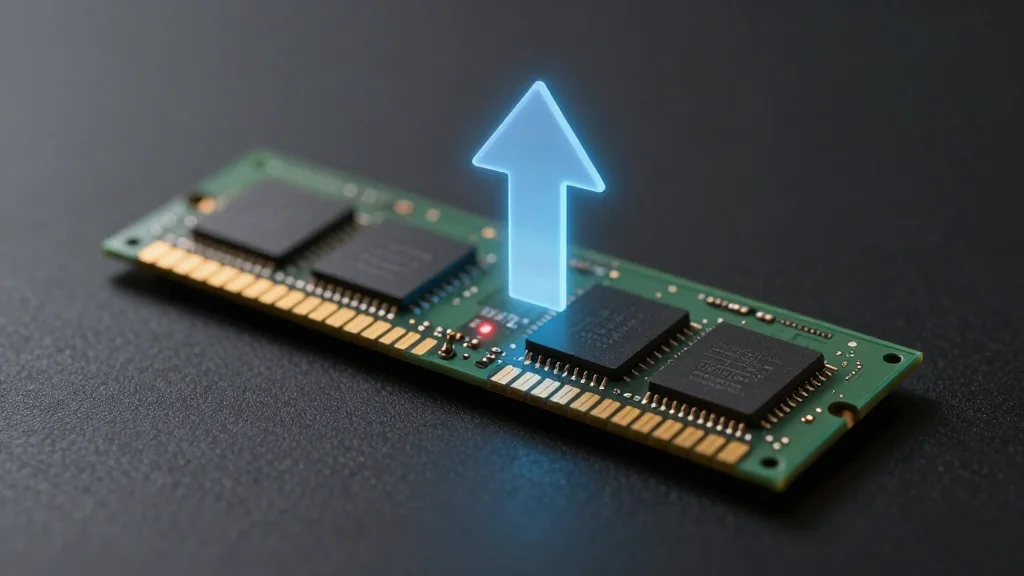
RAM Shortage Drives Up Laptop, Smartphone and Console Prices by Up to $300

Companies Mentioned

Why It Matters
The RAM shortage illustrates how a single component can ripple through the entire consumer‑tech ecosystem, inflating costs for devices that billions rely on daily. As AI workloads continue to dominate chipmaker roadmaps, the imbalance between data‑center and consumer memory allocation could become a persistent structural issue, reshaping pricing strategies and supply‑chain risk management. Beyond price tags, the shortage fuels a broader debate about the societal costs of AI. If consumers perceive AI as a driver of higher living expenses, public support for AI research and deployment could wane, prompting governments to intervene with taxes or caps on AI‑related memory consumption. The outcome will influence investment decisions across the semiconductor industry and the pace of AI adoption in consumer products.
Key Takeaways
- •Global DRAM shortage linked to AI demand raises laptop, smartphone and console prices by $150‑$300.
- •Dell, Acer, Lenovo, MSI and Framework report price hikes of up to 30% year‑over‑year.
- •IDC’s Jitesh Ubrani predicts tight memory supply through 2026, with modest relief only by 2028.
- •Johns Hopkins professor Tinglong Dai warns of consumer backlash and potential regulatory action.
- •Even virtual goods like Fortnite V‑Bucks see reduced value, reflecting the broader market impact.
Pulse Analysis
The current RAM crunch is a textbook case of demand‑side shock outpacing supply in a highly specialized market. AI’s exponential growth has re‑prioritized DRAM allocation toward data‑center GPUs, leaving consumer‑grade memory in a perpetual deficit. Historically, memory shortages have been cyclical, but the AI catalyst is different: it is not a temporary surge but a structural shift in how silicon is consumed. This means manufacturers cannot simply wait for a seasonal inventory replenishment; they must either redesign products to use less memory, secure long‑term contracts with memory fabs, or pass costs onto end users.
From a competitive standpoint, firms that own the memory stack—NVIDIA, AMD, and emerging players like Graphcore—stand to gain market share and pricing power, while traditional PC OEMs face margin compression. The price hikes also create a wedge between premium and budget segments, potentially accelerating the shift toward refurbished or second‑hand markets as price‑sensitive consumers look for alternatives. Meanwhile, policy makers in major economies are beginning to notice the consumer pain point, which could translate into new regulations that cap AI‑related memory consumption or impose levies on high‑intensity AI workloads.
Looking forward, the industry’s response will hinge on three variables: the speed of new DRAM fab capacity coming online, the evolution of alternative memory technologies (e.g., MRAM, HBM), and the regulatory environment. If memory capacity expands faster than AI demand, we could see a price correction by 2028 as Ubrani suggests. Conversely, if AI workloads continue to double annually, the shortage may become a chronic feature, forcing a re‑evaluation of device design philosophies and possibly spurring a wave of innovation in low‑memory AI models. Stakeholders—from chipmakers to device OEMs and policymakers—must therefore monitor memory supply metrics as closely as they track AI model performance.
RAM Shortage Drives Up Laptop, Smartphone and Console Prices by Up to $300
Comments
Want to join the conversation?
Loading comments...