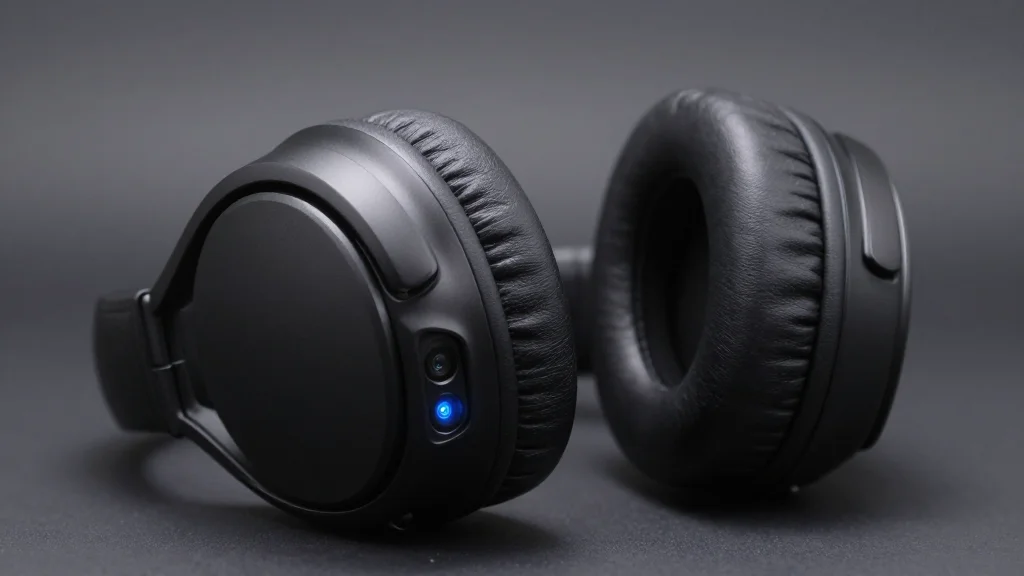
Razer Unveils Project Motoko AI Vision Headset at CES 2026

Companies Mentioned


Why It Matters
Project Motoko could redefine the consumer wearables category by merging AI vision with a form factor that already enjoys mass adoption. By removing the need for dedicated glasses, Razer may unlock new use cases—from real‑time translation to contextual information overlays—without the social friction that has hampered smart‑glasses adoption. The platform‑agnostic AI approach also signals a shift toward a more open ecosystem, potentially spurring competition among AI service providers to integrate with everyday hardware. If successful, the headset could accelerate the convergence of audio, visual and AI functions, prompting other manufacturers to explore similar hybrid designs. This would broaden the market for AI‑enhanced experiences and could drive a wave of software innovation tailored to ear‑cup cameras and on‑device processing.
Key Takeaways
- •Project Motoko replaces smart‑glasses with an over‑ear headset that includes dual cameras and a Snapdragon AI processor.
- •The device is platform‑agnostic, supporting Grok, OpenAI and Gemini AI services.
- •Razer positions the headset as a daily‑wear product, leveraging existing headphone adoption.
- •Smart‑glasses usability issues—prescription, visibility, social acceptance—are cited as the primary market barrier.
- •No pricing or launch date disclosed; developer prototypes are already in testing.
Pulse Analysis
Razer’s decision to embed AI vision in a headphone form factor is a strategic pivot that could reshape consumer expectations for wearable intelligence. Historically, the wearables market has been split between fitness‑focused bands and niche smart‑glasses, both of which have struggled to achieve mainstream penetration. By co‑opting headphones—a product with established daily usage patterns—Razer sidesteps the friction points that have limited smart‑glasses adoption. The move also aligns with broader trends in edge computing, where processing power is being pushed closer to the sensor to reduce latency and preserve privacy.
The open AI partner model is another noteworthy gamble. While it offers users flexibility, it also introduces complexity in delivering a seamless experience across disparate AI back‑ends. Competitors that have locked users into proprietary assistants may find themselves at a disadvantage if developers gravitate toward the more modular approach Razer promotes. However, the success of this strategy will hinge on the robustness of the SDKs and the willingness of AI providers to prioritize integration with a non‑standard hardware platform.
From an investment perspective, the headset could open new revenue streams for Razer beyond its core gaming peripherals. If the device proves viable for enterprise use cases—such as remote assistance, training, or real‑time translation—it could attract B2B contracts that supplement consumer sales. The key risk remains the hardware’s cost structure; Snapdragon‑based AI modules are still relatively expensive, and achieving a price point that appeals to mass‑market consumers will be critical. In the coming months, market watchers should monitor Razer’s supply‑chain announcements and developer feedback to gauge whether Project Motoko can transition from concept to commercial reality.
Razer Unveils Project Motoko AI Vision Headset at CES 2026
Comments
Want to join the conversation?
Loading comments...