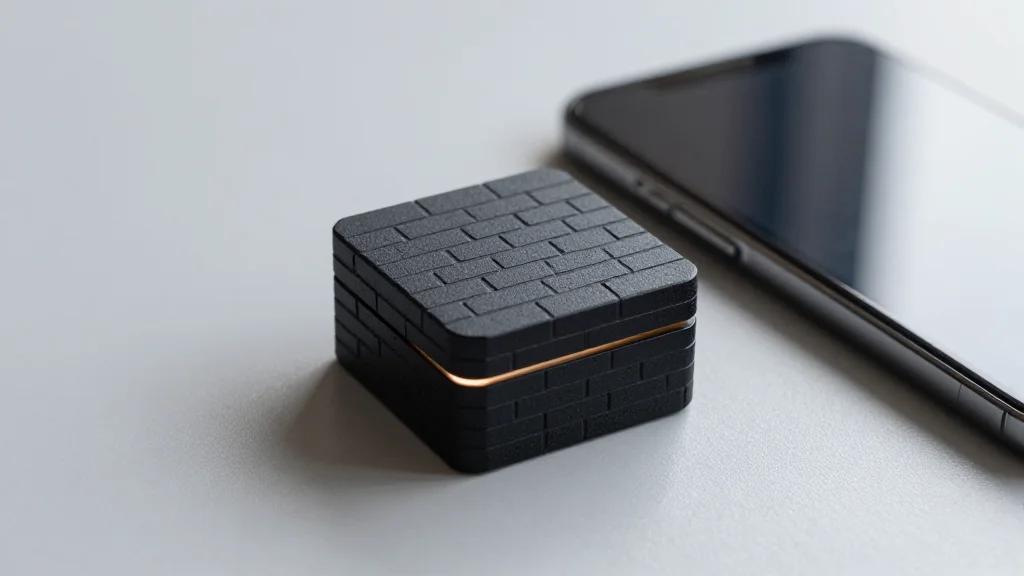
Reviewer Says $60 Brick Accessory Leaves Phone Bricked for Two Weeks, Questions Value

Why It Matters
Phone‑free accessories like the Brick represent a shift toward hardware‑based digital wellbeing tools, challenging the dominance of software‑only solutions. As consumers grow increasingly aware of screen‑time impacts, products that offer a tangible lockout could capture a segment of the market seeking enforceable boundaries. However, the reviewer’s experience highlights a key limitation: without cross‑device integration, such devices may only address part of the problem, potentially limiting widespread adoption. If manufacturers can broaden the Brick’s reach to laptops, tablets, and even smart TVs, the accessory could become a more comprehensive safeguard against digital distraction. Until then, its value proposition remains tied to users who are comfortable accepting a single‑device lockout in exchange for a modest hardware cost.
Key Takeaways
- •Reviewer tested the Brick for two weeks, logging a 14‑hour maximum block.
- •Daily average screen time before the trial was 4 hours 40 minutes.
- •Brick costs $60 and includes five "Emergency Unbricks" for lost devices.
- •Reviewer found the device ineffective during work because of desktop access.
- •Online sentiment shows over 33,000 reviews, indicating strong consumer interest.
Pulse Analysis
The Brick’s niche lies in its physical enforcement of screen‑time limits, a differentiator in a market saturated with app‑based controls. Historically, digital wellbeing tools have relied on software nudges that users can override; the Brick flips that model by requiring a tactile action to regain access. This approach resonates with a subset of users who view digital discipline as a habit‑forming exercise rather than a passive setting.
From a competitive standpoint, the Brick competes not only with other hardware solutions like the Light Phone but also with ecosystem‑wide features from Apple and Google that integrate screen‑time limits directly into the OS. Its advantage is simplicity and low entry cost, but its disadvantage is a lack of ecosystem integration. As the reviewer noted, the ability to sidestep the block via a desktop undermines its efficacy. Future product roadmaps that incorporate Bluetooth or Wi‑Fi to extend the lockout across devices could close this gap and position the Brick as a more holistic digital wellbeing platform.
Investors and manufacturers should watch consumer response to the Brick as a barometer for demand in hardware‑centric wellbeing products. If the market validates the need for tangible barriers, we may see a wave of accessories—ranging from smart locks for apps to wearable devices that mute notifications—entering mainstream retail. The Brick’s current price point and mixed user experience suggest it is an early‑stage offering; scaling up will require addressing cross‑device compatibility, durability, and perceived value to move beyond a novelty into a staple of the consumer tech toolkit.
Reviewer Says $60 Brick Accessory Leaves Phone Bricked for Two Weeks, Questions Value
Comments
Want to join the conversation?
Loading comments...