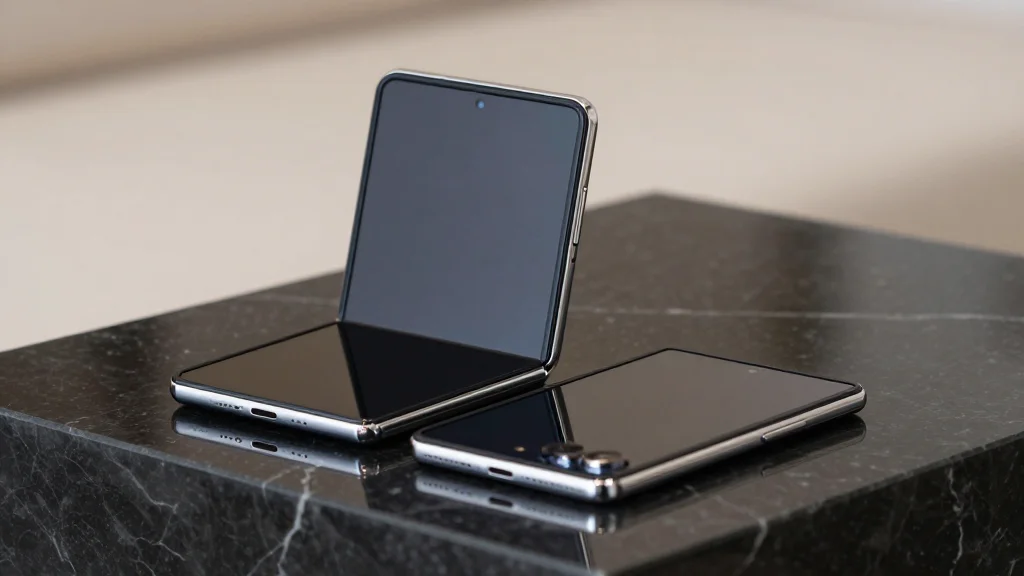
Samsung Galaxy Z Fold 8 and Google Pixel 11 Pro Fold Set to Clash in 2026 Foldable Showdown

Companies Mentioned
Why It Matters
The Z Fold 8 vs Pixel 11 Pro Fold showdown will define the premium foldable market just as Apple prepares to enter the segment. Samsung’s performance lead could cement its status as the benchmark for high‑end Android foldables, while Google’s focus on AI integration may attract users seeking a more seamless software experience. Pricing decisions will also signal how manufacturers plan to absorb AI‑related component cost pressures without alienating price‑sensitive buyers. Beyond the two flagships, the naming controversy at Samsung highlights the strategic importance of branding in a crowded premium space. A shift to an “Ultra” moniker could set a new price ceiling, influencing how other OEMs position their own foldables and potentially accelerating the convergence of high‑end specs with luxury pricing. Finally, the impending iPhone Fold adds a wildcard that could redraw market dynamics. If Apple’s entry captures even a modest share, both Samsung and Google may need to accelerate innovation cycles, adjust pricing, or deepen ecosystem lock‑ins to retain their lead.
Key Takeaways
- •Samsung Galaxy Z Fold 8 launch set for July 22 in London, price $1,999
- •Google Pixel 11 Pro Fold expected in August, starting at $1,799
- •Z Fold 8 to use Snapdragon 8 Elite Gen 5 for Galaxy; Pixel 11 Pro Fold to run Tensor G6
- •Rumors of Samsung renaming its standard model to “Z Fold 8 Ultra” amid Apple Fold hype
- •Both devices retain 8‑inch inner OLED displays with 120 Hz refresh, but Pixel may be 0.7 mm thinner
Pulse Analysis
Samsung’s decision to keep the Z Fold 8’s price steady at $1,999 is a calculated gamble. By preserving the premium price point, Samsung signals confidence that its hardware lead—particularly the Snapdragon 8 Elite Gen 5—will continue to justify the cost for power users and enterprise customers who value the S Pen and multitasking capabilities. However, the rumored “Ultra” rebranding could backfire if consumers perceive the change as a price‑inflation tactic rather than a genuine upgrade. Historically, Samsung’s Ultra branding on the S‑series has delivered tangible hardware boosts; replicating that success on a foldable will require more than a marginally larger screen.
Google’s approach leans heavily on software differentiation. The Tensor G6 is expected to deepen on‑device AI, enhancing real‑time translation, photography, and security. By holding the entry price at $1,799, Google aims to undercut Samsung while offering a more integrated AI experience. This could attract a younger demographic that prioritizes software fluidity over raw benchmark scores. Yet, Google must ensure the Tensor G6 can keep pace with Samsung’s Snapdragon in graphics‑intensive tasks, or risk being pigeonholed as a “soft‑core” foldable.
The looming iPhone Fold adds strategic urgency. Apple’s brand cachet could siphon high‑end buyers away from Android, especially if the iPhone Fold delivers a compelling price‑to‑feature ratio. Both Samsung and Google will likely double‑down on ecosystem lock‑ins—Samsung with its Galaxy ecosystem and Google with its suite of AI‑driven services—to retain loyalty. In the short term, the Z Fold 8 vs Pixel 11 Pro Fold battle will shape consumer expectations for performance, price, and AI integration, setting the stage for how the foldable market adapts to Apple’s entry.
Samsung Galaxy Z Fold 8 and Google Pixel 11 Pro Fold Set to Clash in 2026 Foldable Showdown
Comments
Want to join the conversation?
Loading comments...