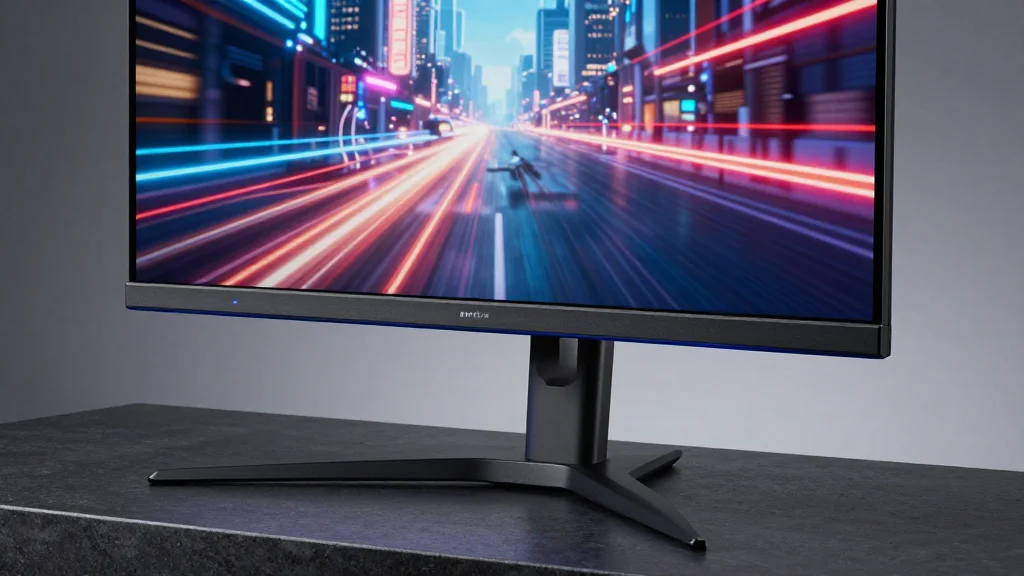
Samsung Launches Odyssey G8, World’s First 6K Gaming Monitor

Companies Mentioned
Why It Matters
The Odyssey G8 establishes a new resolution ceiling for consumer gaming monitors, forcing GPU manufacturers to ensure their next‑gen cards can sustain 6K output at high refresh rates. This shift could accelerate the adoption of PCIe 5.0 and DisplayPort 2.0 standards across the PC ecosystem. Additionally, Samsung’s dual‑mode approach offers a template for balancing pixel density with frame‑rate demands, a trade‑off that has long constrained competitive gamers. By cementing its 26 % OLED gaming monitor share and adding a flagship LCD‑based 6K model, Samsung positions itself as the de‑facto supplier for both high‑fidelity visual experiences and ultra‑responsive esports setups. The move may also pressure rivals to invest in higher‑resolution panels, potentially reshaping the premium monitor market for the next several years.
Key Takeaways
- •Samsung's Odyssey G8 (32‑inch) delivers 6K resolution at 165 Hz, the first gaming monitor at this pixel count.
- •Dual‑mode option drops to 3K resolution but raises refresh to 330 Hz for ultra‑fast motion clarity.
- •27‑inch variant offers 5K at 180 Hz and 1440p at 360 Hz, expanding the performance envelope.
- •Samsung holds a 26 % share of the global OLED gaming monitor market, reinforcing its leadership.
- •Price for the 6K G8 is expected in the $800‑$1,200 range, targeting high‑end enthusiasts.
Pulse Analysis
Samsung’s decision to launch a 6K gaming monitor is a bold bet on the future of PC graphics. Historically, monitor resolution upgrades have lagged behind GPU capabilities; the industry moved from 1080p to 1440p, then to 4K, each step taking several product cycles. By leaping directly to 6K, Samsung is effectively forcing the market to accelerate its hardware roadmap. GPU vendors will need to ensure that memory bandwidth, power delivery, and driver optimization can handle the increased pixel load without throttling performance, especially at the 165 Hz target.
The dual‑mode refresh strategy is a pragmatic compromise. Competitive gamers have long prioritized frame rate over resolution, and the 330 Hz 3K mode gives them a viable alternative when the GPU cannot sustain 6K at high frame rates. This flexibility could broaden the G8’s appeal beyond a niche of simulation enthusiasts to include esports athletes who demand the fastest possible response times. However, the premium price tag may limit early adoption, and the monitor’s success will hinge on whether game developers begin to ship titles with native 6K support.
From a market dynamics perspective, Samsung’s move could trigger a cascade of responses from rivals. Asus’s ROG and Acer’s Predator lines have already flirted with 4K/240 Hz panels; a 6K competitor forces them to consider whether to double down on ultra‑high resolution or double‑down on refresh rate. The broader implication is a potential bifurcation of the high‑end monitor segment into two camps: one focused on visual fidelity for content creation and simulation, the other on raw speed for competitive play. Samsung’s simultaneous push into OLED with higher HDR certification further blurs the line, suggesting a future where gamers can toggle between pixel density, color depth, and latency based on the title they are playing. The next few quarters will reveal whether the market embraces this complexity or consolidates around a single performance axis.
Samsung Launches Odyssey G8, World’s First 6K Gaming Monitor
Comments
Want to join the conversation?
Loading comments...