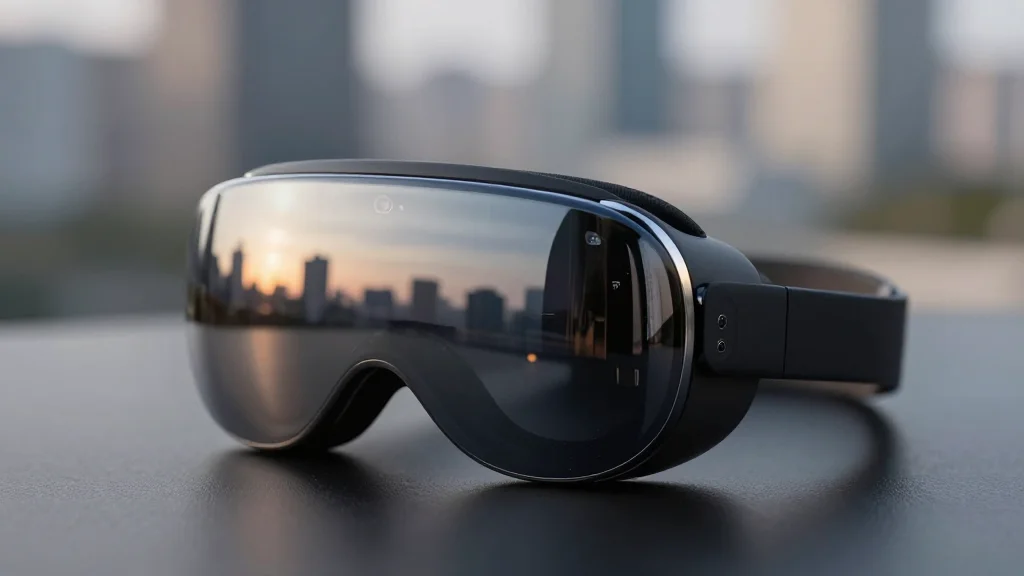
Samsung Positions Galaxy XR Headset as Springboard for Future AR Smart Glasses

Companies Mentioned

Why It Matters
The Galaxy XR’s positioning as a platform for AR smart glasses matters because it signals Samsung’s intent to move beyond high‑price, niche headsets into mass‑market wearables. By reusing core technologies—eye tracking, gesture control, and Android XR—Samsung can lower development costs and accelerate time‑to‑market for glasses that blend digital content with everyday vision. If successful, Samsung could challenge Apple’s Vision Pro and Meta’s glass projects, expanding consumer choice in a segment that has struggled to achieve mainstream adoption. Moreover, the move underscores the growing importance of “facial computing,” where devices become extensions of the face rather than handheld accessories. A successful AR glasses line could unlock new use cases in productivity, entertainment, and enterprise, driving broader ecosystem growth for developers and advertisers alike.
Key Takeaways
- •Galaxy XR headset launched six months ago at $1,800, priced about half of Apple Vision Pro.
- •James Choi, Samsung’s XR R&D EVP, says the headset creates a scalable ecosystem for future glasses.
- •Device runs Android XR, enabling Android apps in spatial environments.
- •Samsung is developing its first smart glasses, expected in the coming months.
- •Headset features 4K micro‑OLED optics, eye‑tracking, gesture control, but weighs 1.2 lb.
Pulse Analysis
Samsung’s approach reflects a pragmatic shift from pure hardware ambition to ecosystem leverage. By treating the Galaxy XR as a development platform rather than a final consumer product, Samsung can iterate on core XR capabilities while gathering user data and developer interest. This mirrors Apple’s strategy with the Vision Pro, which also serves as a testbed for future wearables, but Samsung’s reliance on Android XR gives it a broader app base and potentially faster adoption among Android‑centric users.
Historically, AR glasses have faltered due to form‑factor constraints and limited compelling content. Samsung’s emphasis on “scalable ecosystem” suggests a modular roadmap: start with a heavyweight headset to perfect eye‑tracking and AI interaction, then strip down the hardware for glasses. If Samsung can retain the same interaction fidelity in a lighter device, it could overcome the eye‑strain and comfort issues that plagued earlier attempts.
Looking ahead, the key risk lies in execution speed and market timing. Competitors like Meta are already shipping lighter AR glasses, albeit with less sophisticated optics. Samsung must deliver a product that not only matches but exceeds the user experience of existing glasses while staying competitively priced. The next 12 months will reveal whether Samsung can translate its XR R&D into a consumer‑ready AR glasses line that reshapes the wearables market.
Samsung positions Galaxy XR headset as springboard for future AR smart glasses
Comments
Want to join the conversation?
Loading comments...