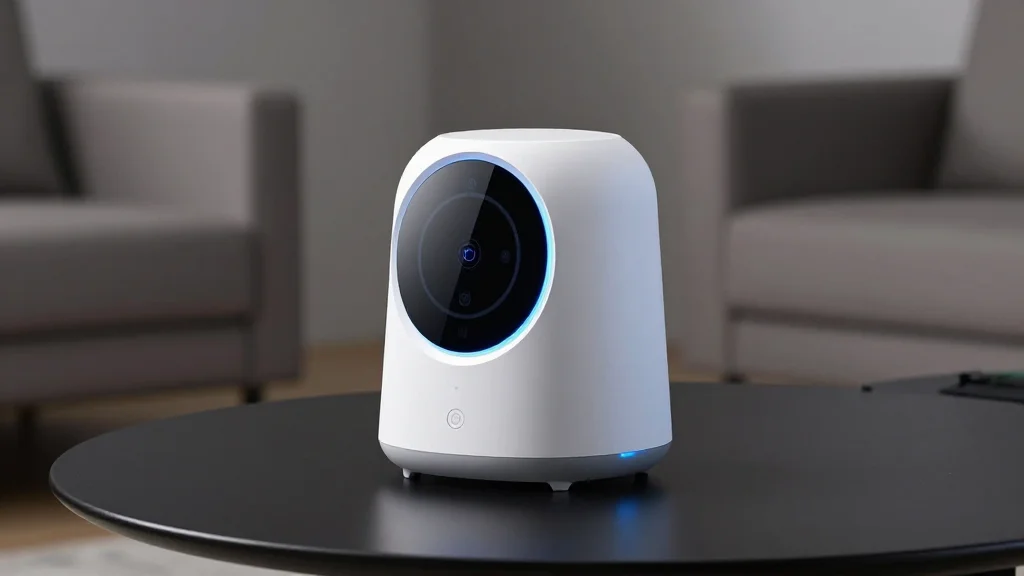
Samsung Unveils Project Luna Robot with Swiveling Circular Screen at Milan Design Week

Companies Mentioned
Why It Matters
Project Luna signals Samsung’s intent to re‑enter the smart‑home market with a differentiated hardware form factor. By marrying a kinetic display with voice interaction, Samsung could carve out a niche that competes with static smart speakers, potentially reshaping consumer expectations for desktop‑size AI companions. The concept also reflects a broader industry trend toward more immersive, design‑forward devices that blend function with aesthetics, a shift that could influence how other manufacturers approach AI‑enabled hardware. If Samsung can overcome the engineering and software challenges that stalled earlier projects like Galaxy Home and Ballie, Project Luna could become a catalyst for a new wave of interactive home devices. Its success—or failure—will provide a barometer for consumer appetite for moving displays and could inform the strategic direction of AI hardware across the sector.
Key Takeaways
- •Samsung debuted Project Luna, a robot‑style desktop gadget with a rotating circular screen, at Milan Design Week 2026.
- •Chief design officer Mauro Porcini called the concept a "vibe" and said "These are all things that could really happen in the future."
- •Luna combines smart‑speaker functions, voice interaction and a kinetic display that swivels to face the user.
- •The concept follows Samsung’s troubled smart‑speaker history, including the cancelled Galaxy Home and delayed Ballie robot.
- •Analysts see Luna as a potential new category that could challenge Amazon and Google’s static smart speakers.
Pulse Analysis
Samsung’s Project Luna is less a product launch than a design manifesto, but its implications run deep. The rotating circular screen tackles a long‑standing limitation of flat‑panel smart speakers: a fixed visual plane that can’t adapt to user position. By introducing motion, Samsung hints at a future where AI devices become more physically aware of their environment, a capability that could unlock richer contextual interactions—think a speaker that turns toward a conversation or follows a user’s line of sight.
Historically, Samsung’s smart‑home ventures have stumbled, largely because hardware innovations arrived without a compelling software ecosystem. Project Luna’s lack of a defined AI assistant suggests the company is still searching for the right software partner, whether that be its own Gemini AI or a third‑party platform. If Samsung can marry its hardware ingenuity with a robust conversational AI, it could finally leverage its massive consumer base to compete with Amazon Echo and Google Nest.
From a market perspective, Luna may also be a testbed for premium, design‑centric devices aimed at affluent early adopters. The sleek, kinetic aesthetic aligns with Samsung’s broader strategy of positioning its hardware as lifestyle statements, not just functional tools. Should the concept evolve into a commercial product, it could open a new revenue stream that sits between high‑end audio equipment and mainstream smart speakers, forcing competitors to rethink the visual and interactive dimensions of their own offerings.
Samsung Unveils Project Luna Robot with Swiveling Circular Screen at Milan Design Week
Comments
Want to join the conversation?
Loading comments...