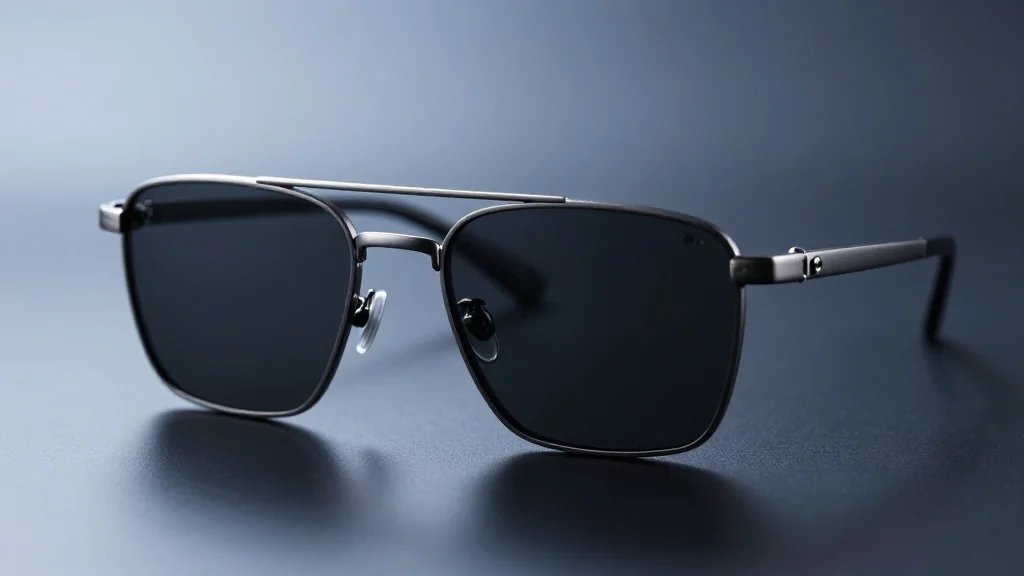
Samsung's Galaxy Glasses Surface in One UI 8.5 Code, Pointing to Late‑2026 Launch

Companies Mentioned


Why It Matters
The appearance of Samsung’s Galaxy Glasses in One UI code marks the company’s first foray into AR wearables, a segment that has yet to achieve mainstream traction. By leveraging its massive hardware ecosystem, Samsung could lower barriers to entry for consumers, potentially accelerating adoption of smart‑glasses technology. A successful launch would also intensify competition among the few players currently offering AR eyewear, prompting faster innovation cycles and possibly driving down prices. Beyond consumer appeal, the Galaxy Glasses could serve as a platform for Samsung’s broader ambitions in mixed reality, including integration with its VR headset lineup and future services such as spatial computing apps. The device’s success or failure will provide a bellwether for how traditional smartphone manufacturers can transition into emerging form factors without cannibalizing their core business.
Key Takeaways
- •Samsung’s Galaxy Glasses icon found in One UI 8.5 and unreleased One UI 9 code.
- •Device expected to launch in late 2026 as a phone‑companion AR eyewear.
- •Executive Jay Kim confirmed the glasses will not be standalone, mirroring early Meta models.
- •Samsung may follow with a more advanced mixed‑reality version in 2027.
- •Launch could pressure existing players like Meta, Google, and Snap, reshaping the AR wearables market.
Pulse Analysis
Samsung’s tentative entry into smart glasses arrives at a pivotal moment for AR wearables. The market has been dominated by niche products that struggle with battery life, privacy concerns, and a lack of compelling use cases. Samsung’s strength lies in its integrated hardware-software approach; embedding the glasses directly into One UI could eliminate many of the friction points that have hampered competitors. By positioning the device as a companion rather than a standalone unit, Samsung sidesteps the technical challenges of on‑device processing while still offering a seamless user experience for notifications, navigation, and media playback.
However, the companion model also limits differentiation. If the Galaxy Glasses merely replicate the functionality of existing Ray‑Ban Stories, Samsung risks being perceived as a follower rather than an innovator. The real test will be whether Samsung can deliver unique features—perhaps leveraging its expertise in display technology, sensor fusion, or integration with its ecosystem of TVs, appliances, and Bixby AI—to create a compelling value proposition. A successful launch could unlock new revenue streams and cement Samsung’s role as a hardware leader in the emerging spatial computing era.
Investors should watch for signals of supply‑chain readiness and pricing strategy. Samsung’s ability to mass‑produce at scale could drive costs down, making AR glasses more accessible to a broader audience. Conversely, a premium price tag could relegate the product to early adopters, limiting its impact on overall wearables adoption rates. The upcoming product announcement will likely set the tone for the next wave of consumer AR, and Samsung’s execution will be a key determinant of whether the technology moves from novelty to everyday utility.
Samsung's Galaxy Glasses Surface in One UI 8.5 Code, Pointing to Late‑2026 Launch
Comments
Want to join the conversation?
Loading comments...