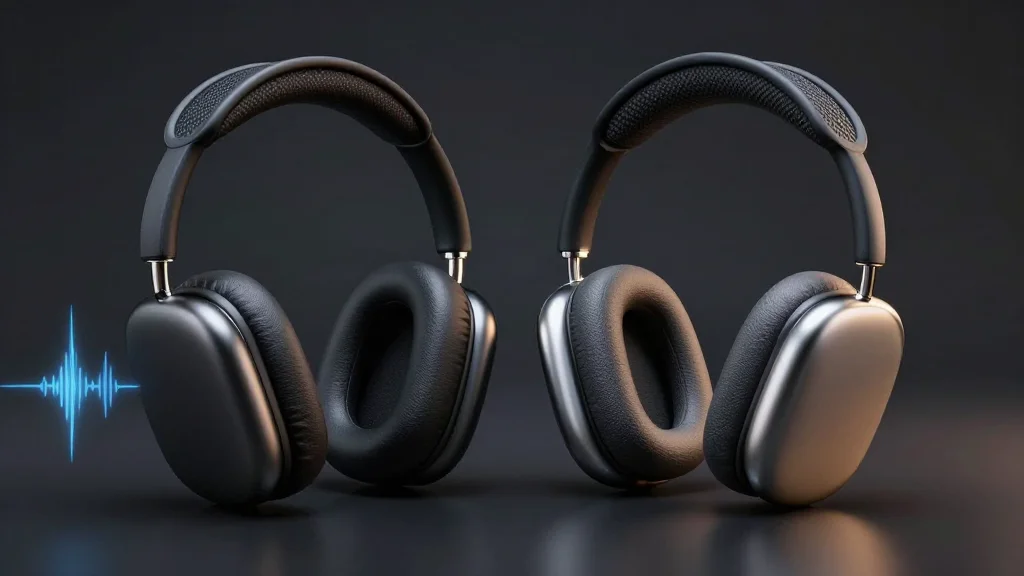
Sony WH-1000XM6 Beats Bowers & Wilkins Px8 S2 in $300 Price‑Performance Clash

Why It Matters
The head‑phone market is a bellwether for consumer tech spending, especially as remote work, travel and mobile entertainment drive demand for high‑quality audio. Sony’s WH‑1000XM6 sets a benchmark for affordable premium ANC, forcing competitors like Bowers & Wilkins to justify higher price points with material quality and codec support. Meanwhile, the surge of sub‑$50 and sub‑$30 options demonstrates that effective noise cancellation is no longer exclusive to flagship models, expanding the addressable market and pressuring premium brands to innovate beyond raw specs. For investors and product strategists, the price‑performance tension highlighted by the $300 gap signals where future R&D dollars may flow: smarter ANC algorithms, longer battery life, and tighter integration with mobile OS ecosystems. As consumers become more discerning about value versus luxury, manufacturers that can deliver a compelling mix of features at a competitive price will capture the growing segment of “smart‑budget” buyers, while true‑premium players will need to double‑down on craftsmanship and exclusive audio technologies.
Key Takeaways
- •Sony WH-1000XM6 retails at $450, praised for top‑tier adaptive ANC and smart features.
- •Bowers & Wilkins Px8 S2 costs $800, offering premium materials and high‑resolution AptX codecs.
- •Anker Soundcore Space 2 provides a $130 alternative with improved ANC and memory‑foam ear pads.
- •Amazon’s RUNOLIM Hybrid ANC headphones sell for £18.98 (~$23), earning rave reviews for value.
- •Consumer demand for long battery life and reliable ANC drives a three‑tier market from $23 to $800.
Pulse Analysis
Sony’s WH‑1000XM6 continues to dominate the mid‑range ANC segment by bundling a robust software stack with a comfortable, long‑lasting design. The brand’s strategy of incremental upgrades—adding LC3 codec support and refined Speak‑to‑Chat functionality—keeps the product fresh without a radical price hike, a tactic that has historically protected its market share against both high‑end audiophile gear and low‑cost newcomers.
Bowers & Wilkins, meanwhile, is playing a classic luxury game: leveraging heritage materials and high‑fidelity codecs to appeal to a niche of discerning listeners who value soundstage and build quality over convenience. The $300 premium over Sony is defensible only if buyers prioritize the tactile experience and codec ecosystem that aligns with high‑end home audio setups. However, the lack of intuitive ANC software may limit its appeal to the broader commuter crowd that values plug‑and‑play performance.
The proliferation of budget ANC headphones—exemplified by Anker’s $130 Space 2 and the $23 RUNOLIM deal—signals a democratization of noise‑cancellation technology. As semiconductor costs fall and Bluetooth standards converge, manufacturers can embed competent ANC in far cheaper chassis. This pressure forces premium brands to differentiate through ecosystem integration (e.g., Sony’s Android and Windows pairing shortcuts) and exclusive audio processing patents. In the coming year, we can expect Sony to tighten its pricing or introduce a lower‑cost sibling to guard against erosion from the budget tier, while B&W may explore software upgrades to close the ANC gap and justify its luxury price point.
Overall, the $300 price differential between Sony and B&W encapsulates a broader industry narrative: premium audio is no longer a monolith, but a spectrum where value, performance, and brand heritage intersect. Companies that can navigate this spectrum—delivering meaningful upgrades without alienating price‑sensitive consumers—will shape the next wave of headphone adoption.
Sony WH-1000XM6 Beats Bowers & Wilkins Px8 S2 in $300 Price‑Performance Clash
Comments
Want to join the conversation?
Loading comments...