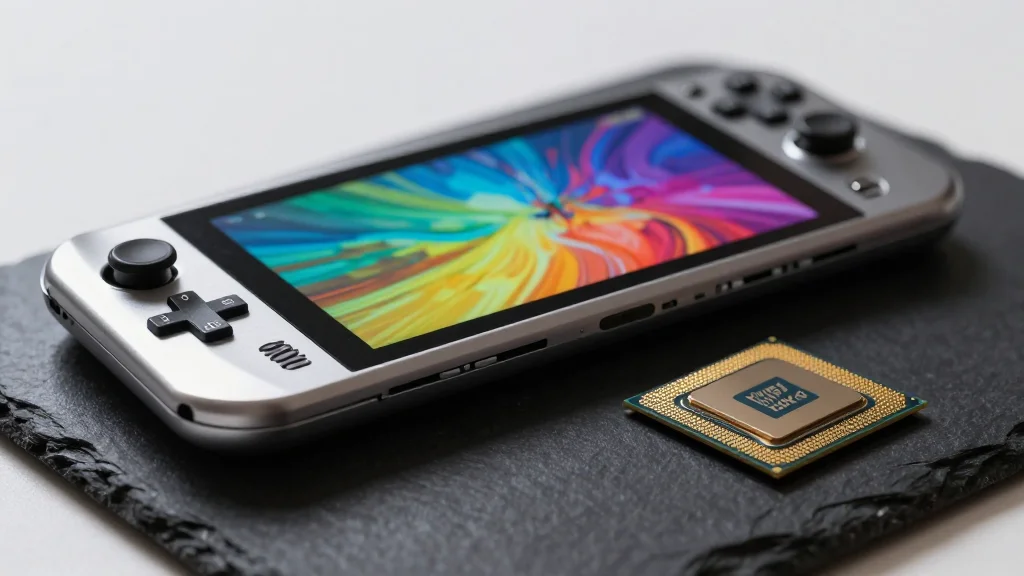
Steam Deck Sells Out Again Despite $300 Price Hike, Meanwhile Intel Unveils New Handheld Chip to Counter AMD's Dominance
Companies Mentioned


Why It Matters
The rapid sell‑out shows strong consumer demand for Valve’s Linux‑based handheld despite higher pricing, while Intel’s new chips could reshape the competitive landscape by giving developers a viable AMD alternative for next‑gen handhelds.
Key Takeaways
- •Steam Deck sold out within 24 hours after $300 price increase
- •OLED Deck still leads Steam sales despite spotty availability
- •Intel's Arc G3 APUs target handheld market with 14‑core CPUs
- •G3 devices will ship starting June, featuring XeSS upscaling
- •AMD's upcoming FSR 4 may narrow performance gap on handhelds
Pulse Analysis
The Steam Deck’s recent price hike to $789 for the 512 GB OLED model and $949 for the 1 TB version has sparked debate, but the device’s sell‑out in less than a day underscores a loyal user base willing to pay a premium for Valve’s curated Linux ecosystem. Supply constraints, driven by a worldwide RAM shortage, have made the Deck’s availability erratic, yet its lower‑priced configuration still outperforms many Windows‑based rivals on Steam’s revenue leaderboard. Comparisons with Asus’s ROG Xbox Ally highlight a shifting value proposition: while the Ally offers comparable performance at $599 and a $999 high‑end variant, the Deck’s OLED screen remains its unique selling point.
Intel’s introduction of the Arc G3 and G3 Extreme APUs marks a strategic push into the handheld arena traditionally dominated by AMD’s Z2 series. Built on an 18‑nanometer process, the chips deliver 14‑core CPUs and a Xe3‑based B390 iGPU, paired with XeSS super‑resolution technology that currently outperforms AMD’s FSR 3. Intel also announced pre‑compiled shader support, mirroring features already present on the Steam Deck and Microsoft’s Advanced Shader Delivery, reducing in‑game stutter. Early adopters such as MSI’s Claw 8 EX AI+, OneXPlayer, and Acer’s Predator Atlas 8 are slated to ship from June, offering high‑refresh displays and up to 24 GB of LPDDR5x RAM.
The handheld gaming market is entering a pivotal phase as Intel and AMD vie for supremacy. AMD’s forthcoming FSR 4, set to debut on RDNA 3 hardware next month, could erode Intel’s XeSS advantage, especially for devices like the ROG Xbox Ally X. Consumers will weigh factors beyond raw performance—price, screen quality, and ecosystem lock‑in—when choosing between Valve’s Linux‑centric Deck, Intel‑powered newcomers, or AMD‑backed Windows devices. As supply normalizes and next‑gen chips roll out, the competition is likely to drive innovation, lower prices, and broaden the appeal of portable PC gaming to a mainstream audience.
Steam Deck sells out again despite $300 price hike, meanwhile Intel unveils new handheld chip to counter AMD's dominance
Comments
Want to join the conversation?
Loading comments...