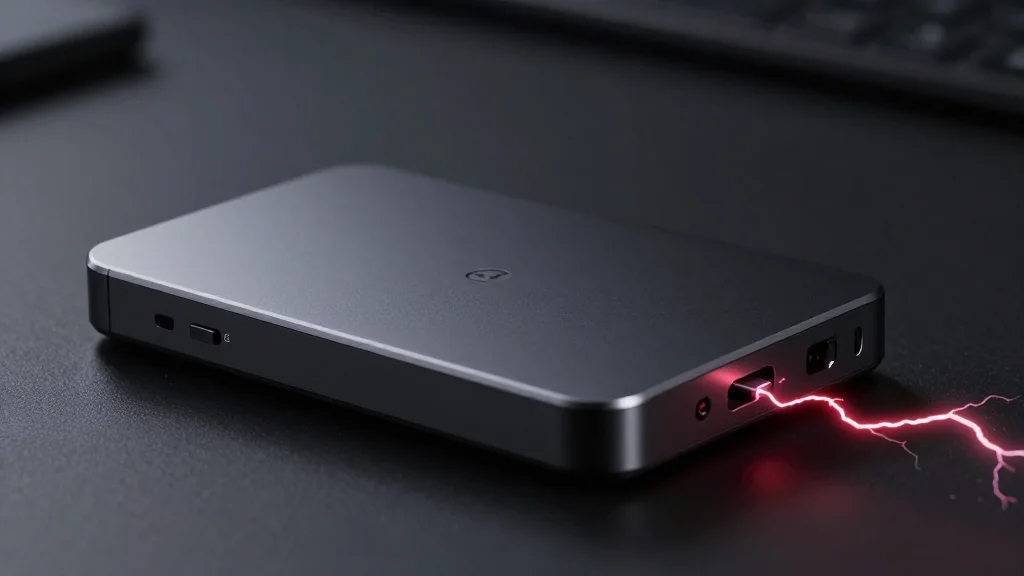
TeamGroup Built an External SSD that Destroys Itself when You Send It a Text Message
Companies Mentioned

Why It Matters
Remote self‑destruct capability addresses the growing risk of data exposure from lost or stolen portable drives, giving enterprises a decisive tool for compliance and breach mitigation.
Key Takeaways
- •TeamGroup's T‑Create Expert P35SG self‑destructs via 4G LTE text command.
- •Two‑step wipe: logical erase followed by high‑voltage hardware damage.
- •Remote destruction targets lost or stolen drives, enhancing data protection.
- •Physical button version P35S offers manual self‑destruct option.
- •AI‑focused CUDIMM packs 128 GB DDR5, enabling 256 GB systems.
Pulse Analysis
The introduction of TeamGroup's T‑Create Expert P35SG marks a notable evolution in portable storage security. By embedding a 4G LTE module, the SSD can receive a text‑message trigger even when disconnected from any network, initiating a two‑phase destruction sequence that first overwrites data and then physically disables the NAND chips. This remote wipe capability directly addresses the pain point of data leakage from devices that fall out of an organization’s physical control, offering a compliance‑friendly alternative to traditional encryption alone.
Beyond the self‑destruct SSD, TeamGroup showcased a suite of products aimed at high‑performance and niche markets. The AI‑focused CUDIMM pushes DDR5 capacity to 128 GB per module, enabling developers to run larger local AI models without resorting to cloud resources. Meanwhile, the T‑Force Liquid II SSD cooler applies liquid cooling—once reserved for CPUs and GPUs—to storage, mitigating thermal throttling in sustained workloads. The e‑Paper‑display P33 SSD and low‑profile DARK RGB DDR5 modules reflect a broader trend toward user‑centric design and compact form factors, catering to both enterprise and enthusiast builders.
Collectively, these announcements signal a shift where storage is no longer a passive repository but an active security and performance component. Companies handling sensitive data may adopt remote‑destruct drives to meet stricter data‑privacy regulations, while AI developers benefit from unprecedented memory density. However, widespread adoption will hinge on cost considerations, reliability of the self‑destruct mechanism, and integration with existing device‑management platforms. As the line between hardware and security blurs, manufacturers that embed protective features at the silicon level are likely to gain a competitive edge.
TeamGroup built an external SSD that destroys itself when you send it a text message
Comments
Want to join the conversation?
Loading comments...