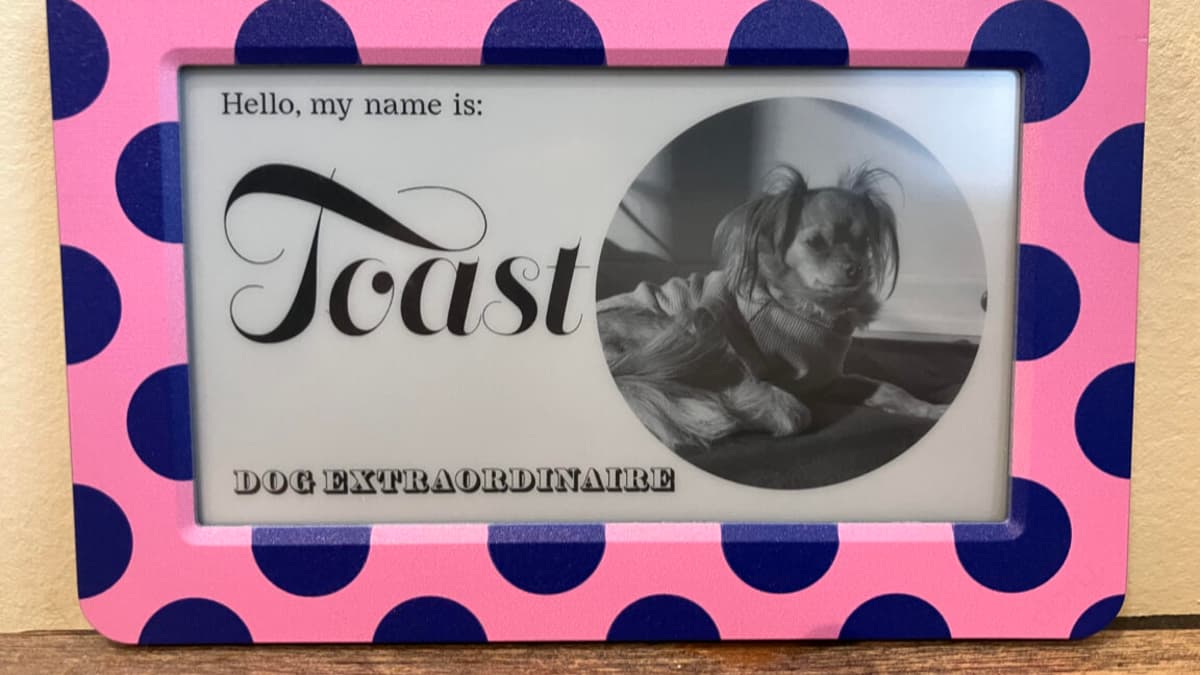
The Dory Sign Is E Ink, Smart Screen Simplicity at Its Finest
Why It Matters
Dory demonstrates how low‑power E‑Ink can deliver durable, customizable signage, offering a sustainable alternative to frequent paper replacements while highlighting the risk of app‑dependent hardware longevity.
Key Takeaways
- •Dory Sign uses E‑Ink, consuming power only on updates.
- •Battery supports up to 1,000 updates, lasting 10‑15 years.
- •App‑based control raises risk of device bricking if company folds.
- •Priced at $149, targeting office, home, and small‑business signage.
- •Certified Calm Tech, emphasizing low‑stress user experience.
Pulse Analysis
The rise of E‑Ink technology has reshaped low‑power signage, offering paper‑like readability without backlighting. Unlike conventional LCD or LED panels, E‑Ink only draws electricity when the image changes, making it ideal for static messages in offices, apartments, or storefronts. Companies such as Dory are leveraging this advantage to create compact, Bluetooth‑enabled signs that can be customized through mobile apps. As businesses seek cost‑effective ways to convey dynamic information while reducing energy consumption, E‑Ink‑based smart signs are gaining traction in the broader IoT ecosystem.
Dory prices the sign at $149 and backs it with a claim of up to 1,000 content updates over a 10‑ to 15‑year battery life. If the estimate holds, the total cost of ownership becomes comparable to a traditional paper placard that must be replaced annually. This longevity aligns with sustainability goals, as fewer device replacements translate into reduced electronic waste. For small‑business owners, the upfront expense can be justified by the sign’s durability, IP44 rating, and the ability to display QR codes, schedules, or branding without recurring printing costs.
The sign’s reliance on a proprietary mobile app introduces a long‑term risk: if Dory discontinues support, the hardware could become unusable—a scenario known as bricking. Industry peers mitigate this by offering open‑source firmware or fallback manual controls, ensuring devices remain functional independent of cloud services. Dory’s CEO promises to keep the app alive, but without a transparent roadmap, enterprise buyers may hesitate. Future smart‑sign solutions may benefit from dual‑mode operation, combining Bluetooth updates with on‑device buttons, thereby preserving utility even if the vendor exits the market.
The Dory Sign is E ink, smart screen simplicity at its finest
Comments
Want to join the conversation?
Loading comments...