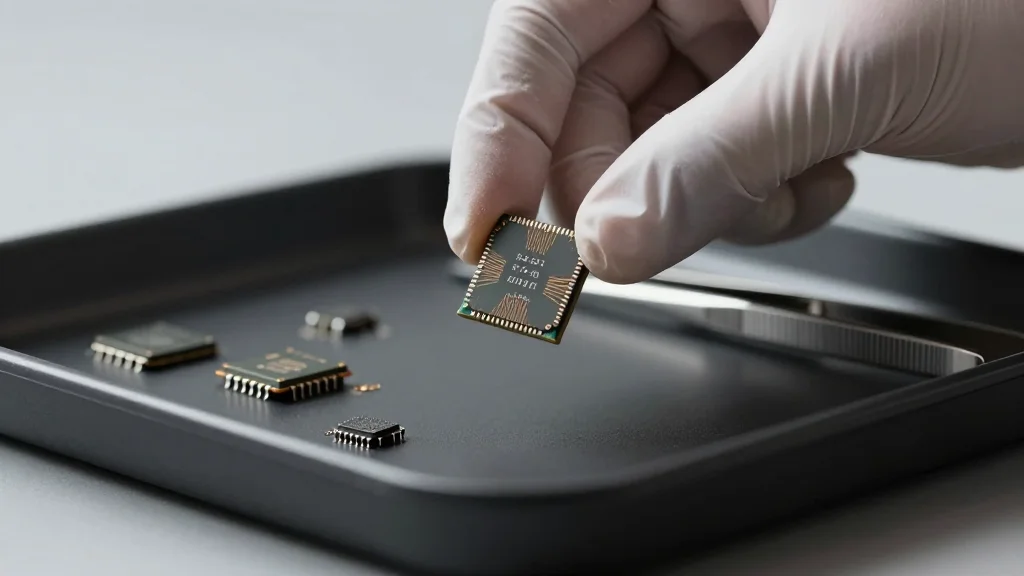
The Google Pixel 11 Will Reportedly Feature a 5-Year-Old GPU
Why It Matters
A legacy GPU may erode Pixel’s competitiveness in a market where visual performance drives buying decisions, potentially harming Google’s smartphone market share. The move signals how hardware trade‑offs can outweigh software fixes in premium devices.
Key Takeaways
- •Pixel 11 may retain 2021 PowerVR GPU
- •Outdated GPU could widen performance gap vs Samsung
- •Google's CPU upgrade may not offset graphics lag
- •Software updates may improve but can't match newer hardware
- •Animal codenames hint at internal branding continuity
Pulse Analysis
Google’s decision to reuse a five‑year‑old PowerVR GPU in the Pixel 11 underscores a strategic gamble. While the Tensor G6’s seven‑core ARMv9.3‑A CPU promises strong compute performance, the graphics subsystem remains a bottleneck. Competitors such as Samsung and Motorola have already integrated newer GPUs that support hardware‑accelerated ray tracing and Vulkan 1.4, delivering smoother gaming and AR experiences. By relying on legacy silicon, Google risks alienating power users and gamers who prioritize frame rates and visual fidelity, potentially shifting sales toward devices with more modern graphics pipelines.
The performance disparity is not merely theoretical. Benchmarks from the previous Tensor G5 showed a Geekbench GPU score of about 3,700, a fraction of the roughly 26,000 points recorded by the Galaxy S25. Even with driver updates—like Imagination’s version 25.1 that adds Vulkan 1.4 support—the hardware ceiling limits gains. In a market where flagship smartphones are marketed on their ability to handle intensive workloads, a dated GPU can diminish the perceived value of the Pixel brand, especially as Apple’s iPhone 17 continues to push advanced GPU capabilities.
However, Google may be betting on software differentiation and ecosystem integration to compensate. The high‑clocked CPU cores could excel in AI‑driven tasks, and Google’s expertise in machine‑learning could deliver unique on‑device experiences that offset raw graphics power. Still, the broader industry trend favors hardware parity across CPU, GPU, and AI accelerators. If Google does not refresh its graphics architecture soon, the Pixel line may struggle to retain premium market share, prompting analysts to watch upcoming launch events closely for any surprise hardware revisions or aggressive pricing strategies.
The Google Pixel 11 will reportedly feature a 5-year-old GPU
Comments
Want to join the conversation?
Loading comments...