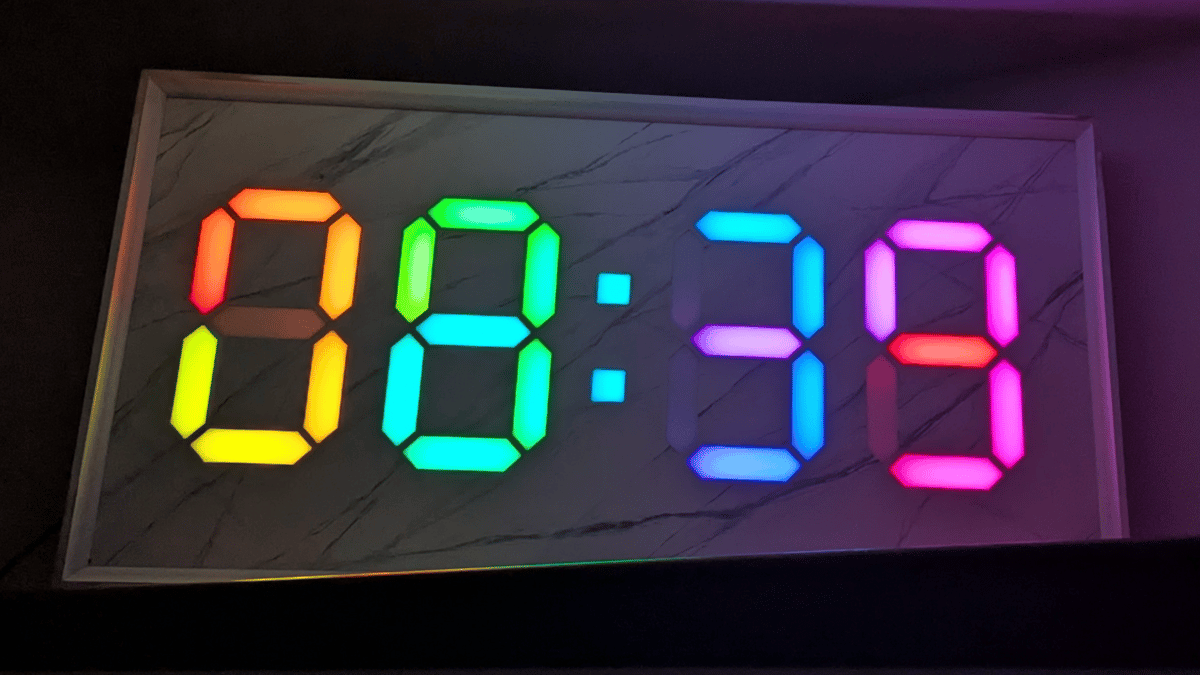
This LED Strip Clock Aims to Make Your Next One Easier, Too

Key Takeaways
- •Web UI configures LED segments without code changes
- •MQTT support enables Home Assistant integration
- •OTA updates allow remote firmware upgrades
- •Auto-dimming via LDR adjusts brightness automatically
- •CNC‑milled MDF enclosure with marble finish adds premium look
Pulse Analysis
The resurgence of DIY lighting projects has been driven by affordable microcontrollers and addressable LEDs, but many hobbyists still wrestle with firmware complexity. The Pixel Clock sidesteps this hurdle by bundling a ready‑made firmware stack on a Wemos D1 Mini, paired with WS2812 strips. Its modular hardware—MDF chassis, laser‑cut acrylic diffusers, and optional LDR sensor—delivers a polished aesthetic that rivals boutique products while keeping component costs low. This blend of form and function appeals to both seasoned makers and newcomers seeking a turnkey solution.
Beyond its physical appeal, the clock’s software architecture emphasizes flexibility. A browser‑based configuration portal lets users assign any LED to any digit segment, adjust time synchronization, and set dimming thresholds—all without recompiling code. MQTT integration exposes telemetry and control endpoints, making the device a natural fit for Home Assistant or other smart‑home ecosystems. OTA firmware delivery further future‑proofs installations, allowing feature upgrades or security patches without disassembly. These capabilities transform a simple timepiece into a versatile IoT node capable of triggering scenes, displaying status alerts, or syncing with other ambient displays.
For the broader market, the Pixel Clock exemplifies how open‑source hardware can bridge the gap between hobbyist tinkering and commercial viability. Its elegant enclosure demonstrates that low‑cost materials, when CNC‑machined and finished thoughtfully, can achieve a premium look. As enterprises explore customizable lighting for branding or experiential spaces, a platform that offers both aesthetic refinement and seamless integration lowers development risk. Consequently, the Pixel Clock not only enriches the maker ecosystem but also signals a shift toward modular, software‑driven lighting solutions in the smart‑home industry.
This LED Strip Clock Aims to Make Your Next One Easier, Too
Comments
Want to join the conversation?