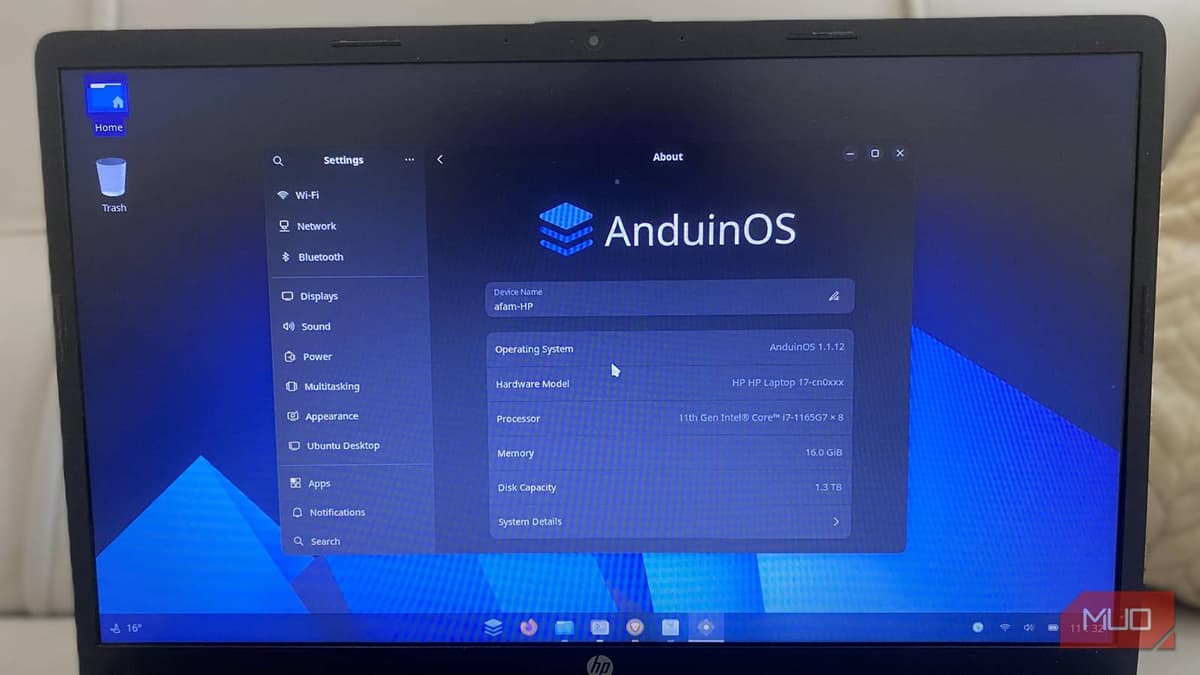
This Ubuntu-Based Distro Might Be the Easiest Windows Escape Route Yet
•February 28, 2026
0
Companies Mentioned

Why It Matters
By lowering the UI learning curve, AnduinOS could accelerate Windows‑to‑Linux migration, expanding the Linux desktop market and offering a cost‑effective alternative for legacy hardware.
Key Takeaways
- •Windows 11 lookalike built on Ubuntu.
- •GNOME 48 powers the desktop environment.
- •Out‑of‑box driver support for Wi‑Fi, Bluetooth.
- •Runs smoothly on 8 GB RAM machines.
- •Ideal for developers, less for creative Windows‑only apps.
Pulse Analysis
The inertia of habit makes moving from Windows to Linux a daunting prospect for many professionals. AnduinOS tackles this barrier by mirroring the Windows 11 interface down to the smallest widget, allowing users to navigate with familiar shortcuts like the Super key search and right‑click pinning. This visual continuity reduces the cognitive load of adoption, positioning the distro as a practical escape route for those who have built daily workflows around Microsoft’s design language.
Under the hood, AnduinOS inherits Ubuntu’s robust hardware compatibility and long‑term support, while GNOME 48 provides a modern, extensible desktop. The inclusion of Flatpak and Flathub simplifies application management, and out‑of‑the‑box drivers ensure Wi‑Fi, Bluetooth, and webcam functionality without manual tweaks. Benchmarks on an eight‑gigabyte, mid‑range machine reveal smooth window handling and minimal background processes, proving that the distro can revitalize older hardware without sacrificing performance.
For the market, AnduinOS represents a niche yet strategic offering: it appeals to developers and power users seeking a Linux environment without the steep learning curve, while still delivering the command‑line flexibility and container support Linux is known for. Creative professionals reliant on Windows‑only tools may encounter hurdles, but the distro’s open‑source foundation invites community solutions. As enterprises look to cut licensing costs and extend device lifespans, a Windows‑like Linux alternative could see growing traction, especially in education and small‑business settings.
This Ubuntu-based distro might be the easiest Windows escape route yet
0
Comments
Want to join the conversation?
Loading comments...